Visa
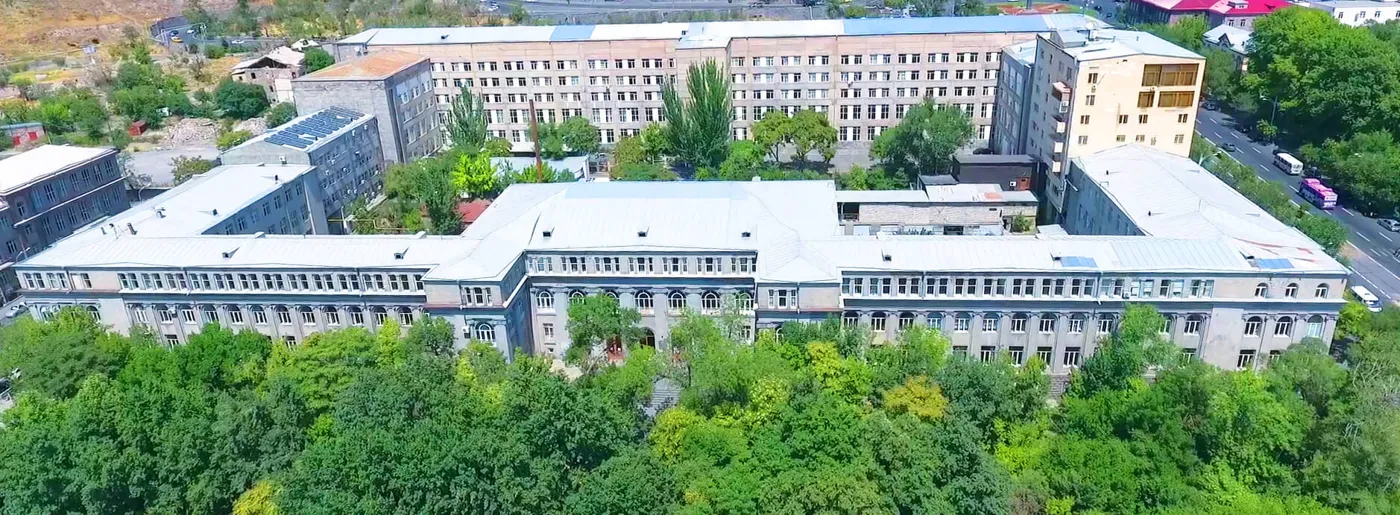

About Armenian National Agrarian University
Agrarian education in Yerevan
Armenian National Agrarian University, commonly known as ANAU, is based at 74 Teryan Street in Yerevan, Armenia. Its educational focus is the country’s agricultural and food system. The university offers full-time and part-time study, and its published academic structure includes agronomy, food technologies, agricultural engineering, veterinary medicine and animal husbandry, and agribusiness and economics. Its mission emphasises preparing professionals who can apply agricultural technology and work with people and organisations in the sector. Research and the application of knowledge are connected with that educational purpose.
Sources: General information ↗ · University mission ↗
Institutes, an academy and a university
The university’s institutional history brings together two strands of agricultural higher education. One developed from the agricultural faculty of Yerevan State University into the agricultural institute established in 1930. The other developed around veterinary medicine and animal husbandry. Over subsequent decades, these institutions expanded their teaching and research into subjects such as farm mechanisation, agricultural economics and dairy production.
In 1994, the Armenian Agricultural Institute and Yerevan Zooveterinary Institute were merged to form the Armenian Agricultural Academy. The institution became the State Agrarian University of Armenia in 2005 and received its present national-university name in 2012. This sequence explains why earlier institutional names remain part of ANAU’s history. The contemporary university combines these educational traditions within a broader structure connecting agriculture, food production, engineering and related research.
Sources: Institutional history ↗
Library collections and digital discovery
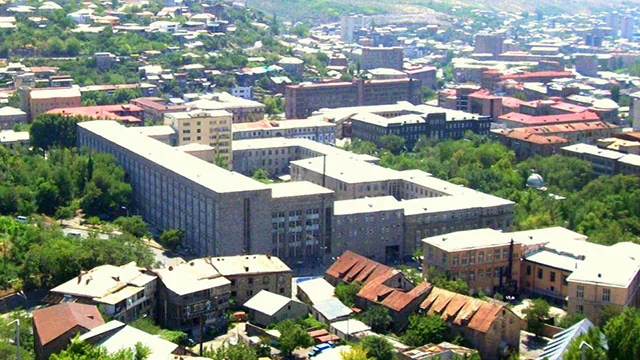
The scientific library connects the university’s agricultural heritage with resources for contemporary study. Its history dates the agricultural institute’s library to 1931. A further change came in 1994, when the collections associated with the agricultural and animal-husbandry institutions were brought together. The library describes holdings that include professional literature, periodicals, fiction, reference works and rare older books.
Koha library software supports an electronic catalogue and services for readers. The library also describes the digitisation of literature and the preparation of analytical records for faculty research articles. Reading rooms, a press hall and electronic reading spaces provide different settings for using its collections. Digital books, educational resources and electronic databases complement printed material. The library’s work therefore involves both maintaining collections and helping users discover material through organised records and electronic access.
Sources: Scientific library ↗
Student representation and research participation
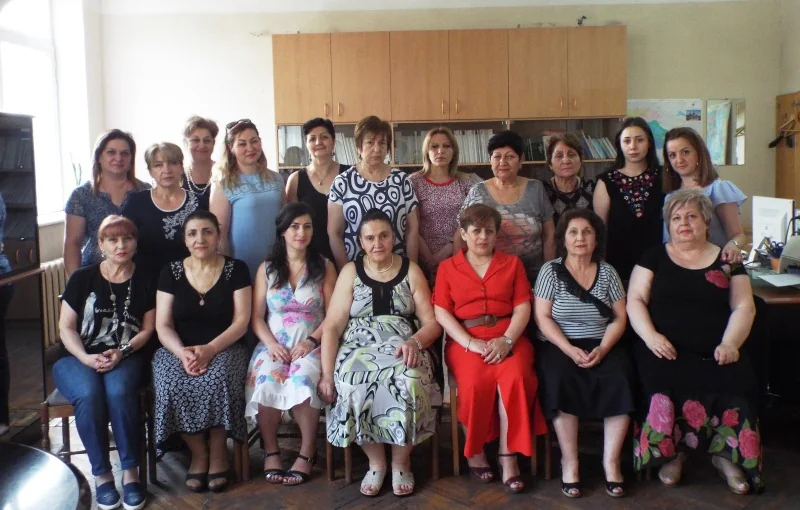
ANAU’s student-life account identifies two student bodies with different responsibilities. The Student Council is a self-governing representative body that raises concerns, discusses issues affecting students and communicates them to university authorities. The student scientific body focuses on involving students in research and encouraging their development within scientific work.
Both are described as student-led structures that support participation in university management. This gives student life an organised role alongside the social relationships and growing independence associated with higher education. The university’s student-life resources also point towards sport, events and opportunities. Representation and research participation are therefore presented together, linking students’ everyday experience with the wider academic community and its institutional decisions.
Sources: Student life ↗
Food technologies and practical learning
The Faculty of Food Technologies prepares specialists for the agri-food sector. Its published fields include food technology, fermentation and winemaking, and food safety at bachelor’s and master’s levels. The faculty’s account links teaching with laboratories, seminars, practical training and student research. It describes updated four-year curricula introduced from the 2019–2020 academic year as part of its educational development.
Its stated priorities include electronic learning tools, professional development for teaching staff, and monitoring the quality of educational activities. Visits connected with specialist departments and practical classes at university experimental farms also appear within its plans. Research priorities include student participation, projects crossing professional fields, and diploma or master’s work addressing practical questions. These aims place the study of food processing within a combination of scientific investigation and applied learning. They also connect the faculty’s teaching with the facilities and practical settings used across the university.
Sources: Faculty of Food Technologies ↗
Agricultural robotics and mechatronics
The AGROBOT Centre of Excellence project provides an example of ANAU’s interest in the relationship between agricultural engineering and digital technology. Its programme description records an implementation agreement signed in June 2023. The project is framed around modernising teaching and research, strengthening laboratory provision and connecting university education with the needs of the agricultural sector.
The published objectives include a robotics and mechatronics educational programme, an agricultural robotics laboratory and a programming laboratory. Proposed teaching tools include Python and SolidWorks, connecting programming and design with engineering applications. The centre’s description also envisages research on agricultural robots, the development of educational methods, and training or consultation involving specialists and farmers. These are the project’s stated objectives, rather than a claim that every planned facility or activity has been completed. The account illustrates how agricultural mechanisation can provide a setting for interdisciplinary work involving engineering, software and practical research.
Sources: AGROBOT Centre project ↗
A historical example of agritech incubation
ANAU’s published Green Agri-Tech Startup Incubator programme from 2021 describes a different connection between agricultural knowledge and technological development. The initiative was organised with Nation 2.0 within the EU Green Agriculture Initiative in Armenia. Its programme framework identifies support from the European Union and Austrian Development Cooperation, with the Austrian Development Agency and UN Development Programme among the implementing partners.
The call focused on science- and technology-based early-stage teams developing responses to agricultural challenges. Its themes included data-driven agriculture, online management and commerce, and the food-production value chain. The proposed sequence moved from applications and selection towards a demonstration event, mentoring, training and a final startup presentation. The programme also anticipated access to university facilities and relationships with people working in agriculture and technology. As a historical programme example, it shows how the university has connected its specialist educational setting with entrepreneurship and the development of practical ideas.