Visa

About Anania Shirakatsi University of International Relations
A university in Yerevan
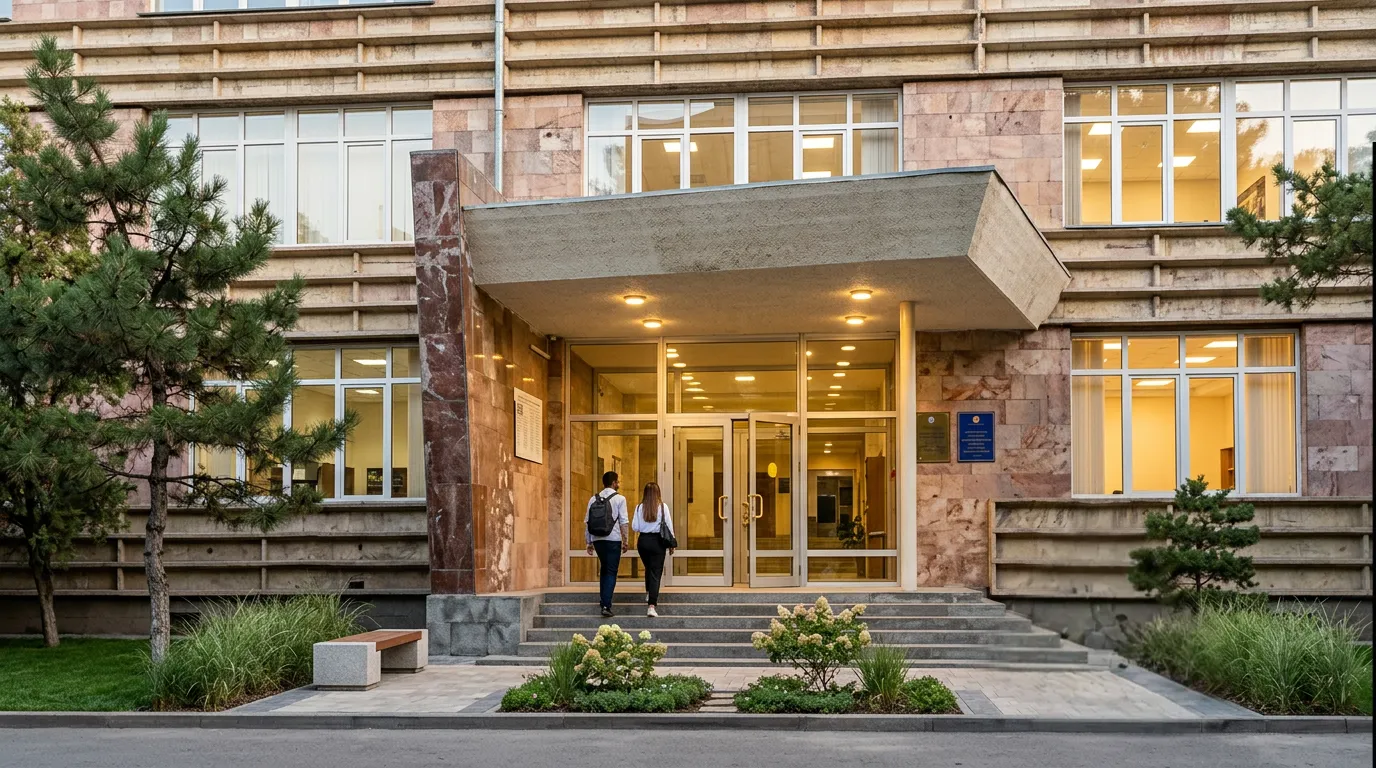
Anania Shirakatsi University of International Relations is a higher education institution in Yerevan, Armenia, with its published address in Nork-Marash on Armenak Armenakyan Street. Its official history dates its foundation to 1990 and identifies philologists Vagharshak Madoyan and Hrazdan Madoyan as the initiators. The institution originally had a humanities orientation and was known as the University of History and Philology.
The history describes an expansion into economics and law two years later, accompanied by adoption of the Anania Shirakatsi name in honour of the medieval Armenian scholar. Its published educational fields now include economics, law, foreign languages, journalism and pharmacy. The university also describes academic publishing and conferences as part of its activities, linking its teaching role with scholarly work and institutional cooperation.
Sources: History and institutional background ↗
Teaching and academic participation
The university’s About page describes an educational approach built around lectures, seminars and practical classes. Learning materials, equipped lecture spaces and a library are identified as resources for students. Its stated aims include professional knowledge, independent thinking, responsibility and participation in society.
The same account places research alongside teaching. It describes the involvement of academic staff and students in scholarly activity, with articles, monographs and textbooks among the forms of publication. National and international conferences provide further settings for presenting academic work and exchanging ideas. Student participation also extends beyond the classroom through a Student Council that organizes academic, cultural and sporting events. These descriptions present the university as a setting for subject study, research participation and organized student activities, rather than limiting its role to the delivery of lectures alone.
Academic Council and representation
The published Academic Council directory brings together members from different academic backgrounds and includes student representatives. Qualifications listed among its academic members encompass philology, economics, pedagogy, agricultural science and political science. The rector is identified as chair of the council, while the directory also identifies a secretary.
Founder Vagharshak Madoyan appears among its members. The inclusion of students alongside academics provides a concrete example of student representation within the university’s published institutional structure. The council page documents its membership, complementing the broader descriptions of teaching and student activities elsewhere on the university website.
Sources: Academic Council ↗
A guide to Armenian information resources
The university’s library webpage provides a guide to external national, academic and digital resources. It links to the National Library of Armenia and the Fundamental Scientific Library, together with the Pan-Armenian Digital Library and the National Scientific Medical Library. The page therefore directs users to collections covering more than one subject area.
Several entries focus on Armenian language and literature. These include electronic literature collections, ArmenianHouse, the Eastern Armenian National Corpus and the Nayiri electronic dictionary library. Other links point readers towards electronic books, author references and digitized materials. These are presented as useful external resources, rather than as collections owned by the university. The guide gives students and other readers a set of starting points for finding Armenian literary, historical, linguistic and scholarly information online.
Sources: Library resource guide ↗
Information for international applicants
The international applicant page describes a multicultural learning environment and provides an administrative route for prospective students from abroad. It directs applicants to the Armenian education platform fs.emis.am for uploading documents and identifies the university’s International Relations Office as a contact for further information.
The document list includes educational records, a curriculum vitae, passport information and photographs, along with other required supporting materials. The page also describes an orientation programme introducing the city and Armenian culture, student support and cultural and sporting activities. These elements connect the administrative application process with the practical experience of joining a university in another country. The office contact gives prospective students a university point of communication for questions about the institution and its published requirements.
An economics programme with a Hungarian partner
In a July 2026 announcement, the university described an economics programme with Wekerle International University in Hungary. The published arrangement follows a three-plus-one structure: three years at Anania Shirakatsi University in Yerevan and a final academic year in Budapest. The announcement describes English-language teaching and an academic focus on economics, analytical thinking and international experience.
The programme is presented as leading to diplomas from both participating institutions after students complete the studies and meet its academic requirements. Its registration outline includes an application, document review, candidate assessment and academic orientation. The announcement also describes individual student support during the programme. This dated account provides a specific example of the university’s international educational cooperation and of a study pathway involving teaching in two countries.
Additional language courses
The university announced additional language-learning opportunities in 2026. Its July notice about a Chinese course describes introductory work on characters, pronunciation through pinyin, conversational practice and Chinese culture. The course was addressed both to university students and to other interested learners.
A separate Armenian-language announcement in May described provision for international students and others wishing to learn the language. Reading, writing, speaking and listening were included, together with Armenian culture and traditions. University lecturers were identified as the teachers. Both notices directed enquiries to university offices. These short-course announcements show language teaching extending beyond degree titles and providing opportunities to engage with the languages and cultures connected with the university’s local and international setting.
Sources: Chinese language course announcement ↗ · Armenian language course announcement ↗
A documented graduation event
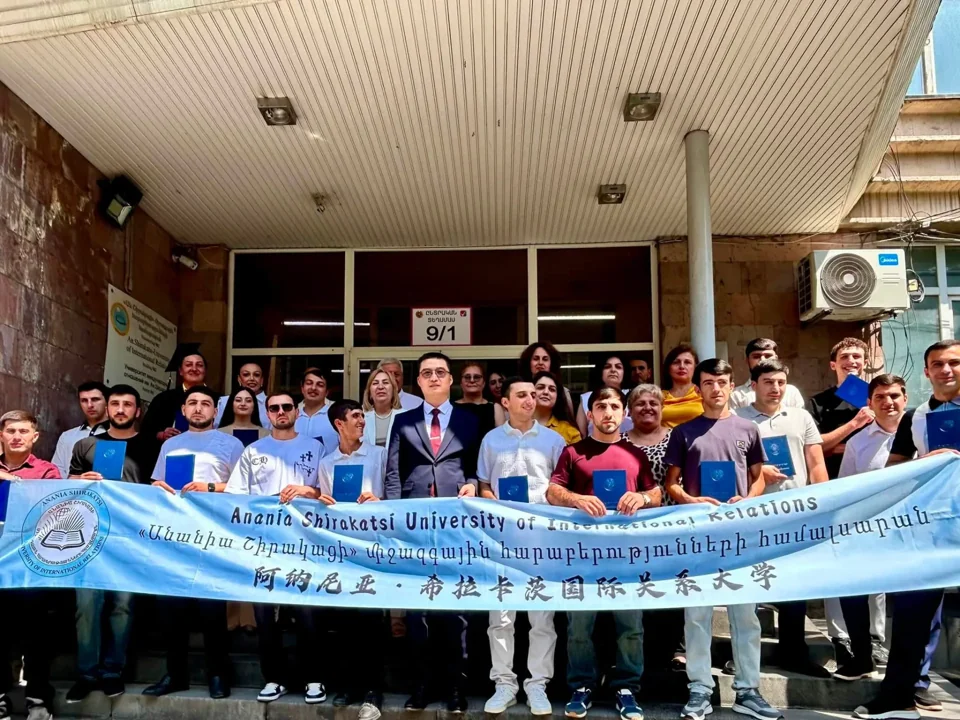
The university’s July 2026 diploma-ceremony report records a gathering of graduates, academic staff and university officers. Its account describes speeches from institutional representatives and a message of thanks delivered on behalf of graduates by an economics graduate. Presentation of the diplomas formed the central part of the event.
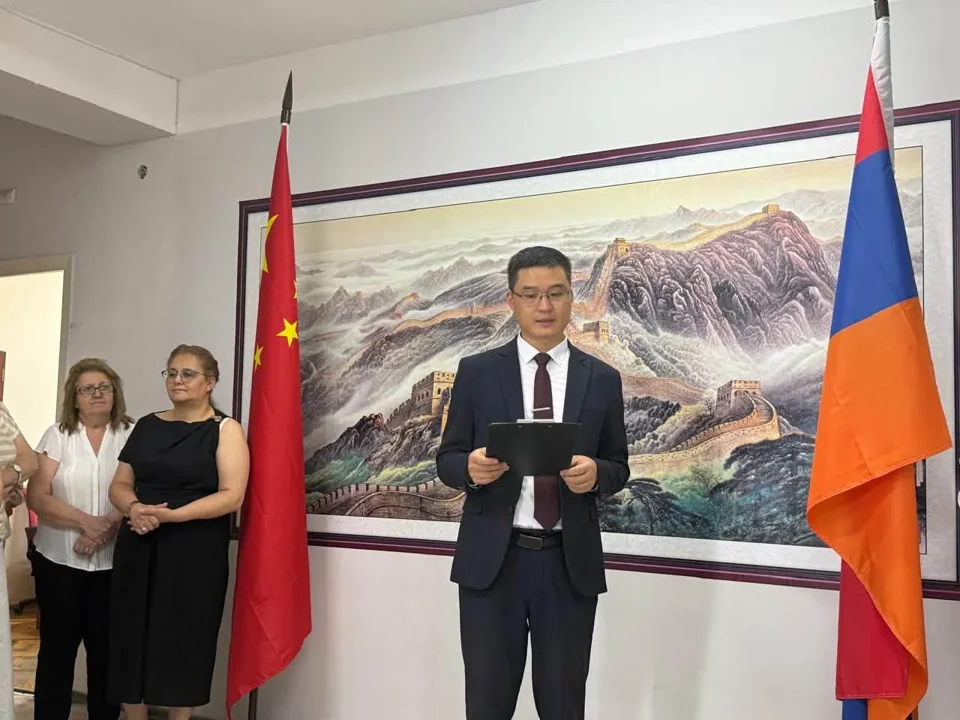
Photographs published with the report show participants gathered outside the university and speakers addressing the ceremony indoors. The article offers a dated record of university community life and the completion of a cohort’s studies. It complements the institution’s broader historical and educational descriptions with a specific occasion involving graduates and the people supporting their education.
Sources: Diploma award ceremony ↗