Visa


About Arkhangelsk State Technical University
A technical university within a continuing institutional history
Arkhangelsk State Technical University was a higher-education institution in Arkhangelsk, northern Russia. In 2010 it became the basis for Northern (Arctic) Federal University. The former university’s preserved website records the federal university’s official registration on 8 June 2010 and states that its own information stopped being updated that autumn. Its academic descriptions therefore document the technical university’s historical provision rather than a separate current admissions offer.
The archived institution was based at 17 Northern Dvina Embankment. Its pages preserve a picture of a university whose teaching, research and supporting services were closely connected with the industries and natural resources of the European North.
Sources: Official archive transition notice ↗
Forestry origins and a broader academic role
The institution began as the Arkhangelsk Forestry Engineering Institute in 1929, responding to the northern region’s need for trained personnel in forestry and wood processing. Teaching initially occupied a small part of a former diocesan-school building before the institute acquired more space and developed laboratories. Construction subsequently expanded the main academic complex on the Northern Dvina embankment.
The post-war decades brought further diversification. From the 1950s, the institute developed industrial and civil engineering, industrial heat power, road and vehicle-related training, and specialisms serving pulp and paper production. Evening and correspondence study widened its forms of provision. The institute received university status in 1994, becoming Arkhangelsk State Technical University. Its history links this change with a broader educational remit, extending beyond the specialist workforce requirements that had originally shaped the forestry institute.
Sources: Institutional history ↗
Teaching connected with regional industry
The technical university’s archived English introduction presents education and research as closely connected with business and industry. Its provision included specialist qualifications, bachelor’s and master’s study, doctoral training, preparation before university and continuing professional education. Professional retraining also formed part of this framework, reflecting the institution’s involvement with people already engaged in working life.
The introduction records international specialist training in engineering, technology and economics from 2003. It also describes supporting infrastructure: student accommodation near the university, sports halls, a stadium, a student centre, library services and internet resources. These features situate the historical institution as a campus-based academic community, combining specialised technical study with the accommodation, information and recreational services needed by students studying away from home.
Sources: Archived English introduction ↗
The range of historical academic subjects
Forestry and natural resources remained central to the technical university’s academic structure. Its published programme list included forestry, soil science, horticulture and landscape design, land cadastre, and forest-harvesting and woodworking production. Mechanical engineering covered machines for forest industries, vehicle maintenance and service, technological equipment and robotics. Wood-related study also included artistic material processing and industrial safety.
Chemical technology brought together chemistry, biotechnology, metrology, quality management, chemical wood processing and environmental protection. Industrial power engineering included heat, electrical supply and automation. Civil and industrial construction, building design and applied mathematics appeared within building engineering. The university also taught economics, management, finance, law, information systems and translation. This combination shows how a forestry-focused institute had developed into a multidisciplinary technical university while retaining substantial links with the region’s resource-based economy.
Research on resources, production and the northern environment
The university’s research priorities, approved by its academic council in April 2007, covered both environmental questions and industrial processes. They included monitoring and responsible use of northern ecosystems, resource-conserving forestry technologies, and observation of natural resources. Further themes addressed forest-industry machinery, mechanical wood processing and chemical or biochemical processing of plant materials.
Energy use in industrial enterprises and energy-saving technologies formed another strand. Construction under northern conditions, responsible natural-resource management and the economics of investment in the forestry sector also appeared in the research programme. Beyond these industrial and environmental concerns, the priorities included information-system integration, mathematical modelling, translation-related language research and legal responsibility. The archived account describes participation by academic staff across faculties and departments, presenting research as a university-wide activity rather than the work of a single specialised unit.
A museum preserving the institute and university
The ALTI–AGTU museum preserved the history of both the forestry institute and its technical-university successor. The archive records that a museum existed in the institution’s early years and that its displays were later dismantled. It resumed activity on a voluntary basis in February 1986, with members of the university community contributing to the rebuilding of its exhibition.
Museum displays combined photographs with physical objects and covered the university’s development, scientific work and technical achievements. Other sections remembered people who had worked at the institution and its educational experience during the Second World War. Temporary exhibitions also presented the creative work of students and employees. The museum thus connected documentary history with material collections and the activities of the university community itself.
Sources: ALTI–AGTU museum ↗
Library spaces and information services
The technical university’s library served students, teaching staff, other employees and engineering personnel. Its published description emphasised access to both printed and electronic resources, with reading rooms, lending services and educational and research databases. An electronic-resources department provided information services alongside the physical collections.
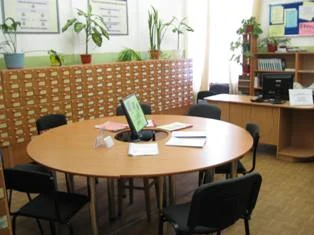
Photographs on the archived library page identify a catalogue room, a fiction-lending area and a reading room. The catalogue photograph shows card drawers and a shared consultation table, while the reading-room view shows shelves, study desks and readers. These historical spaces illustrate how the university supported both the discovery of information and sustained individual study, complementing its classrooms and technical laboratories.
Sources: University library ↗