Visa


About Arellano University
Arellano University in Manila
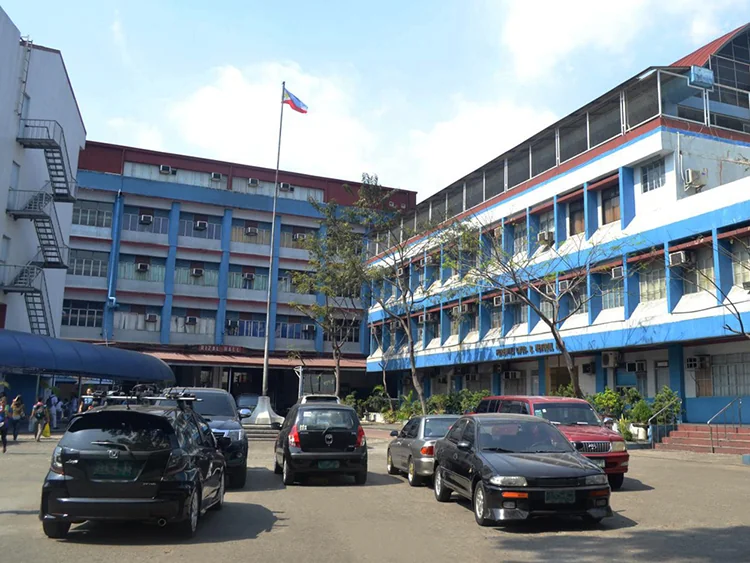
Arellano University’s main campus is the Juan Sumulong Campus on Legarda Street in Sampaloc, Manila. The university identifies this location as AU Legarda or Main, distinguishing it from its campuses elsewhere in Metro Manila. Its published contact directory includes offices for university registration and for elementary and secondary education, reflecting an institution whose activities extend across more than one educational level.
Sources: Juan Sumulong main campus ↗
Origins and institutional development
The university traces its beginnings to Arellano Law College, which opened in 1938 under the leadership of educator Florentino Cayco, Sr. It was named after Cayetano Arellano, the first Filipino chief justice. Wartime closure interrupted its work from December 1941, and it reopened in April 1945 as Arellano Colleges.
Its academic scope expanded after the war to include education, teacher training, commerce, foreign service, arts and sciences, and secondary education. University status followed on 22 February 1947. A graduate school was organised that year, while a school of nursing opened in 1954. In 1978, the graduate school acquired the Florentino Cayco Memorial name, and management of the College of Law passed to the Arellano Law Foundation under an agreement. This history explains the university’s growth from a law college into a broader educational institution.
Sources: University history ↗
Undergraduate fields
Arellano’s undergraduate directory brings together liberal arts, professional studies, business, education, computing and health-related disciplines. Its College of Arts and Sciences describes a liberal arts education, while criminal justice provision addresses criminology and related fields. Computing is represented through information technology and computer studies, including computing concepts, theory and algorithmic foundations.
Other listed units include accountancy, business administration, business and commerce, business technology, teacher education, psychology, and hospitality and tourism management. Health-related offerings encompass nursing, medical laboratory science, pharmacy, physical therapy, radiologic technology and midwifery. These are distinct academic areas rather than a single general course of study. The directory describes combinations of general education, core and professional subjects in several programmes, giving students different routes through undergraduate education according to their selected discipline.
Sources: Undergraduate programmes ↗
Graduate education
The Florentino Cayco Memorial School of Graduate Studies includes business, education and nursing. The business school describes a development-oriented programme concerned with management and the stewardship of organisational resources. Graduate education provision has a longer institutional lineage: the university records recognition of master’s-level study in 1947 and doctoral-level study in 1969.
Graduate nursing was established on 13 June 1978. Its stated educational purpose concerns the preparation of nurses for more advanced professional responsibilities. The graduate directory therefore presents different disciplinary strands within a shared memorial school, with their own histories and areas of study.
Research and publication
The Research and Publications Department links research with teaching, faculty development and community extension. Its stated remit includes developing the university’s research capacity, supervising or monitoring research grants, and supporting a research culture involving both faculty members and students. It also seeks connections with local, national and international organisations that may support collaborative work or external funding.
The department’s goals include the discovery and dissemination of knowledge across university disciplines. Research is also intended to inform teaching methods and learning practices. Its public research area separates projects, publications, abstracts, capability-building activities and conference presentations, making these different forms of scholarly activity visible within the university’s research structure.
Sources: Research and Publications ↗
Links with industry
Industry partnerships are presented as a connection between academic study and experience outside the university. Arellano describes cooperation with local organisations across disciplines, seeking opportunities relevant to students’ particular fields. Its partnership office also relates these activities to changing industry requirements and the development of academic offerings.
International programmes form another part of this work, with the office describing university relationships in the United States, Australia, Japan and Thailand. These links are presented as institutional cooperation and educational opportunities, rather than a single common experience undertaken by every student.
Sources: Industry partnerships ↗
Community development and outreach
The Office for Community Development acts as the university’s extension and outreach arm. Its published account describes programmes directed towards community needs, self-reliance and participation in social development. Different colleges contribute to this work, connecting university activities with communities beyond the classroom.
The office lists educational projects, livelihood-skills activities and empowerment seminars among its forms of engagement. It also describes medical and dental missions as part of its outreach history. These activities sit within a broader community-development remit focused on disadvantaged and marginalised groups. The office is based at the university’s Legarda Street address in Manila.
Sources: Community development ↗
Student organisations and campus participation
The Office for Student Affairs supervises student organisations and co-curricular activity. It recognises legitimate organisations, coordinates their use of university facilities and oversees student off-campus activities. Its responsibilities also include implementing student policies and dealing with minor disciplinary matters under the student code.
The office’s educational role is to complement classroom experience through opportunities for social, cultural, moral and spiritual development. It also describes itself as a channel of communication among students, administrators, faculty members and parents. Supporting student welfare involves cooperation with other student-service units, while guidance for organisations and the Supreme Student Council connects campus participation with leadership and responsibility. Student affairs consequently includes both the administration of activities and support for students’ involvement in university life.
Sources: Office for Student Affairs ↗
Consumer education in student life
A report published on 26 October 2026 documents a consumer-awareness initiative associated with the Manila student council. At Freshie Day on 23 June, incoming freshmen and transferees attended a Department of Trade and Industry seminar about consumer rights and responsibilities. The event connected orientation activities with practical education about purchasing decisions.
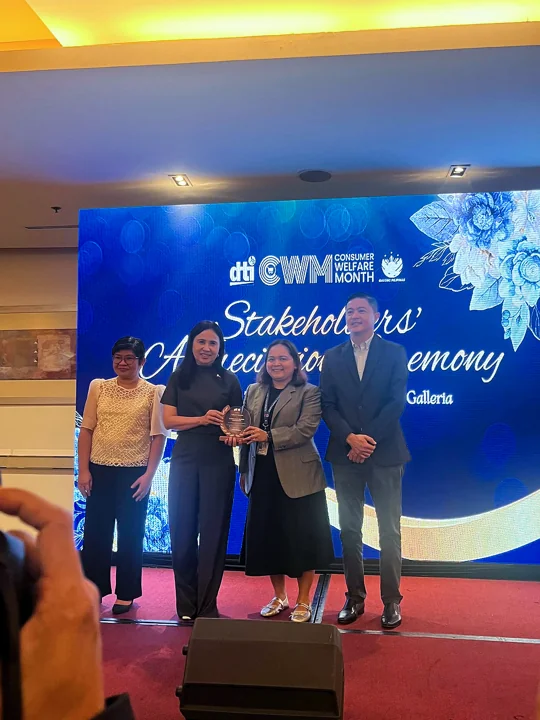
The same report records the university’s participation in a stakeholders’ appreciation ceremony on 21 October at Crowne Plaza Manila Galleria in Quezon City. Representatives of the Juan Sumulong campus and Manila student council attended as the university received recognition for its consumer-education work. The report was written by Dhennis H. Castañeda, the Juan Sumulong student council president.
Sources: Consumer education and recognition, October 2026 ↗