Visa

About Ardahan University
A university in northeastern Türkiye
Ardahan University, or Ardahan Üniversitesi, is based in Ardahan in northeastern Türkiye. Its institutional history traces its establishment to Law No. 5765, adopted by the Turkish parliament on 22 May 2008. The university publishes its Yenisey Campus address in the Çamlıçatak area of Ardahan. Its mission emphasises producing knowledge and educating individuals with attention to national and regional needs. Its vision connects the institution with the economic, social, cultural and technological development of its surrounding geography. Innovation, sustainability and an entrepreneurial outlook are identified as parts of that institutional direction.
Sources: Ardahan University history ↗ · Ardahan University mission and vision ↗
Culture, clubs and sport
The university's campus-life account describes social, cultural and sporting activity as part of the student experience. It lists concerts, photography, theatre, folk dancing and courses, together with social-responsibility projects organised by student clubs. Its stated purpose is to encourage participation beyond classes and connect students with artistic and cultural activities. Theatre productions are described as taking place within the university and at festivals, while spring celebrations form another part of its account of campus life. Sporting activities include boxing, football, volleyball and skiing. The university also describes work associated with the nearby Yalnızçam ski facilities. These examples bring performance, community participation and physical activity into the wider educational environment, providing different forms of involvement alongside students' academic programmes.
Sources: Life at Ardahan University ↗
Finding and using library resources
The university library's guide explains both the organisation of its collections and ways of reaching electronic resources away from campus. It identifies VETİS as a browser-based access route using institutional account details, alongside a VPN route connecting authorised users with campus services. The guide also describes the Library of Congress classification system used to organise books by subject. Its categories cover areas including history, geography, social sciences, politics, law, education, music, fine arts, language and literature, science and technology. The inclusion of a subject-based guide helps users understand how the shelves are arranged and how different academic fields fit within the collection. Remote-access information and collection organisation are presented together as practical support for study and research.
Sources: University library guide ↗
Library study during examinations
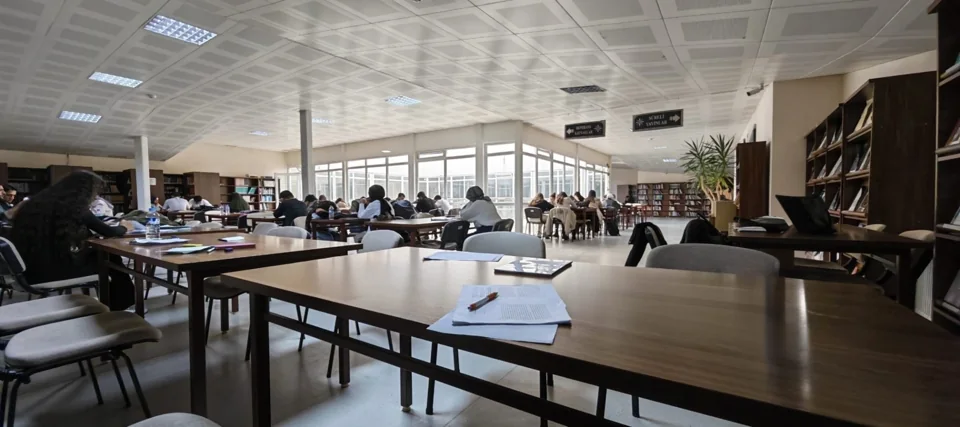
A library report published on 3 November 2026 describes increased use of the Central Library before autumn-semester midterm examinations. It identifies study areas, printed and electronic information resources, academic databases and digital research tools as parts of the service. The report also explains that opening arrangements may be extended in response to student demand, available capacity and the intensity of use. This dated account presents the library as a place for individual study and examination preparation as well as access to academic materials. It connects service planning with the changing pattern of demand across the academic calendar.
Sources: Central Library midterm-period report, November 2026 ↗
Training in digital academic resources
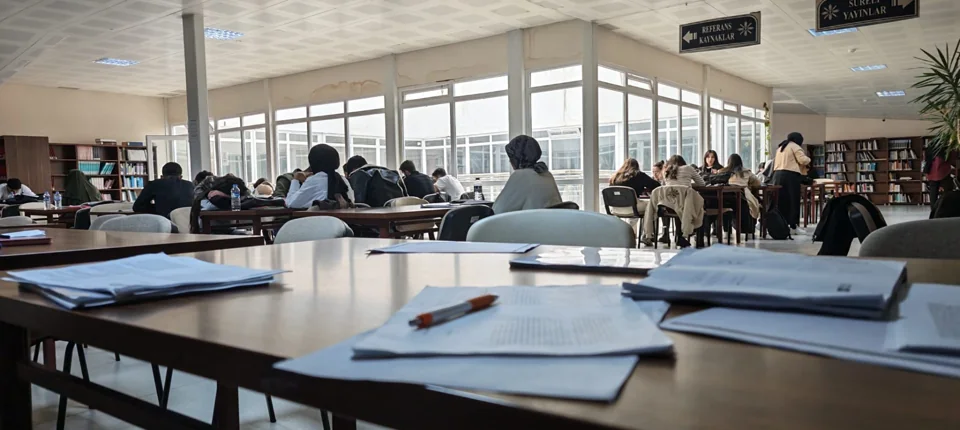
The library's report on a Turcademy user-training session records an online event held on 23 October 2026 for students and university staff. The session introduced the platform's academic publishing content, principal functions, advanced searching and methods of accessing resources. It also demonstrated the platform's artificial-intelligence assistant and discussed its use within academic research. The report describes an interactive format involving participants' questions and contributions. A recording was offered through the library website and the university's institutional YouTube channel for people wishing to revisit the material. This example shows the library's role in teaching users about digital resources, combining an introduction to a particular platform with demonstrations of searching, access and research-related features.
Research connected with regional priorities
Ardahan University's research and development policy gives particular attention to questions affecting agriculture and animal husbandry in its region. It also identifies research on the conservation and production of Caucasian bees and on the diversification of bee products. The policy places these interests within a wider geographical outlook extending towards the Caucasus, Central Asia and the Far East. Its stated aims include supporting scientific publications, projects and research, strengthening infrastructure, and improving opportunities for academics to follow and apply developments in their fields. Cooperation with researchers and institutions beyond the university, participation by stakeholders and the use of research funding are further priorities. Scientific ethics and communicating research results are also emphasised. These aims connect regional subjects with broader academic cooperation and the development of research capacity. The policy names honey, royal jelly, propolis, pollen and bee venom as research subjects, alongside an aim to train people with the skills needed for research and development.
Sources: Research and development policy ↗
An approach to teaching and learning
The university's teaching policy sets out an approach aligned with the Turkish Higher Education Qualifications Framework and the Bologna Process. It emphasises current subject knowledge, professional skills, the use of technology and a critical approach to research. Social responsibility, ethical values and respect for nature and living things are included among its educational aims. The policy also identifies continuous improvement of programmes, attention to digital developments and accessibility of teaching for students. Artistic, cultural and sporting development forms part of this wider educational outlook. Another priority is involving internal and external stakeholders in decisions about teaching. Through these stated principles, the university connects subject learning with the way programmes are reviewed, supported and developed, including the role of technology and participation in institutional decisions.
Sources: Education and teaching policy ↗