Visa
About Acibadem University
A health-science university in Istanbul
Acıbadem University, formally Acıbadem Mehmet Ali Aydınlar University, was founded in 2007 with a focus on health sciences. Its Kerem Aydınlar Campus is in Ataşehir on the Asian side of Istanbul. The university’s academic identity combines education in health-related fields with research in life sciences and biotechnology. Its campus brings classrooms, laboratories, research facilities and student services into a common setting.
That health-science emphasis also creates links with engineering and the natural sciences. The Faculty of Engineering and Natural Sciences lists biomedical engineering, computer engineering, and molecular biology and genetics among its departments. Its educational approach prioritises project-focused teamwork involving clinicians and companies. The faculty’s description connects technical knowledge with questions arising in healthcare and industry, rather than treating engineering as separate from the university’s wider scientific interests.
Sources: University history and campus ↗ · Engineering and Natural Sciences ↗
Engineering, design and biological research
The engineering faculty identifies a range of fields within its curriculum, including medical equipment, robotics, medical data processing, biomechanics, biomaterials, tissue engineering, biosensors and neurotechnology. These areas bring together the study of devices, biological systems, information and the ways people interact with technology. Clinical and patient engineering further connect technical design with the contexts in which equipment and systems are used.
The Biodesign Center, established in 2017, provides another setting for interdisciplinary work. It develops projects arising from academic, healthcare and manufacturing needs through a clinical-innovation approach. Its services cover product, interface and experience design, project coordination, expert networks and the search for appropriate research funding. A design studio and prototyping workshop support the transition from an idea to a model or working prototype. Workshop capabilities include additive manufacturing, laser cutting, mechanical and electronic tools, and product photography. Training and internship programmes also form part of the centre’s activities. Its support also includes intellectual property, regulatory consultancy and commercialisation, addressing the wider process through which designs are developed.
Sources: Engineering and Natural Sciences ↗ · Biodesign Center ↗
Simulation as an educational environment
CASE is the university’s advanced medical simulation and training centre. Its educational model combines simulated patients, electronic learning and skills laboratories. Undergraduate training aims to develop clinical and management skills, while postgraduate courses address more specialised areas. The centre’s description also gives teamwork and communication an important place alongside technical performance.
An electronic system follows educational activity from online learning through simulation and subsequent evaluation. Information collected from cameras, simulators and medical devices helps instructors review participants’ performance. This creates a setting in which a practical exercise can be discussed and assessed after it takes place. The centre also encompasses advanced endoscopic and robotic-surgery training facilities. These are educational resources within the university; the emphasis is on structured practice, feedback and the development of professional understanding.
Library collections and academic support
The main library is on the Kerem Aydınlar Campus, with additional libraries serving the university’s affiliated hospitals in Atakent and Maslak. Its collections support teaching and research, particularly in medicine and health sciences. Books, journals, electronic publications and multimedia resources sit alongside reference, reserve and thesis collections. The library also identifies rare books and hospital-specific collections among its resources.
Collection development takes account of requests from academic staff, students and administrative users, with materials acquired through purchases and subscriptions. The library’s combination of print and electronic resources gives readers different routes into scholarly information. Elsewhere in the university’s research-support structure, the Academic Activities Support Commission evaluates applications concerning conferences, scientific meetings, publications and development-oriented training. It considers requests from faculty and graduate students and can approve support from the relevant academic budget. These arrangements connect access to information with opportunities for scholarly communication and development.
Sources: Library resources and collections ↗ · Academic Activities Support Commission ↗
International academic exchange
The International Office provides information about exchanges through Erasmus and other bilateral agreements. The university describes opportunities for study and internship periods at partner institutions for a semester or an academic year. Its exchange framework covers both student and staff mobility, with agreements and programme coordinators providing the organisational structure.
The global exchange information identifies partner destinations across several regions, including Europe, the Americas and Asia. These opportunities connect the university’s local campus experience with academic environments abroad. The International Office separates exchange programmes from other forms of international activity, such as institutional agreements, research collaborations and visiting faculty. This gives international engagement several forms, encompassing taught study, practical experience and academic cooperation.
Sources: Exchange programmes and Erasmus ↗
Sport and life beyond the classroom
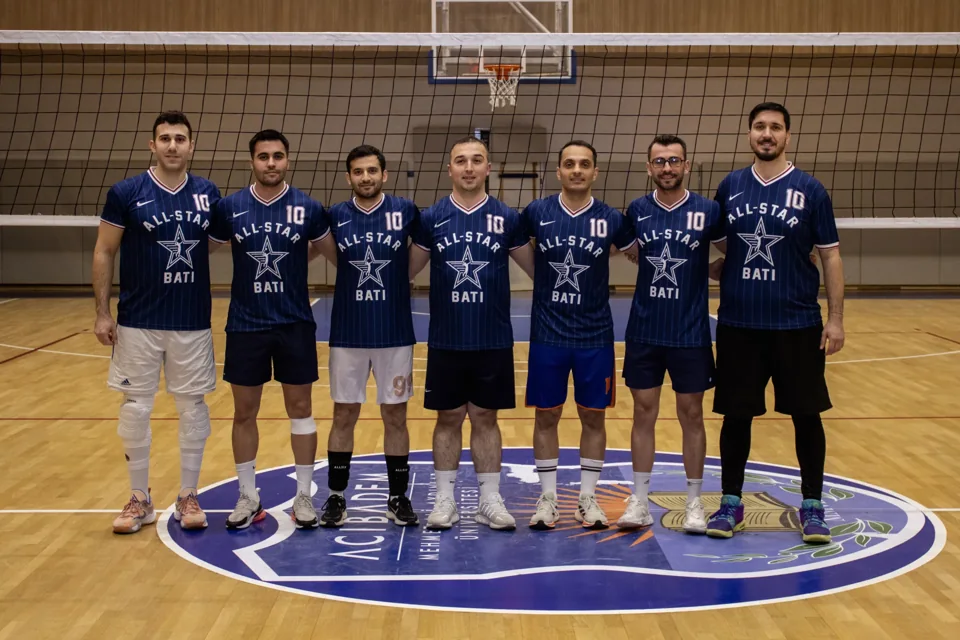
The Kerem Aydınlar Campus Sports Center occupies approximately 3,000 square metres of indoor space. It includes a multipurpose sports hall, a running track overlooking the hall and fitness facilities. Squash, spinning and Pilates spaces extend the range of activities, while a semi-Olympic swimming pool provides another setting for exercise. The centre operates through a membership system with discounted membership for students and university employees.
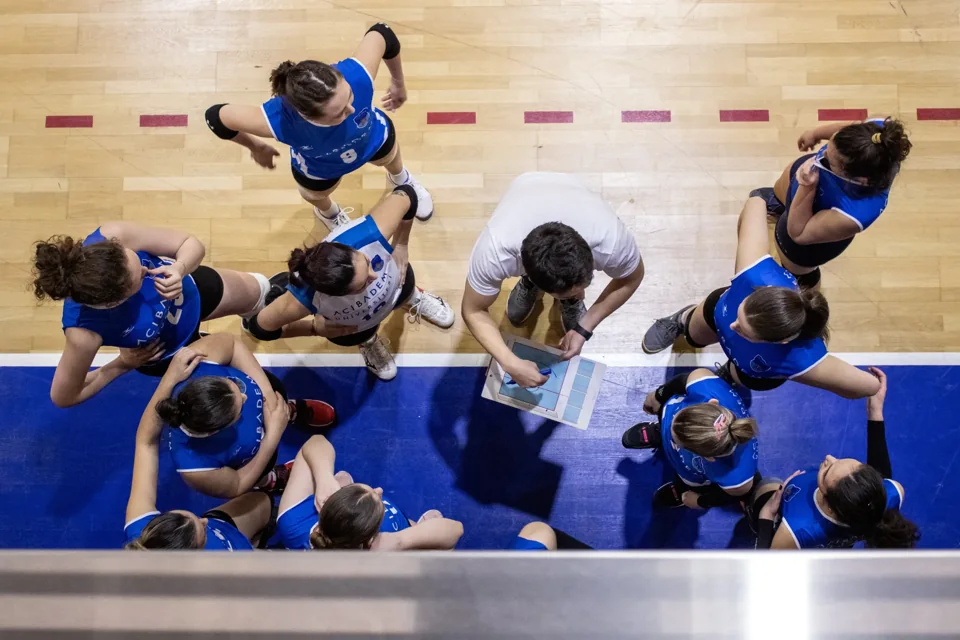
The official sports-centre gallery documents team activity as well as the facility itself. Photographs show volleyball participants on the campus court and a women’s team gathered for discussion during play. These scenes illustrate another side of university life, in which cooperation and shared activity take place outside laboratories and lecture rooms. Sport complements the academic environment by providing space for exercise, social contact and participation within the campus community.
Sources: Sports Center ↗