Visa
About Aquincum Institute of Technology
An English-language study-abroad institute
Aquincum Institute of Technology, usually presented as AIT-Budapest, offers semester-long study in Hungary. Its computer and data science programme is taught in English and is designed especially for North American undergraduates in computing, data science and software engineering. The institutional overview places emphasis on small classes, interaction between teachers and students, practical projects and problem-solving. Its academic approach brings technical foundations together with applications, design, entrepreneurship and Hungarian cultural study. The institute describes depth of understanding and student creativity as priorities, supported by collaboration rather than lectures alone. The overview also identifies an Arts, Film and Culture programme beginning in autumn 2026, broadening the subjects available through the institution's study-abroad offering.
A campus beside the Danube
AIT is situated in Graphisoft Park in Budapest, beside the Danube and near the remains of the Roman settlement of Aquincum. Its address places the institute in Building U3 on Záhony Street. The surrounding science park includes research, technology and pharmaceutical businesses as well as educational institutions. This setting places the academic programme within a wider working environment concerned with technology and research. The campus information describes connections with municipal buses, the suburban railway and the city's metro system. A park shuttle provides another connection, while nearby riverside cycle routes offer an alternative way to reach the area. The campus therefore combines a riverfront setting with access to Budapest's broader transport network.
Sources: A campus beside the Danube ↗
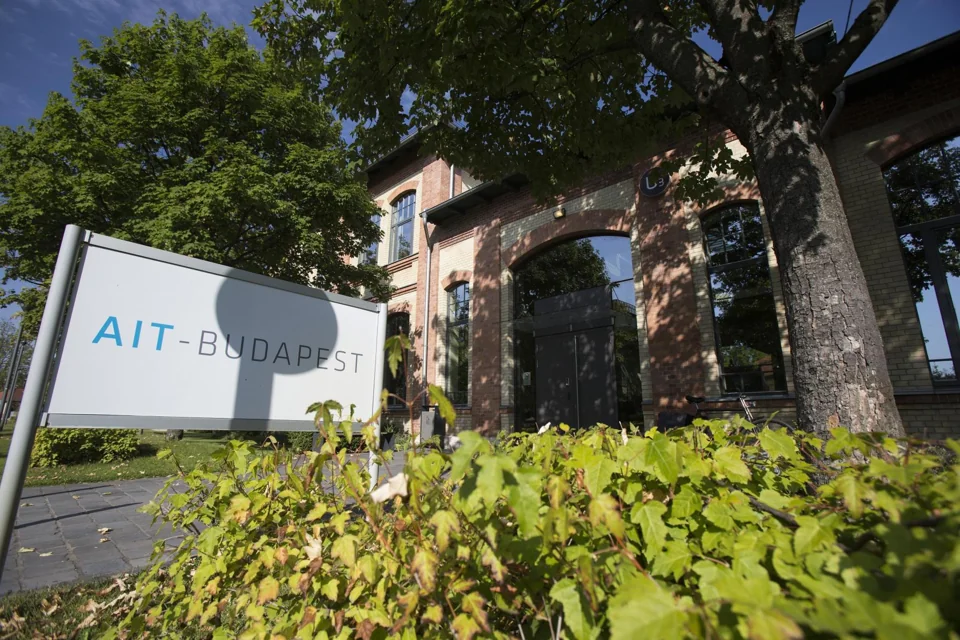
A repurposed industrial building
The institute occupies a historic factory building adapted for educational use. Its facilities account explains that the renovation followed the programme's needs, creating spaces for teaching and for time between classes. Classes take place in the AIT building, which is used by its students, faculty and staff. Facilities include a student lounge, kitchen, study rooms, wireless internet and access to textbooks. These spaces allow academic work and informal contact to continue outside scheduled lessons. The wider park adds cafeterias and snack bars, bicycle storage, visitor parking and other services. The combination of dedicated teaching rooms and shared student spaces reflects the institute's aim of making its building a practical base throughout the study day.
Sources: A repurposed industrial building ↗

Computing, mathematics and creative subjects
The published curriculum spans data science and artificial intelligence, mathematical foundations, modern software engineering, entrepreneurship and humanities. Course examples include algorithms and data structures, graph theory, combinatorial optimisation, deep learning and applied cryptography. Software-oriented subjects address mobile development, computer graphics and user-experience design. A design workshop introduces work with physical materials, while entrepreneurship teaching connects technology with leadership and business contexts. Humanities options examine Budapest, Hungarian music, cinema and language. The curriculum also describes a research track involving supervised projects alongside coursework. These areas give students different ways to combine technical study with creative or cultural interests. The catalogue provides descriptions and prerequisites for individual subjects, rather than treating every course as suitable for every background.
Language learning before the semester
An optional introductory Hungarian course is offered through the institute's partner, Babilon Language School. The dedicated course page describes an intensive eleven-day programme in central Budapest before the AIT semester. It combines classroom language lessons with activities intended to introduce participants to local culture. Examples include guided city visits, a market-based language activity, cooking Hungarian dishes and a film evening. Participants receive a completion certificate, while the page explicitly distinguishes the course from credit-bearing study. It is separate from the slower-paced Hungarian language course offered by AIT during the semester. This distinction gives the pre-semester activity a particular purpose: an introduction to everyday communication and the city before regular academic work begins.
Activities beyond scheduled classes
The institute organises cultural events and excursions, generally at weekends. Its extracurricular account describes a mixture of optional activities and shared orientation or closing events. A Budapest scavenger hunt introduces students to landmarks while encouraging contact with classmates. Day trips can involve walking, local history and visits elsewhere in Hungary, with destinations varying by semester and conditions. Some academic courses add their own activities: language classes include cultural field experiences, Budapest Studies uses guided city walks, and music teaching includes performances. The institute also describes holiday gatherings and a farewell dinner. These activities connect student life with the surrounding city and country, while opportunities to study alongside Hungarian students add another form of cultural exchange.
The founder’s educational purpose
Founder Gábor Bojár explains AIT's origins in a letter linking the institute with his experience establishing and developing Graphisoft. He describes using part of the proceeds from the company's sale to support a new educational undertaking. The letter presents study abroad as a way to bring international students together with Hungarian academic and entrepreneurial experience. It also relates the institute's setting to the redevelopment of an industrial site into Graphisoft Park. Its educational ambitions include understanding the needs of technology businesses and connecting academic learning with practical innovation. The founder's account places cultural adaptability and attention to different markets within this purpose, explaining why entrepreneurship and cross-cultural perspectives accompany technical subjects.
Sources: The founder’s educational purpose ↗
Academic organisation and assessment
The academic-policy page describes ongoing assessment throughout the semester, with individual syllabuses explaining how work is evaluated. Course selection begins during application and continues through orientation, when faculty introduce subjects, prerequisites and learning outcomes. Students can then refine their choices during the opening stage of the semester. The institute encourages discussion with academic advisers at home institutions when planning coursework. Its account identifies Pomona College as the school of record issuing official transcripts from spring 2025, while also stating that AIT remains affiliated with Budapest University of Technology and Economics. End-of-semester course evaluations provide feedback on teaching and the academic environment. These arrangements describe the organisation of a visiting semester and the documentation of students' work.