Visa
About APJ Abdul Kalam Technological University
Kerala’s technological university
APJ Abdul Kalam Technological University is the Kerala state university also known as KTU, headquartered in Thiruvananthapuram. It began on 21 May 2014 under the initial name Kerala Technological University. Its institutional remit extends across engineering science, technology and management, including graduate, postgraduate and research education. The university describes a role in developing academic standards for affiliated colleges alongside promoting research, development and innovation. Its objectives connect technical education with the state's wider engineering planning and technology-related policy. They also include interdisciplinary education, links with national and international institutions, and opportunities for people to update their knowledge. Community development through extension activities forms another part of this remit. The institution's account therefore covers a wider educational network as well as the learning and research undertaken within its own academic structures.
Sources: University overview and objectives ↗
Evidence, practice and educational purpose
The university's stated mission distinguishes its own schools of learning and research from its affiliated colleges. It aims to develop the former while guiding the latter towards teaching and practice relevant to society. The mission gives particular attention to the relationship between evidence and professional practice: reasoned enquiry should improve practice, and experience in practice should generate further evidence. This describes an intended cycle of learning rather than a single direction from theory to application. Its vision also emphasises innovative scientific and technological thinking and the development of future leaders. These institutional aims provide the context for its postgraduate schools and its responsibilities across affiliated technical education.
Sources: Values, vision and mission ↗
The University Schools initiative
KTU's specialised University Schools were launched in the 2024–25 academic year. Their official introduction identifies electrical sciences, communication sciences, building sciences and mechanical sciences as the four disciplinary areas. The schools' postgraduate programmes connect established engineering subjects with newer technological concerns. Their introduction links electric vehicle technology with sustainable transportation, embedded systems with intelligent devices, infrastructure engineering with resilient development, and mechanical and materials technology with manufacturing. The initiative emphasises research relevant to industrial and societal needs, collaboration across disciplines and practical learning. It also identifies sustainability as a shared concern through examples such as green mobility, smart cities and advanced manufacturing. These schools represent the university's own specialised postgraduate provision within its broader technical-education role.
Sources: University Schools overview ↗
Infrastructure, construction and management
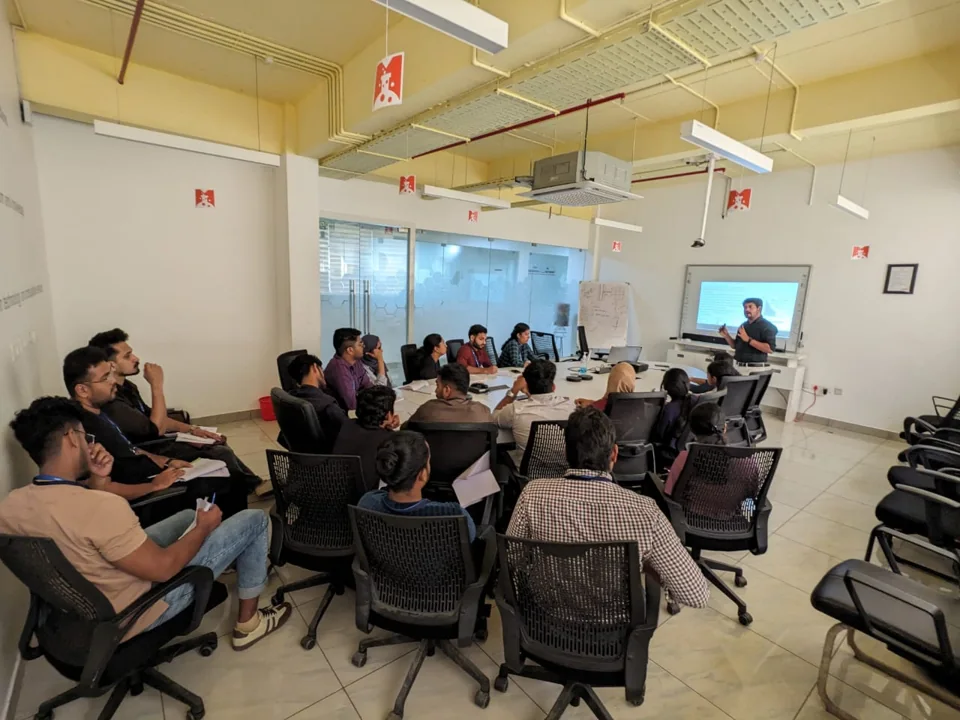
The School of Building Sciences and Technology presents an M.Tech in Infrastructure Engineering and Management. Its programme description addresses the engineering and organisational demands of large infrastructure projects. The topics outlined include modern construction materials, sustainable development models, automation and data-driven approaches. Mass rapid transit is one example used to explain the relevance of infrastructure education to changing transport needs. Research into alternative construction materials is another stated area of emphasis. The school describes its academic subjects, projects and activities as connecting engineering with the demands of both industry and academic investigation. This gives the programme a scope extending from the materials used in a project to the ways infrastructure is designed, developed and managed, with sustainability and social responsibility included in that educational framing.
Embedded systems and connected technologies
The School of Communication Sciences and Technology offers postgraduate study in Embedded Systems Technologies. Its account places the subject at the intersection of computer science, electronics and control engineering. The programme addresses microprocessor and microcontroller architectures, real-time operating systems and the joint design of hardware and software. Students are introduced to programming languages, development tools and hardware platforms used to design and implement embedded solutions. Coding, debugging and optimisation are identified as practical aspects of this work. The school situates these technologies in applications including consumer electronics, automotive systems and industrial automation. Alongside theoretical understanding, its programme description emphasises practical development and research, with problem-solving, teamwork and communication forming part of its stated educational approach. The focus is on understanding how computing and electronics work together within a larger technological system.
Electrical engineering and electric vehicles
The School of Electrical Sciences and Technology presents an M.Tech in Electric Vehicle Technology. Its academic focus concerns the systems involved in transport electrification, particularly batteries and energy storage, electric drive trains and sensor networks. The school places these subjects within research and development related to electric mobility. Its explanation extends beyond road vehicles to the possible application of electrical technologies in rail, marine and aeronautical systems. Battery technology and drive-train design are identified as important technical areas underlying the programme. The postgraduate provision is framed around the relationship between engineering investigation and the development needs of electric-vehicle systems. This gives the school a defined technological focus within the university's wider electrical-sciences activity.
Sources: School of Electrical Sciences and Technology ↗
Mechanical engineering and materials research
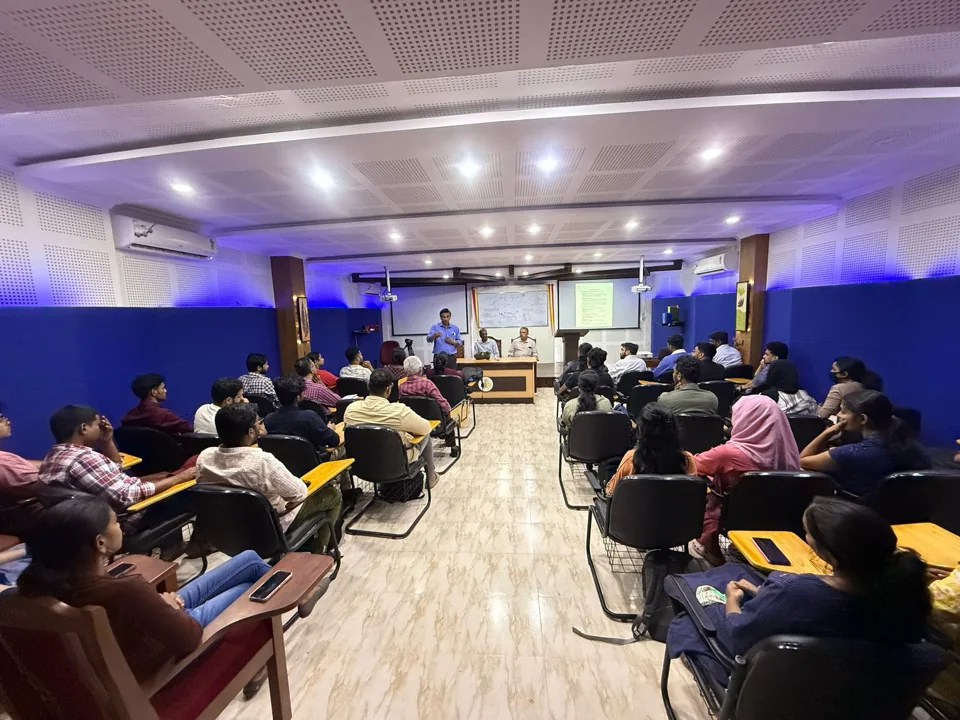
The School of Mechanical Sciences and Technology offers an M.Tech in Mechanical and Materials Technology. Its programme description links the development of products, machines and tools with changes in automation and production. Materials technology is presented as an interdisciplinary area concerned with selecting and using materials and manufacturing methods to develop or improve products. The school identifies computational materials science, thermal-fluidics and hybrid materials as areas requiring investigation. It also highlights the incorporation of mechatronic systems into conventional machinery. Together, these subjects connect mechanical design with materials behaviour, manufacturing and the interaction of mechanical and electronic systems. The programme is intended to support research and development in these connected areas. Its account places postgraduate learning within the practical questions raised by changing industrial technologies, including machinery for hazardous working environments.