Visa

About Anyang Academy of Agricultural Sciences
A municipal agricultural research institution
Anyang Academy of Agricultural Sciences, known in Chinese as 安阳市农业科学院, is a comprehensive agricultural research institution directly under the Anyang municipal government in Henan, China. Its published address is 833 East Wenming Avenue, Anyang. The academy’s institutional history traces its origins to the Anyang prefectural agricultural research institute established in 1962.
The present academy was formed in December 2008 through the merger of the city’s agricultural research institute and vegetable research institute. In June 2011, the Henan Academy of Agricultural Sciences approved the establishment of its Anyang branch within this institutional framework. The academy’s February 2020 introduction describes research spanning wheat, maize, foxtail millet, soybeans, peanuts, mung beans, vegetables, fruit trees and flowers. Breeding and introducing varieties are accompanied by demonstrations of agricultural techniques and their wider application. This combination of research and extension connects experimental work with the practical needs of agricultural production in the region.
Sources: Institutional introduction and history, February 2020 ↗
The Yonghe experimental and demonstration base
The Yonghe base gives the academy a setting for field experiments and agricultural demonstrations. A March 2019 institutional account explains that the academy and Anyang County government agreed to establish a modern agricultural demonstration park in Yonghe town. Construction began in 2015. The account describes a site divided into agricultural experimentation and modern-agriculture display areas.
Its research functions include crop breeding, cultivation studies and work on fruit, vegetables and flowers. Other activities concern nursery production and the development of agricultural-product processing techniques. The 2019 description records facilities such as seed cold-storage rooms, experimental observation space, greenhouses, research offices and supporting field infrastructure. It also describes demonstrations concerning standardised production, water conservation and ecological agriculture. The intended role of the park extended beyond experimentation: it was conceived as a place for research results to be demonstrated, technologies to be developed further, and agricultural science to be communicated to a wider audience.
Sources: Yonghe experimental demonstration base, March 2019 ↗
Research exchange and collaborative experiments
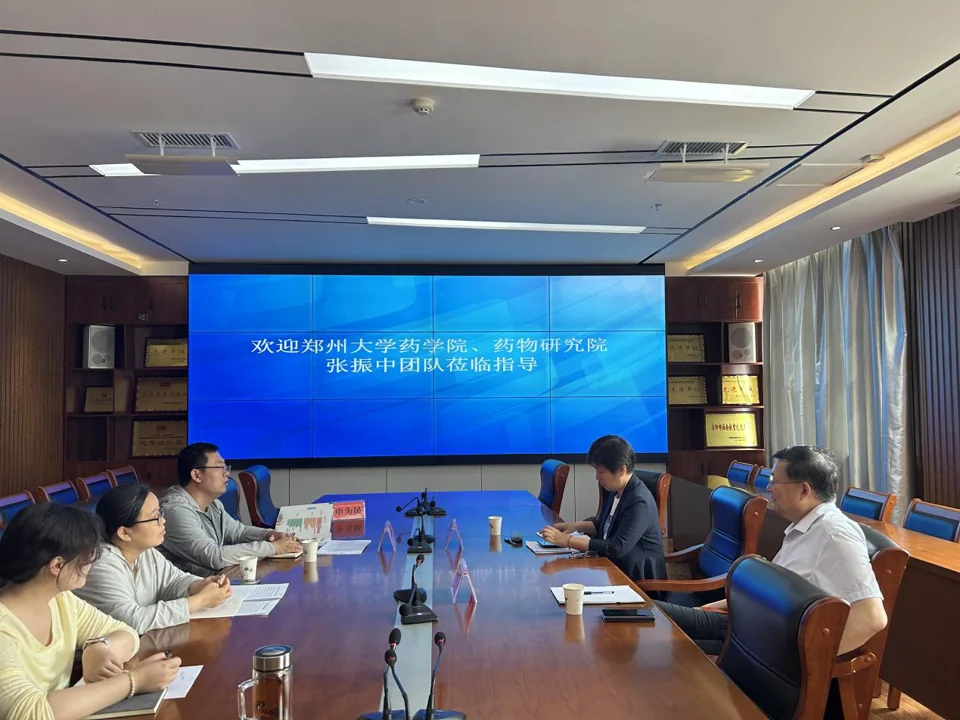
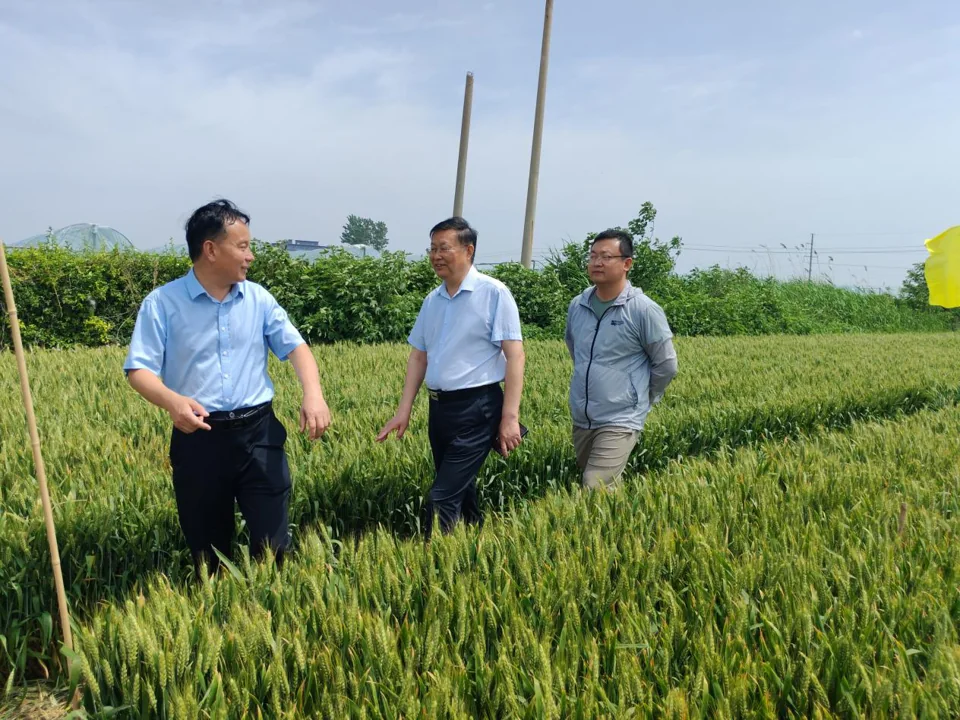
A May 2026 report describes a visit by researchers from Zhengzhou University’s School of Pharmaceutical Sciences and pharmaceutical research institute. Discussions concerned possible agricultural applications of nanomaterials, alongside crop breeding and plant protection. The visitors also toured the academy’s Yonghe experimental base.
During the visit, researchers reviewed an ongoing collaborative wheat experiment involving different application methods and measurements of crop characteristics. The party also visited pepper and protected-agriculture research units, encountering work on pollination and breeding, sweetcorn cultivation and hydroponics. The report distinguishes these activities from proposed next steps, which included further experiments, sample testing, possible standards and patent applications, and future joint research proposals.
Sources: Zhengzhou University research visit, May 2026 ↗
Professional learning for agricultural practitioners
Training is a visible part of the academy’s public-facing work. An October 2026 report records a citywide wheat-sowing technical training meeting held on 29 September. The Anyang comprehensive experimental station within the national wheat industry technology system organised the event jointly with the municipal agriculture and rural affairs bureau.
Participants included academy personnel, agricultural officials and technical staff from counties and districts, people responsible for agricultural businesses, and representatives of wheat storage and processing enterprises. The teaching programme brought together three subject areas: soil microbial communities, water-saving irrigation with integrated water and fertiliser management, and the control of diseases, pests and weeds around the sowing period. The report presents the meeting as a way to connect specialist knowledge with the work of local technical advisers and growers. It illustrates a form of continuing professional learning organised around an agricultural season and the needs of the local wheat sector.
Sources: Citywide wheat-sowing technical training, October 2026 report ↗
Soybean breeding and public evaluation
The academy’s crop-breeding activity is illustrated by its Andou 1065 soybean variety. An October 2025 report states that the variety was independently bred by the academy and passed Henan’s variety review in August 2024. It describes Andou 1065 as a summer soybean with yellow seeds, white flowers and an average growth period of 107 days.
On 22 September 2025, the variety featured at the sixth Huang-Huai-Hai soybean-variety field exhibition in Xuchang, Henan. Research institutes and seed businesses from seven provinces presented varieties and breeding lines. The academy reported that Andou 1065 was selected among varieties recommended for the Henan part of the Huang-Huai-Hai region following an assessment of field performance. Its economic-crops research unit supplied the account. The example shows how breeding work moves from the academy into regional field evaluation and discussion with the wider seed sector.
Sources: Andou 1065 soybean breeding and field exhibition, October 2025 report ↗
Taking research knowledge into villages
The academy also documents direct contact with growers outside its experimental facilities. A June 2026 report describes a technical-service team visiting Tianying village in Yonghe town, Anyang County, during the transition from wheat harvest to summer maize planting. The team brought together personnel from the germplasm-resources and maize research units.
The visit addressed growers’ concerns about unsettled weather, harvesting arrangements, drying and storage, and the establishment of the following maize crop. Staff discussed crop-management approaches and provided maize seed as part of the activity. The report describes a face-to-face exchange in which research personnel responded to the immediate circumstances of local production. Such visits complement the academy’s breeding programmes, demonstration sites and organised training meetings. They provide another route through which the institution shares agricultural knowledge, with the discussion taking place in the village and fields where growers are working.
Sources: Agricultural extension visit to Tianying village, June 2026 ↗