Visa

About Anshan Normal University
A teacher-education institution in Anshan
Anshan Normal University, known in Chinese as 鞍山师范学院, is based in Anshan, Liaoning. Founded in 1958, it has developed around teacher education while extending its academic provision across education, literature, science, art, management, engineering, law and history. Its institutional introduction, with information current to February 2026, describes undergraduate, postgraduate and higher vocational education.
The university connects teacher preparation with partnerships involving other universities, schools and education organisations. It also takes part in teaching placements serving rural and western areas. Research extends from educational questions to natural products, local culture and the arts. The university’s account identifies work on natural-product resources, biological transformation, plant disease and pest control, chemical constituents and functional foods. Humanities research draws on centres concerned with Chinese studies, the storytelling artist Liu Lanfang and Qianshan culture. These activities place its teacher-education role alongside research and service connected with the region.
The development of graduate study
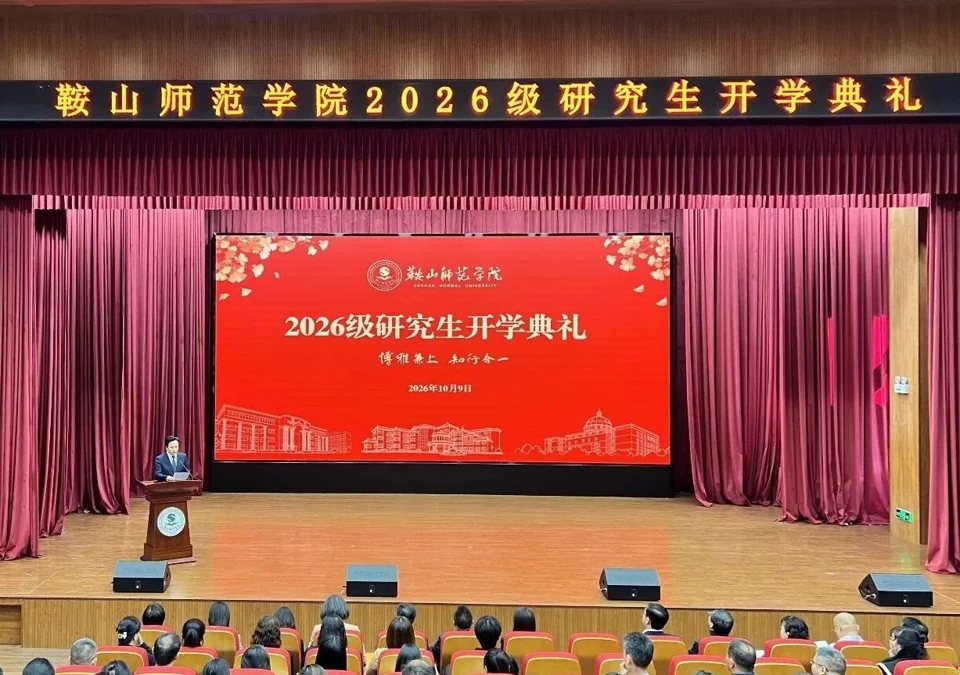
Graduate education developed through several distinct stages. The university entered Liaoning’s development programme for prospective master’s-authorising institutions in 2008. In 2011 it received permission to participate in a pilot project for professional master’s education responding to particular national needs, and it began independently training master’s students in 2012.
Following the pilot project’s first-stage assessment in 2017, further institutional development continued. The graduate administration was renamed the Graduate School in 2019 and became a teaching unit responsible for graduate education and student management. The university’s graduate education page distinguishes a 2021 authorisation-development stage from formal approval as a master’s-degree-awarding institution in 2023. In June 2024, responsibility for university-wide discipline development was assigned to the Graduate School. Its stated approach connects advanced applied study with regional needs, educational reform, shared teaching resources and a quality-assurance system. This history explains how postgraduate study became an established part of the university’s academic organisation.
Sources: Development of graduate education ↗
Education science, psychology and teaching practice
The School of Education Science and Technology was established in December 2004. Its June 2026 introduction lists four teacher-education undergraduate programmes: preschool education, primary education, educational technology and applied psychology. The school also provides teacher-education courses for students across the university and contributes to university-wide student psychological education.
Its practical resources include a teacher professional-skills training centre, psychology and brain-science laboratories, counselling and assessment rooms, children’s sensory-integration facilities, Montessori and Orff music classrooms, and rooms supporting media production and editing. Piano rooms, art studios, clay-modelling rooms and movement-training spaces provide further settings for developing educational skills. Primary education combines educational and psychological study with language, mathematics, curriculum analysis and teaching design. Educational technology connects educational theory with computing, digital media and artificial intelligence applications. Observation, teaching placements and cooperation with schools and kindergartens connect these subjects with the settings in which educational work takes place.
Sources: Education Science and Technology school, June 2026 ↗
Humanities, language and communication
The School of Humanities and Communication traces its origins to the Chinese department established when the institution opened in 1958. A literature school replaced the departmental structure in 2011, and the current Humanities and Communication school was formed in July 2020. Its June 2026 introduction lists Chinese language and literature, history, network and new media, and international Chinese education among its undergraduate subjects.
Chinese language and literature study combines literary knowledge with preparation for teaching through reading, creative work, speech and writing practice. History education similarly links subject knowledge with classroom teaching and practical skills. Network and new media includes facilities for digital media, integrated media, virtual broadcasting and virtual-reality training. International Chinese education combines Chinese-language expertise, Chinese-English bilingual ability and teaching practice, with attention to cross-cultural communication. The school also lists postgraduate professional study in international Chinese education and Chinese-language subject teaching, connecting its undergraduate subjects with further specialised study.
Library collections and reading activities
The university library dates from 1958. Its first separate building opened in 1988, and the present library building entered use in September 2002. The library describes its role as combining document collections, information services and educational activity. Its collections cover philosophy, education, literature, history, science and engineering, with particular strengths in educational materials, humanities and older books.
An information-system upgrade completed in August 2024 introduced integrated arrangements for storage, borrowing, reading and searching, alongside open-shelf access. Reading and individual study spaces support use of the collections. The library also promotes both printed and digital resources through reader training and regular activities. These include recitation, knowledge competitions, lectures, discussion, exhibitions and essay writing. Classical literature, Chinese traditional culture and other themed reading provide recurring strands of the programme. Online and in-person activities therefore accompany the library’s lending and information functions, making it a setting for both independent study and shared cultural participation.
Sources: University library introduction ↗
Supporting the development of new teachers
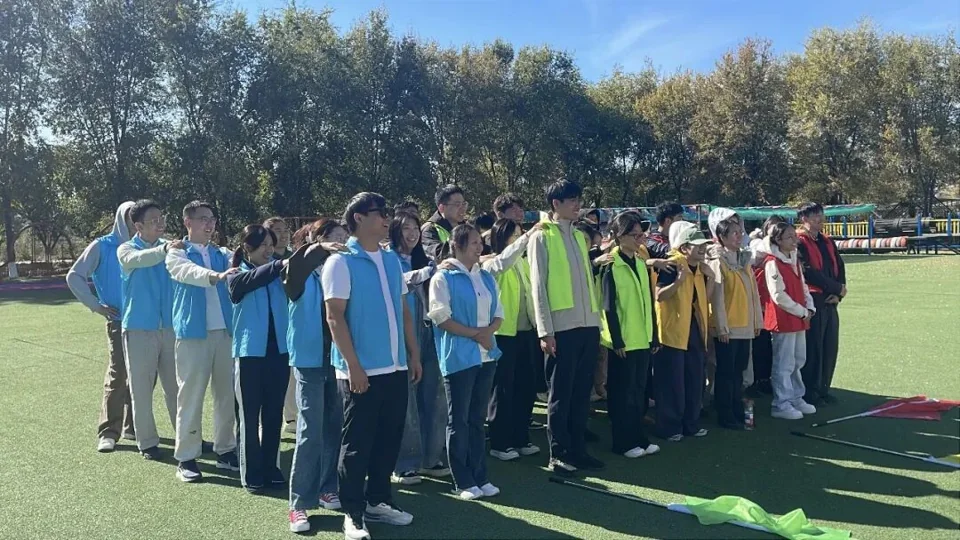
Staff development forms another part of university life. On 14 October 2026, Anshan Normal University organised an experiential development session for newly appointed teachers, reported by its Teacher Development Centre the following day. The event formed part of the university’s induction training for new teachers.
Participants worked in teams through activities intended to develop communication, trust and cooperation. They chose team leaders, agreed team names and slogans, and took part in collaborative challenges requiring planning and coordination. University departments involved included the trade union, Teacher Development Centre, publicity department and youth league. The report presents the session as a way to help colleagues become familiar with one another and join the university community. It connects this introductory experience with the continuing development of teachers and their responsibilities in educational work.
Sources: New-teacher development activity, October 2026 ↗