Visa
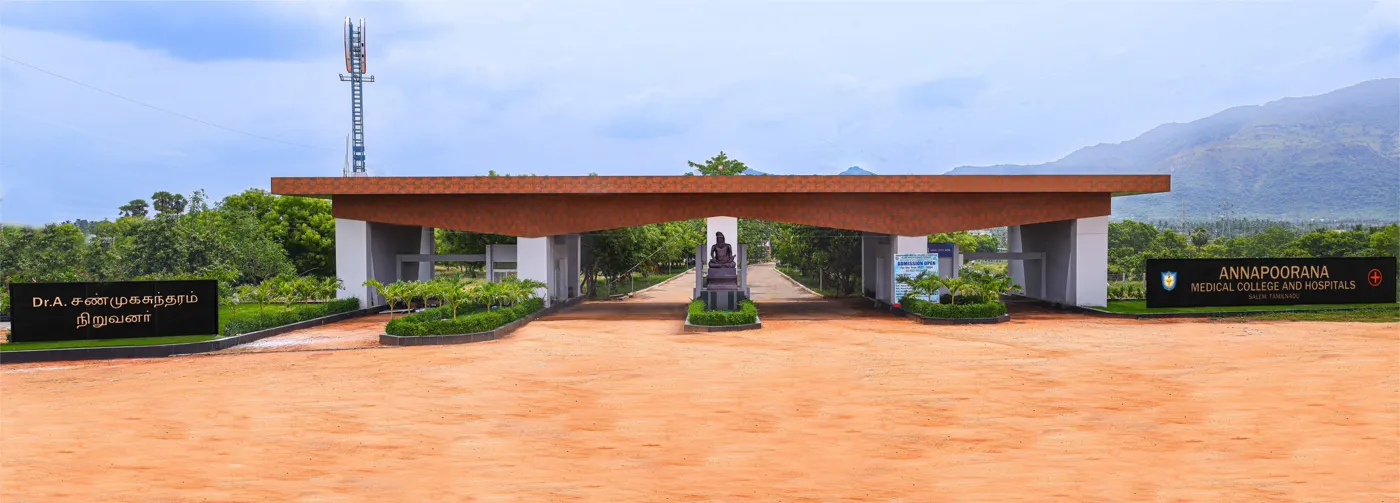
About Annapoorana Medical College and Hospitals
Medical education in Salem
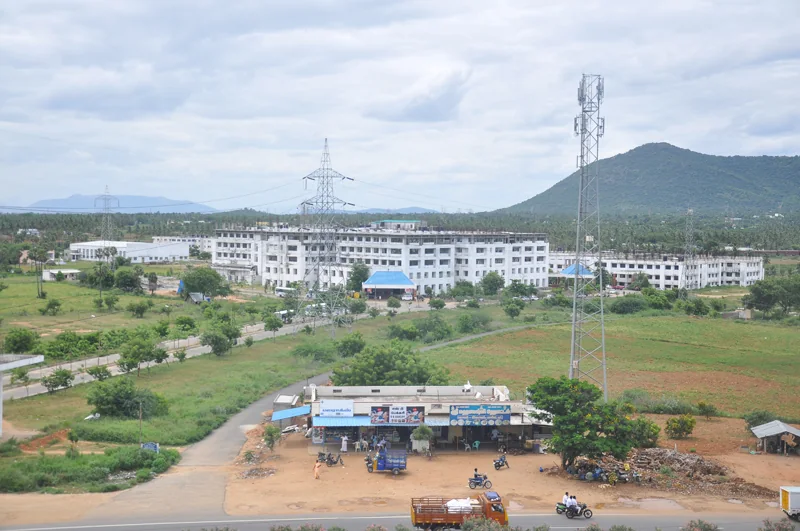
Annapoorana Medical College and Hospitals, commonly known as AMCH, is a medical education institution in Salem, Tamil Nadu, India. It was established in 2011 under the Vinayaka Mission’s Research Foundation Trust and is affiliated with the Tamil Nadu Dr. M.G.R. Medical University. The college and teaching hospital form parts of the same campus environment.
The institution offers undergraduate MBBS education and postgraduate MD study in anatomy, physiology, biochemistry, microbiology and pharmacology. Its overview describes an educational approach combining theoretical knowledge, practical training and research within a competency-based framework. Lecture halls, laboratories, skill-development facilities and the central library support this work. The college presents medical education, research and service to surrounding communities as related elements of its purpose. Its postgraduate subjects give particular attention to the foundational sciences that underpin medical study, complementing the broader undergraduate curriculum.
Sources: Institutional overview ↗
Library resources and study support
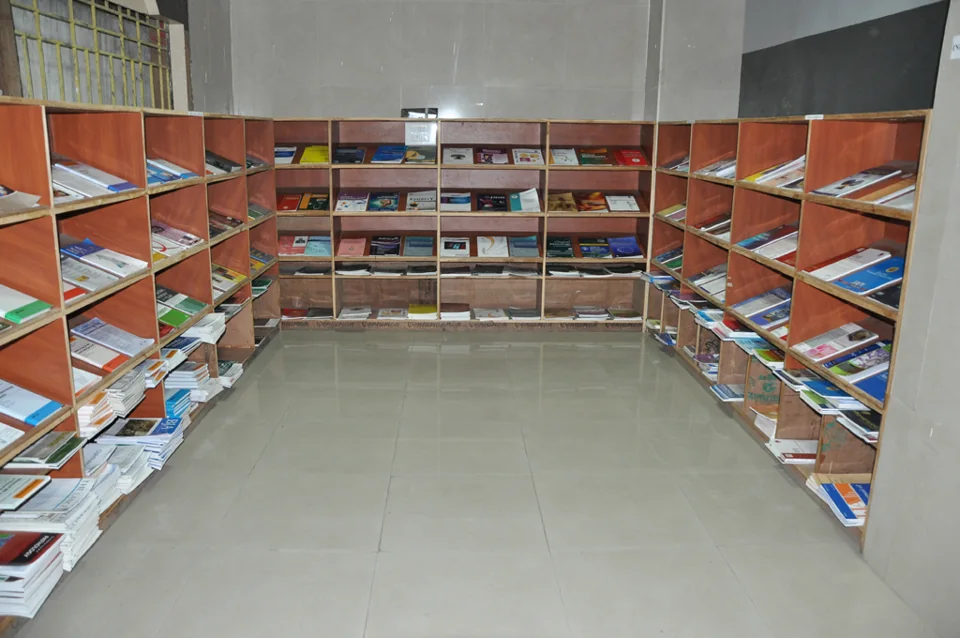
The Central Library serves medical students, faculty, practising doctors and researchers through collections of medical literature and reference resources. Its published description identifies books, Indian and international journals, electronic journals and an internet section as parts of its provision. Trained library staff help readers locate information relevant to their study and research.
The service list includes reference assistance, digital resources, reprography and photocopying, a question bank, inter-library loans, an online public access catalogue, circulation and periodical services. Audio-visual resources, user-awareness programmes and Wi-Fi access provide additional ways to use the collection. The library describes separate seating provision for undergraduate students, postgraduate students and faculty. These arrangements connect the use of printed medical literature with electronic discovery and support for different stages of education. The emphasis is on making subject information available through both collections and staff assistance, rather than relying on a single format of learning material.
Sources: Central Library ↗
Clinical skills and simulation education
The Department of Clinical Skills and Simulation provides a dedicated learning setting for undergraduate and postgraduate medical students, nursing and paramedical learners, and faculty. Its introduction connects the department with competency-based education and the opportunity to practise skills in a controlled educational environment.
The equipment described includes adult and paediatric task trainers and full-body mannequins for nursing, trauma and resuscitation scenarios. A birthing mannequin supports teaching related to delivery and newborn care. These are teaching models used to represent situations that learners may encounter in professional practice. The department also identifies basic and advanced life-support courses for providers and instructors among its educational activities. Its account explains simulation as the representation of real situations for learning through experience. This places the simulation department between theoretical instruction and supervised professional learning, providing another setting in which students can work on their developing capabilities.
Physiology teaching and research
The Physiology department was established in 2011. Its introduction describes faculty involvement in both teaching and research, supported by technical staff and several laboratory settings. These include haematology, clinical, electrophysiology, research and yoga laboratories.
The published facilities account refers to pulmonary-function and autonomic-function testing, electromyography, electroencephalography and evoked-potential work. These subjects form part of the department’s educational and research environment. Its mission emphasises a developed curriculum and the acquisition of professional skills, while its vision focuses on medical education and research in physiology. The department therefore presents the study of bodily function through a combination of academic instruction, laboratory facilities and research interests.
Sources: Department of Physiology ↗
Biochemistry from undergraduate study to dissertation
The Biochemistry department also dates its establishment to 2011. It describes a student laboratory, a demonstration hall with a smart board, a seminar and library room, and a postgraduate research laboratory. Textbooks and national and international journals support subject learning alongside practical work.
Postgraduate education is organised through lectures, practical classes, laboratory activity and a dissertation. The department records weekly journal clubs moderated by faculty, seminars and short-topic discussions. Students maintain a logbook of skills acquired during training. Dissertation work introduces the design and conduct of research, interpretation of findings and statistical analysis. Undergraduate teaching includes self-directed learning, integrated teaching, early clinical exposure, small-group teaching, seminars, quizzes and electronic modules. Attitude, ethics and communication are also identified within the teaching approach. Faculty provide academic support and feedback on examination performance. These different activities connect biochemical knowledge with practical learning, discussion of research literature and the responsibilities associated with professional education.
Sources: Department of Biochemistry ↗
Mentoring throughout medical study
The college’s mentoring programme provides a structured relationship between faculty mentors and medical students. Its published framework covers orientation and goal-setting, academic progress, personal challenges, behaviour, talent development, examination preparation and a review of progress at the end of the year.
The programme describes monthly meetings and a logbook maintained across the undergraduate course. A joint mentor provides an alternative point of contact when the primary mentor is unavailable. Records are also supported through the college’s student-support portal. The operating guidelines ask mentors to help students organise learning time, balance academic and extracurricular interests, and discuss difficulties affecting progress. They also encourage suitable students to participate in research. The stated aim is a supportive, student-friendly environment in which learners can review their development and set further goals. Mentoring is therefore presented as an ongoing educational relationship rather than a single induction activity at the start of medical college.