Visa
About Anna University Regional Campus, Coimbatore
Anna University’s regional campus in Coimbatore
Anna University Regional Campus, Coimbatore is part of Anna University in Tamil Nadu, India. The campus website dates its establishment to 2007 and identifies its location on Maruthamalai Road at Navavoor, Coimbatore. Its educational provision centres on engineering and technology, with management also included in the academic programme list.
The campus presents its educational purpose through technical learning, research, innovation and cooperation with industry. Its dean’s message emphasises connecting theoretical knowledge with practical application, while encouraging ethical conduct, critical thinking and leadership. The current programme overview identifies computer science, electronics and communication, electrical and electronics, and mechanical engineering, alongside artificial intelligence and data science and electronics engineering in VLSI design and technology. Management provision includes an MBA and an MBA in business analytics. These programmes are presented as offerings of the Coimbatore regional campus, within the wider Anna University institution.
Sources: Campus overview, academic programmes and location ↗
Computing and practical learning
The Department of Computer Science and Engineering offers full-time undergraduate programmes in computer science and engineering and in artificial intelligence and data science. Its introduction describes a curriculum combining theoretical foundations with practical learning. Programming languages, computer architecture, operating systems, computer networking, cryptography and artificial intelligence are among the core subjects it identifies. Electives provide further opportunities to study developments in computing.
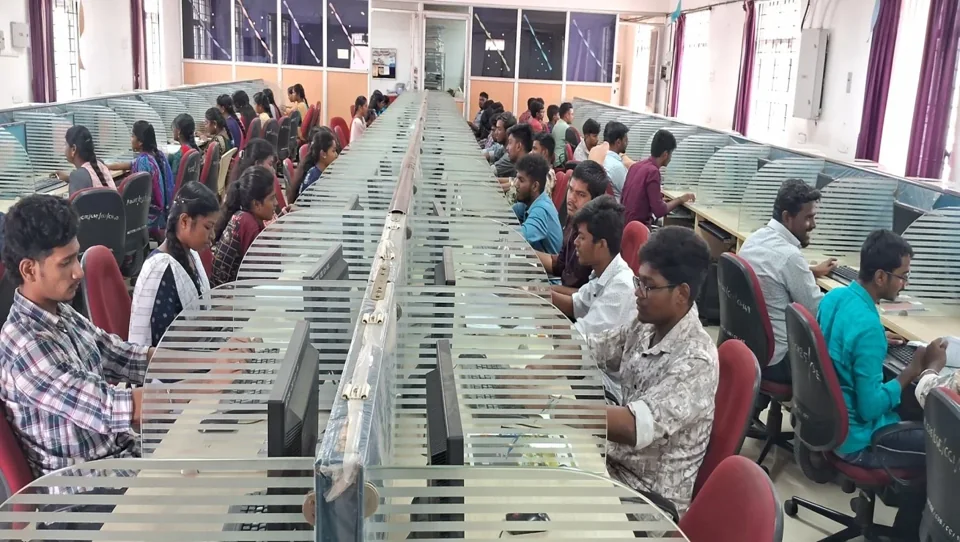
The department’s facilities section presents a Python laboratory and a database laboratory, with photographs of the teaching spaces. Its educational aims include research, innovation and cooperation with industry and other academic organisations. The department also publishes records of student participation beyond routine coursework. Dated examples include a twenty-four-hour hackathon in June 2023, technical paper presentation in March 2024, and speech, writing and athletics events. This account places technical study alongside opportunities to communicate, collaborate and participate in wider campus activities.
Sources: Computer Science and Engineering department ↗
Electronics and communication engineering
The Department of Electronics and Communication Engineering dates its establishment to 2007. Its academic page lists two full-time, four-year undergraduate degrees: electronics and communication engineering, and electronics engineering with a focus on VLSI design and technology. The department describes its field through electronic devices, circuits, communication systems and networks, connecting theoretical concepts with practical applications.
Its published facilities include laboratories for applied electronics, digital signal processing, communication systems, communication networks, microprocessors and microcontrollers, VLSI design, advanced communication systems and embedded systems. The equipment descriptions identify workbenches, oscilloscopes, function generators, computers and educational development boards. The applied-electronics account also refers to simulation software used with laboratory computers. Together, these facilities support different scales of work, from studying individual components and processor systems to the design and analysis of communication and digital circuits. Research and project activity are presented alongside this teaching provision.
Sources: Electronics and Communication Engineering department ↗
Mechanical engineering and research interests
The Mechanical Engineering department began with undergraduate study in 2007 and subsequently introduced postgraduate programmes. Its current programme listing identifies a full-time bachelor’s degree in mechanical engineering. The departmental introduction describes laboratory equipment for fluid mechanics, thermal engineering and aerodynamics, together with a dedicated computer-aided design, manufacturing and engineering laboratory.
The department identifies faculty research interests in materials science, energy engineering, optimisation, quality engineering, supply-chain management, aerodynamics, robotics and intelligent systems, ergonomics and tribology. Its account encourages students to develop project ideas related to emerging technologies and to work with support from industry. Professional commitment, problem-solving methods, ethical engineering and service to the community appear in its educational mission. This combination of laboratory learning, design tools and project work explains how the department connects mechanical engineering subjects with research interests and practical engineering problems.
Sources: Mechanical Engineering department ↗
Library resources and academic services
The campus library was established in 2007 within the School of Management Studies and is described as occupying the south wing of the newer campus building. Its collections cover science, engineering, technology, the humanities, social sciences and management. Materials include books, journals, theses, project reports, standards and other reading resources.
Library services include reference assistance, resource sharing, online journals, databases, a question bank, scanning and printing. The published description identifies E-granthalaya automation software and circulation services. A digital library provides computers and internet access for electronic resources, presentations and project-related work. Separate reading, reference, circulation and periodical sections support different uses of the collection. Reference staff help users locate information and documents, while journal subscriptions are informed by recommendations from academic departments. Print journals and back volumes remain part of the provision alongside networked electronic access.
Sources: Regional campus library ↗
Sports and participation beyond academic study
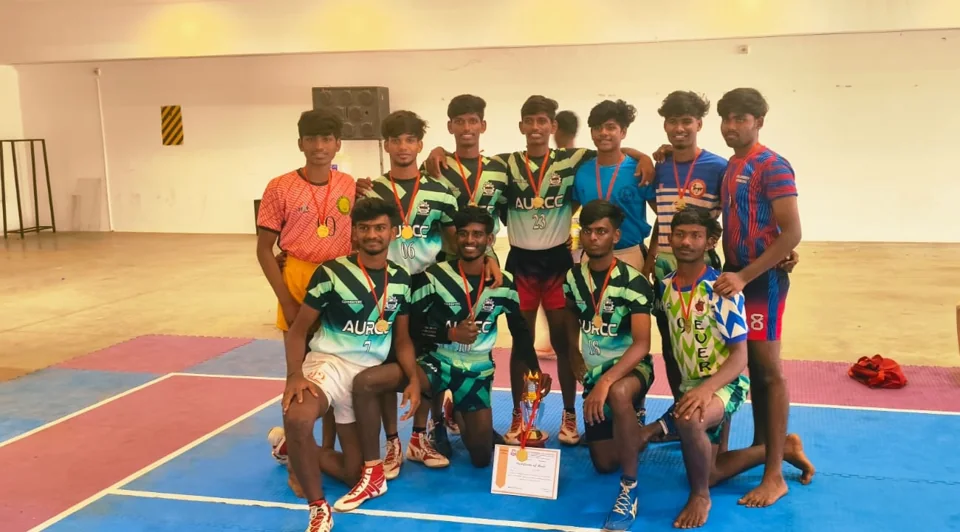
The Department of Physical Education forms part of the university sports board. Its campus page describes participation in zonal and inter-zonal competitions for men and women, as well as the organisation of tournaments. Indoor activities listed include table tennis, carrom and chess. Outdoor provision includes badminton, kabaddi, volleyball, football, cricket, hockey, basketball and kho-kho.
The department’s gallery records activities across several academic years. Examples include a campus-hosted men’s cricket tournament in September 2024 and a football tournament in September 2025. More recent entries document an intra-college kabaddi league held from 5 to 10 March 2026 and a free summer sports coaching camp inaugurated on 1 May 2026, followed by its valedictory ceremony on 20 May. These dated records show organised recreation, competitive sport and coaching as recurring elements of life at the Coimbatore campus.
Sources: Physical Education department and campus sports gallery ↗