Visa
About Ankara Sosyal Bilimler Üniversitesi
A social sciences university in Ankara
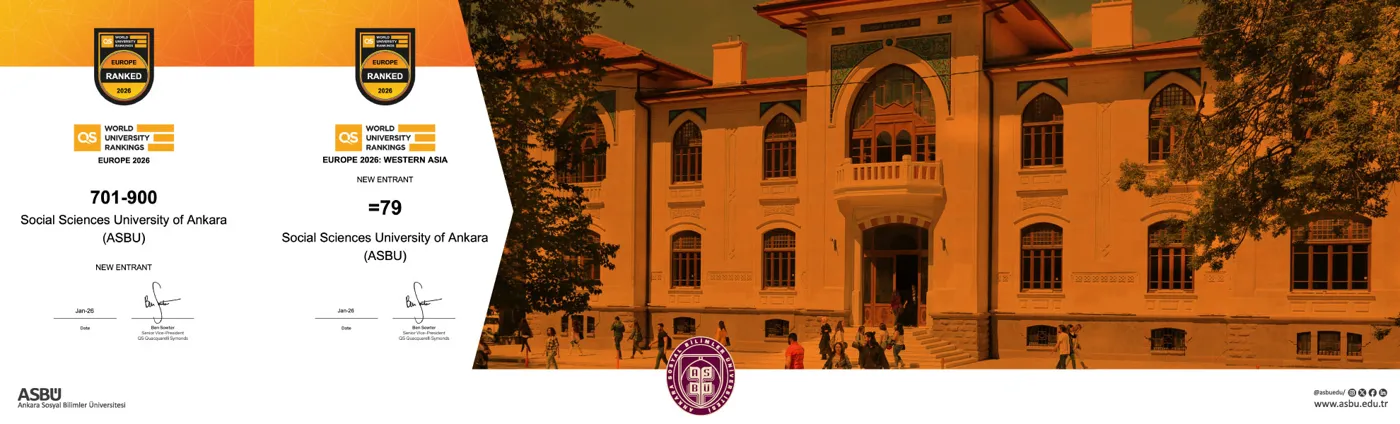
Ankara Sosyal Bilimler Üniversitesi, also known in English as Social Sciences University of Ankara, is a university in Ankara, Türkiye. Its university address is in Ulus, in the Altındağ district. Undergraduate education spans languages, humanities, social sciences, law, business and related fields. The programme directory brings together economics, business, international relations and political science and public administration alongside philosophy, sociology, history and psychology.
Language study has a substantial place in this range. Students can find English language and literature, Turkish language and literature, and translation programmes involving Chinese, Spanish, Japanese and Russian. The directory identifies the language arrangements of individual degrees: several social science programmes are English-medium, while law and philosophy include a thirty-percent English component. Theology includes a thirty-percent Arabic component. New media and communication also appears among the undergraduate options. These subject and language combinations give the university an academic portfolio centred on understanding societies, institutions, texts and communication.
Sources: Undergraduate programmes ↗
Graduate research across disciplinary boundaries
The Social Sciences Institute organises graduate education through both established disciplines and interdisciplinary fields. Its disciplinary departments include public and private law, economics, philosophy, psychology, sociology, business, international relations, political science and public administration, and English and Turkish literature. The institute provides master's and doctoral education, with the available level depending on the programme.
Interdisciplinary departments connect this disciplinary base with particular questions and settings. Examples include energy economics and management, cultural policy and management, disaster and humanitarian aid management, technology policy and innovation, and international trade and logistics. Other fields include Middle East studies, women and family studies, translation studies, media and communication, and information technology and technology law. The institute describes its educational purpose in terms of developing research capability and methodological skills. Academic decisions pass through the institute council, while administrative matters are handled by its management board; the institute director chairs both bodies.
Sources: Social Sciences Institute: about ↗
Legal education and its stated aims
The Faculty of Law describes its programmes as a means of producing knowledge and addressing social needs. Its stated educational aims combine legal knowledge with reasoning and research skills, attention to universal legal values, and the capacity to recognise social problems and propose solutions. The faculty also places democratic public life within this account of legal education. Alongside its undergraduate law degree, taught with a thirty-percent English component, it provides postgraduate study at master's and doctoral levels. This connects its teaching mission with legal scholarship rather than presenting law solely as professional examination preparation.
Sources: Faculty of Law: about ↗
Building the library collection
The university library develops a collection of printed books, periodicals and theses, audiovisual material, and electronic resources. Its collection policy links acquisitions to teaching, research and cultural needs. Selection considers the range of subjects, languages and formats required by users, the currency of material, and whether the collection adequately supports the university community. Academic requests receive priority when they fit those needs, while literary and cultural works also have a place beyond individual courses.
Purchases operate within the annual budget, with requests from academic units submitted through the relevant dean's approval. Donations are assessed against selection criteria rather than accepted automatically. The policy considers physical condition and the completeness of multi-volume works, and excludes categories such as photocopied books and examination preparation material. Donor information is recorded. These arrangements make collection development a continuing process of selection, acquisition and assessment rather than simply an accumulation of donated volumes.
Sources: Library collection development ↗
Using and borrowing library material
Academic and administrative staff and students can use the library's membership and lending arrangements. Borrowing takes place at the lending desk with a university identity card, and responsibility for an item continues until it has been returned. Renewal is possible twice when another reader has not requested the material. Overdue items interrupt further borrowing, while the library can recall material when required.
The lending rules distinguish material that may circulate from resources retained for consultation. Reference works such as dictionaries and encyclopedias, unbound periodicals, unpublished theses, maps and microforms are among the categories that do not normally leave the library. Reserve, rare and manuscript collections, art collections and particularly fragile items also receive special treatment. Loan allowances differ by user category and material type. Together, the rules support individual study while keeping specialist or vulnerable resources available within the library for other readers.
Sources: Library lending services ↗
A symposium connecting law and history
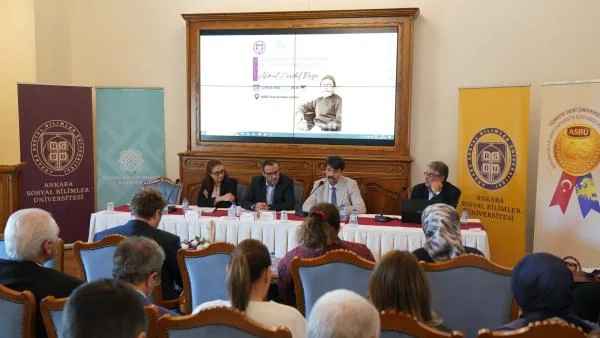
On 22 October 2026, the Faculty of Law organised a day-long symposium on Ahmet Cevdet Pasha with the Atatürk Culture Centre Presidency. Held in Sezai Karakoç Hall, it examined his work as a historian, jurist and statesman, bringing several disciplinary perspectives to late Ottoman intellectual and institutional history.
The first session addressed historiography, perceptions of Russia and the Balkans, and Ottoman modernisation. The second moved into public administration and law, including merit in administration, the judicial organisation inherited by the Republic, pre-emption in the Mecelle and Turkish civil law, and the development of private-law terminology. A further session considered his legal identity, Quranic commentary and work as an official historian. The event illustrates the faculty's use of historical scholarship to examine the development of legal institutions and ideas.
Sources: Ahmet Cevdet Pasha symposium ↗
Civil law as a subject of academic discussion
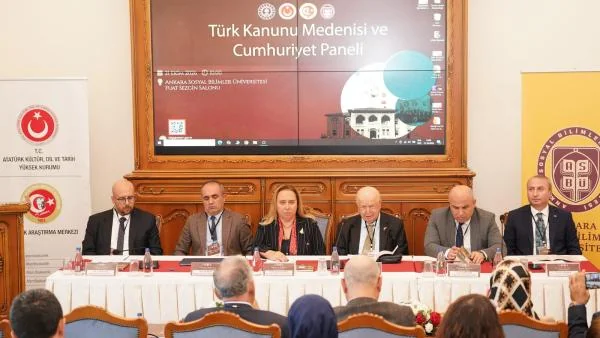
A separate faculty event on 21 October 2026 marked the centenary of the adoption of the Turkish Civil Code. Organised with the Atatürk Research Centre Presidency, the panel used Sezai Karakoç and Fuat Sezgin halls. Its programme considered the code's historical development, its position within private law, and its effects on social life.
Opening presentations discussed the Swiss basis of the code, legal unity, equality in inheritance and the development of the civil-law system. Subsequent sessions addressed contemporary scholarly questions, including inheritance partition agreements, the family home, maintenance, digital inheritance and the best interests of the child. The faculty's report also provides links to video recordings of the opening and later sessions. This gives the event a documented dimension beyond the meetings themselves, making its academic discussions available for subsequent viewing.
Sources: Turkish Civil Code centenary panel ↗