Visa
About Ankara Social Science University
Social sciences in the heart of Ankara
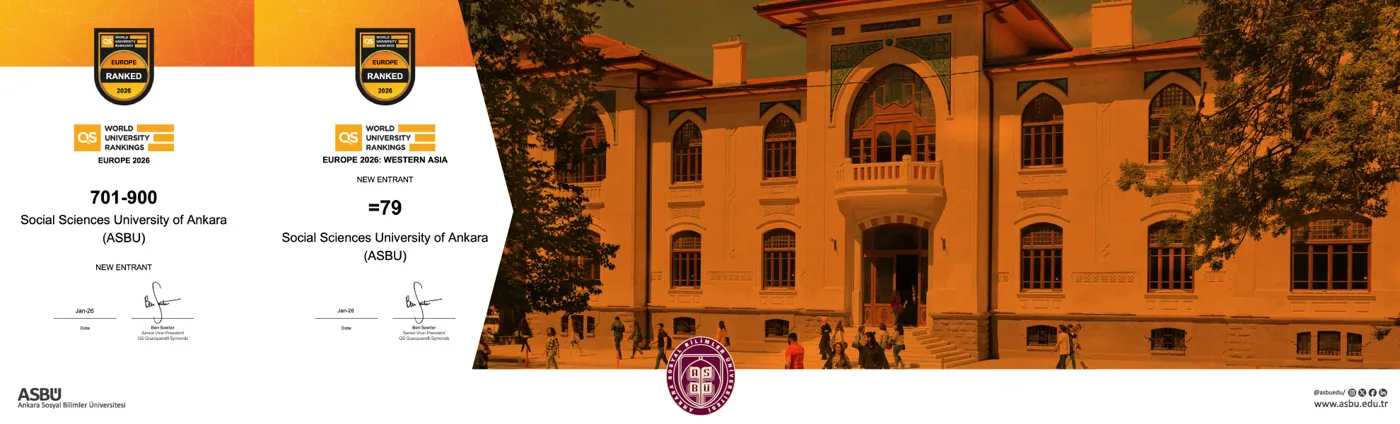
Ankara Social Science University is the directory name for Ankara Sosyal Bilimler Üniversitesi, commonly abbreviated ASBÜ and known in English as Social Sciences University of Ankara. Established in 2013, it is a public university specializing in the social sciences. Its central setting in Ulus places teaching and research within one of Ankara's historic urban districts, close to important civic and cultural sites.
The university's introduction describes an institution oriented toward research, postgraduate education, international cooperation and interdisciplinary study. Its rectorate occupies a building designed by Yahya Ahmet Bey in 1925, which served as the prime minister's offices until 1937 and was assigned to the university in April 2013. The institution presents this historic environment as part of its educational character. Across its teaching, it emphasizes active student participation, critical analysis, practical involvement in projects and opportunities to study subjects beyond a single disciplinary boundary.
Sources: General information about ASBU ↗
A model linking research and society
ASBÜ's account of its university model places research centres at the heart of its academic structure. It describes an approach in which social problems are discussed through research, developed into publications and postgraduate study, and communicated through undergraduate teaching and interaction with wider society. This model connects the production of knowledge with its possible use by public bodies, businesses and civil society.
Its academic structure includes faculties concerned with theology, communication, law, political sciences, art and design, social sciences and humanities, and foreign languages. Graduate institutes address regional studies, Islamic studies, social sciences, and social research and innovation. The university also identifies Sosyokent as a setting for developing innovative responses to social questions. Its stated educational ambition extends beyond specialist professional preparation to the development of people able to understand problems from different perspectives, interpret evidence and contribute to solutions. International cooperation and multilingual, multicultural learning are recurring priorities.
Sources: The ASBU university model ↗
Reuse and sharing as campus activities
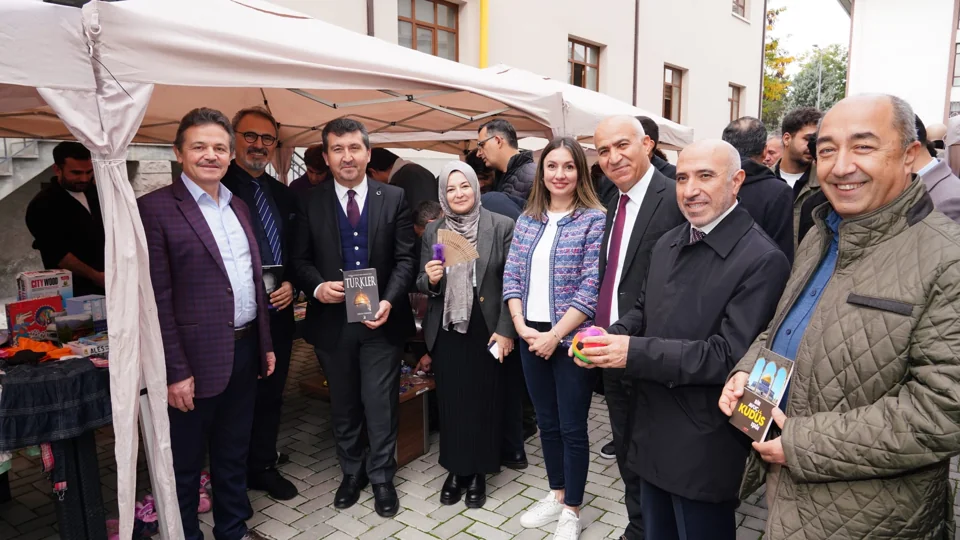
On 2 November 2026, ASBÜ opened the fourteenth exhibition in its reuse project, organized within the Faculty of Social Sciences and Humanities. The event took place in the rear garden of L Block and brought together students, academic staff and administrative employees. Its purpose was to encourage ecological awareness, careful use of resources and a culture of sharing.
The project coordinator explained that the exhibitions began around a single table in 2017 and had continued for nine years. Usable second-hand items were made available to the university community without charge throughout the day. Speeches considered both environmental awareness and social solidarity, as well as possible cooperation with additional partners. The report offers a concrete example of a campus activity in which environmental concerns and everyday participation meet, with practical attention to extending the useful life of objects.
Sources: Fourteenth reuse exhibition, November 2026 ↗
Building an international cooperation framework
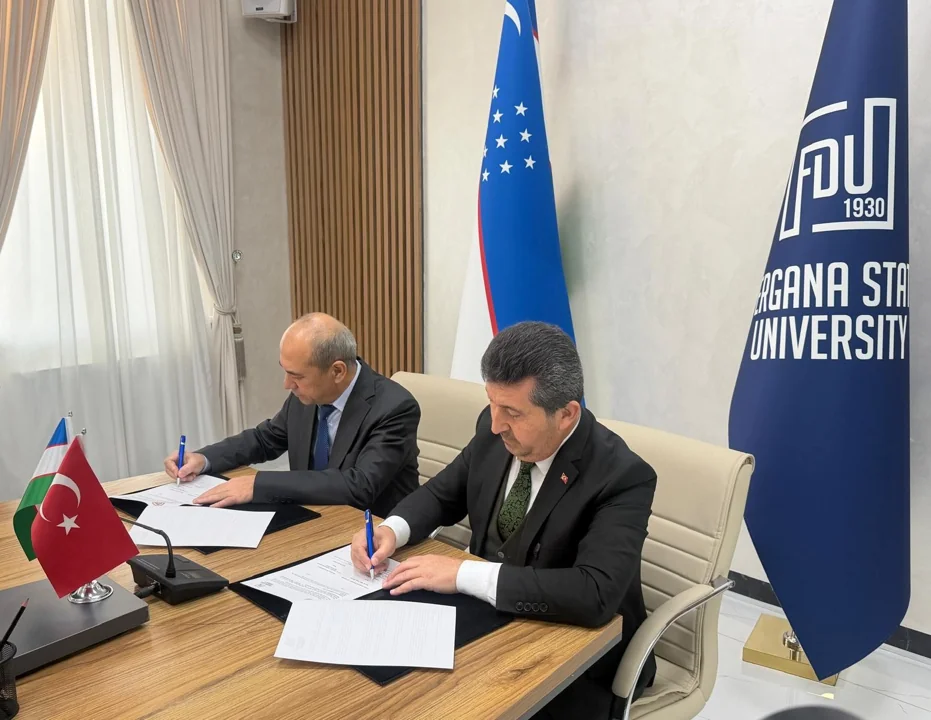
ASBÜ and Fergana State University in Uzbekistan signed a memorandum of understanding on 30 October 2026. The agreement established a framework for cooperation in education, research and academic development. Its provisions cover academic and administrative staff mobility, student exchanges, sharing publications and information, and organizing scientific meetings and joint academic events.
The universities also identified joint research projects, cooperation on funding applications, pilot work and interaction between researchers as priorities. Teaching, seminars, institutional visits and support for student internships were included in the proposed areas of collaboration. Detailed plans were to be developed through further agreements between the relevant university units, with activities reviewed after each implementation period. Financial commitments would depend on the institutions' own budget resources. The report therefore describes the creation of a cooperation framework and its intended workings, providing a dated example of international engagement without implying that every proposed exchange or project had already taken place.
Sources: Academic cooperation agreement with Fergana State University, October 2026 ↗
Learning to use digital academic resources
The university library supports learning through user education as well as access to information resources. On 8 October 2026, its Library and Documentation Department held a Turcademy training session in the Fuat Sezgin Conference Hall. The event was intended for the university's academics and students and focused on effective use of digital academic content.
The training introduced the platform's academic materials, basic functions, advanced searching and access methods. It also considered how to obtain academic publications and use digital information resources during research. The library presented the session as part of its continuing work to introduce information sources and develop users' ability to find material. This example shows an instructional role for the library: alongside making resources available, it provides opportunities for members of the university to become more familiar with the tools and methods involved in academic searching.
Discovering the library through teamwork
Another library initiative used a competition to encourage exploration of its resources and services. The Library Treasure Hunt ran from 19 to 23 October 2026. Students completed tasks designed to develop their familiarity with the library and give them opportunities to use information-access skills in practice.
Awards were presented to the leading teams at a ceremony in the library on 26 October. Students and the staff involved in organizing the activity also took commemorative photographs. The library's account emphasizes learning through discovery and encouraging effective use of information sources. It thanked the participating students and described an intention to continue activities that support library knowledge and skills. As a dated example of student participation, the treasure hunt complements formal user-training sessions by making the exploration of academic resources a shared activity involving tasks, teams and recognition of participants' work.