Visa
About Ankara Dr. Abdurrahman Yurtaslan Oncology Training and Research Hospital
Hospital identity and development
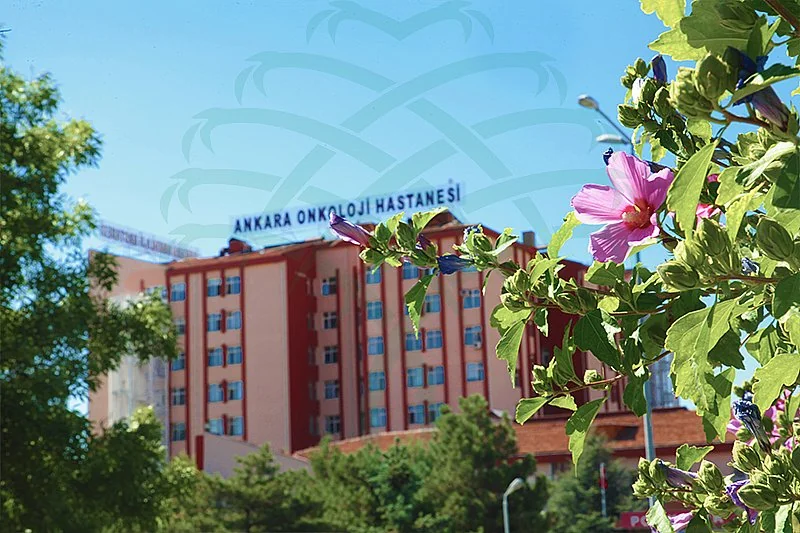
Ankara Dr. Abdurrahman Yurtaslan Oncology Training and Research Hospital is an Ankara institution combining specialist hospital services with professional education and research. Its official history identifies it with the University of Health Sciences. The institution traces its establishment to 1952 and the opening of Ahmet Andiçen Oncology Hospital in the Kurtuluş district to 1956. Support from public authorities and charitable contributors formed part of its early development. Responsibility passed to the Ministry of Health in 1962.
Its geography changed as the hospital developed. An Etimesgut service building opened in 1967, and the Kurtuluş and Etimesgut units were brought together administratively in 1971. The new Yenimahalle building entered service on 6 April 1989. Training and research hospital status followed in 1997, with the Dr. Abdurrahman Yurtaslan name adopted in 2000. Later additions included the Urankent supplementary building in 2007, a clinical research centre in 2017 and a phase-one drug research centre in 2019. These milestones explain the hospital’s combined clinical, educational and investigative identity.
Sources: Institutional history ↗
Coordinating professional learning
The Education Unit coordinates education, orientation, internships and academic development across the hospital. Its responsibilities begin with helping newly appointed staff understand the institution and the departments where they will work. It also plans professional and personal development activities around the needs of individual units, then evaluates the effectiveness of those activities and their performance results.
Student placements involve cooperation with universities, secondary schools and other educational institutions. The unit manages applications, acceptance, orientation and the schedules for practical training within departments. Scientific meetings require a separate layer of coordination: conferences, seminars, workshops, congresses and academic-board events depend on rooms, technical equipment, content planning and logistics. Annual education calendars take account of public holidays, administrative leave, staff requests and needs identified in practice. The unit’s description also includes theoretical and practical professional development with specialist trainers, alongside the administrative arrangements for certification. Education is therefore organised as an ongoing institutional function involving staff, visiting learners and academic events.
Sources: Education Unit ↗
Research ethics and participants
The hospital’s Clinical Research Ethics Committee describes its central purpose as protecting the rights, safety and wellbeing of volunteers participating in clinical research. Its account connects scientific methods with the concerns of society, placing participant protection within the institution’s research responsibilities. The committee provides comprehensive and independent ethical examination of submitted studies.
The published description identifies the Declaration of Helsinki and national and international Good Clinical Practice standards as reference points for that work. It also describes responsibilities toward regulatory bodies, applicants and the public. This gives the hospital’s research profile an explicit ethical component: scientific investigation is accompanied by a defined structure for reviewing the treatment of human participants and the ethical characteristics of proposed studies.
Sources: Clinical Research Ethics Committee ↗
Institutional aims and educational resources
The hospital’s published mission gives cancer a priority while also encompassing the other health fields in which its teams specialise. Education and research sit alongside service provision. Its stated values include public benefit, teamwork, scientific enquiry, transparency, fairness, social responsibility and respect for patients’ rights. The quality policy places attention on both patients and employees and on continuing improvement of the working environment.
Its educational objectives include in-service and personal development opportunities for health workers at different levels. Other stated aims concern scientific meetings with international participation, access to professional databases through an electronic library, and the preparation of guides, books, atlases, audiovisual teaching materials and quality documents. The policy also calls for support for national and international scientific research. These are expressed institutional objectives, linking professional knowledge, teaching resources and organisational development rather than presenting education as a single course or qualification.
Sources: Mission, vision and objectives ↗
International professional exchange
A recent official report records the completion of six-month training programmes by two doctors visiting from Somalia. One trained in surgical oncology and the other in medical oncology. The programme was intended to develop knowledge and experience within their respective specialities and extend familiarity with contemporary diagnostic and treatment approaches.
The hospital presented the visit as an example of international professional education and knowledge exchange. Its report described the hoped-for application of that experience after the doctors returned home. The documented activity concerns specialist professional training hosted by the hospital, connecting its educational work with practitioners from outside Türkiye.
Digital systems as a workshop subject
The hospital’s New Generation Hospital Information Management System workshop examined digital transformation and the integration of hospital systems with wider public-sector infrastructure. Its scope extended beyond clinical software to the administrative processes supporting a hospital. Topics included personnel management, budgeting, procurement, official correspondence, electronic signatures, stock management and medical-product tracking.
Participants also considered links with health-information sharing and social-security systems. The workshop’s stated goal was an integrated digital infrastructure in which these processes could operate through a common data framework. Its report discussed data quality, access to information, decision support and the potential contribution of artificial intelligence. These were subjects and objectives of the meeting, documenting an institutional learning activity about hospital organisation and technology. The event illustrates how the hospital’s professional discussions include information management and public administration alongside medical subjects.
Sources: New Generation Hospital Information Management System workshop ↗
An academic calendar and meeting place
The opening ceremony for the 2026–2027 academic year took place on 9 October 2026 in Korkut Akoğuz Conference Hall. The programme began with an address by the urology clinic’s administrative and educational lead. A subsequent presentation considered observations from China, developments in health technologies and approaches centred on people.
The hospital’s account addressed physicians, researchers and the wider health community as participants in the new academic period. This ceremony provides a concrete example of its academic calendar and the use of a dedicated conference venue for shared scientific discussion.
Sources: 2026–2027 academic-year opening ↗