Visa
About Anjuman Islam Janjira Degree College of Science
A science college in Murud-Janjira
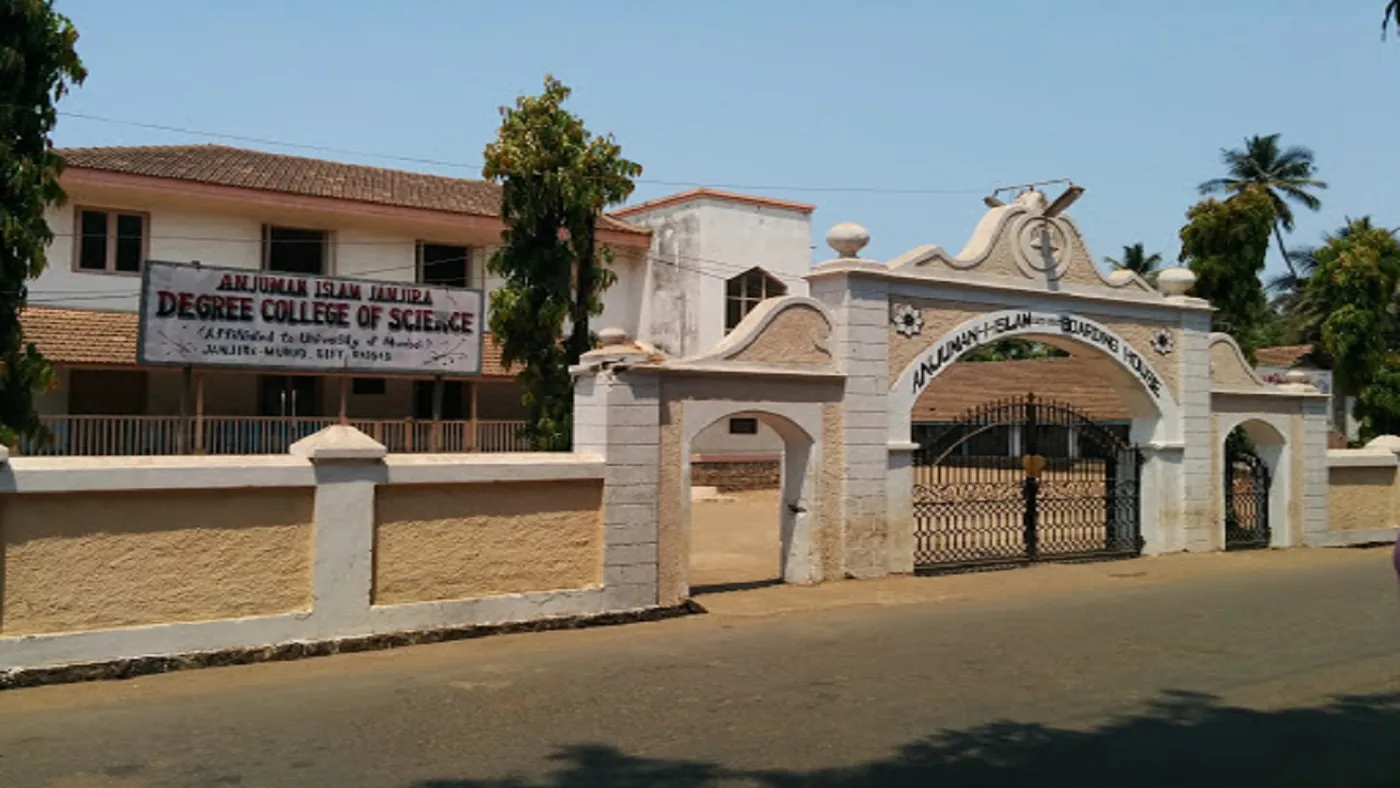
Anjuman Islam Janjira Degree College of Science is located in Murud-Janjira in Maharashtra’s Raigad district. Affiliated with the University of Mumbai, it began in the 2009–2010 academic year with general science education. The institution is also known as AIJ Degree College and AIJ Murud College.
Its published history records a sequence of academic expansion. Undergraduate computer science was added in 2011–2012, followed by postgraduate chemistry and botany in 2021–2022. Commerce in accounting and finance and management studies were introduced in 2022–2023. This development broadened the college’s original science focus while retaining advanced study in laboratory-based subjects. The college’s stated objectives connect education with helping students discover their abilities, develop an independent outlook and build the confidence to participate in wider society.
Sources: Official college history ↗
Educational purpose and student development
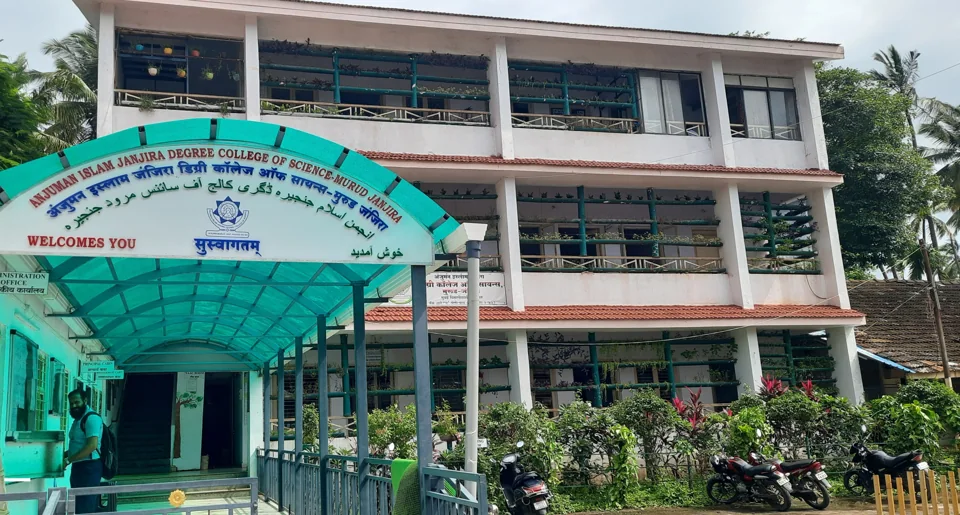
The college’s vision places students at the centre of its educational environment. Its mission emphasises scientific thinking, awareness of quality, management skills and human values. These priorities connect subject knowledge with the personal and professional capabilities students develop during higher education.
The stated objectives include communication, leadership and social skills, together with professional ethics, critical thinking and innovation. The college also seeks to provide opportunities for students to display their talents and to prepare for further study, employment or self-employment. Its policy objectives give particular attention to learners from financially constrained backgrounds, women and minority communities. Scholarship support for deserving students is identified as one way of addressing disadvantage. These are institutional educational aims, expressed alongside an emphasis on perseverance and the development of students’ individual abilities, rather than a narrowly examination-focused account of college life.
Sources: Vision, mission and objectives ↗
Degree study and supplementary learning
The college’s published course list includes undergraduate botany, chemistry and computer science, management studies, commerce in accounting and finance, and postgraduate chemistry and botany. The postgraduate programmes are listed as two-year courses. Science, computing and commerce therefore sit alongside one another in the institution’s academic provision.
The same page records shorter supplementary courses by academic year. Its 2024–2025 list includes floriculture, transition metal chemistry, bio-entrepreneurship, Google Workspace, accounting software with GST, plant developmental biology, usable security, Indian feminisms, experimental nanobiotechnology and waste-to-energy conversion. Earlier entries document subjects such as mushroom and spirulina cultivation, tissue culture skills, spreadsheets, web design and laboratory safety. These dated records show an effort to connect degree subjects with additional practical, digital and interdisciplinary learning. The range extends from biological and chemical science to office applications and entrepreneurship, allowing supplementary study to address topics that cross the boundaries of a single degree subject.
Mentoring and individual academic support
The Mentor–Mentee Scheme, described in a document updated in August 2025, responds to the college’s rural and coastal setting and the presence of first-generation learners. It establishes a structured relationship between faculty mentors and students in undergraduate and postgraduate programmes. The internal quality assurance cell prepares mentor allocations at the beginning of each academic year.
Mentors are expected to meet students, monitor attendance and academic progress, identify difficulties and connect learners with appropriate college support. Remedial classes, including English language support, are among the measures described. Advanced learners are encouraged to participate in research and competitions. The scheme also provides for supervised peer support from final-year students to first-year learners. Orientation, diagnostic tests and digital learning materials support the process. Student feedback and mentor records are intended to inform review of the scheme, linking individual guidance with the college’s wider arrangements for improving student support.
Research as a shared learning activity
The college’s Innovation–Incubation–Research practice document describes an approach in which teachers mentor students working on selected research problems. Groups develop an action plan, meet during the semester, carry out their work and prepare reports. A committee reviews projects and helps identify opportunities for presentation at research events.
The document records participation in the Avishkar research convention across the academic years 2018–2019 to 2022–2023. It also describes workshops, conferences and financial support for research-related participation. Recorded themes include energy and the environment, intellectual property, research project preparation and developments in chemical, physical, life and computer sciences. International online conferences on these science and technology subjects were organised in March 2022 and March 2023. The account places research activity within a teaching environment: students develop ideas with faculty guidance, communicate their findings and encounter work presented by other participants, rather than treating research as separate from learning.
Sources: Institutional Best Practice 2: Innovation–Incubation–Research, 2018–2023 evidence ↗
Community participation beyond the classroom
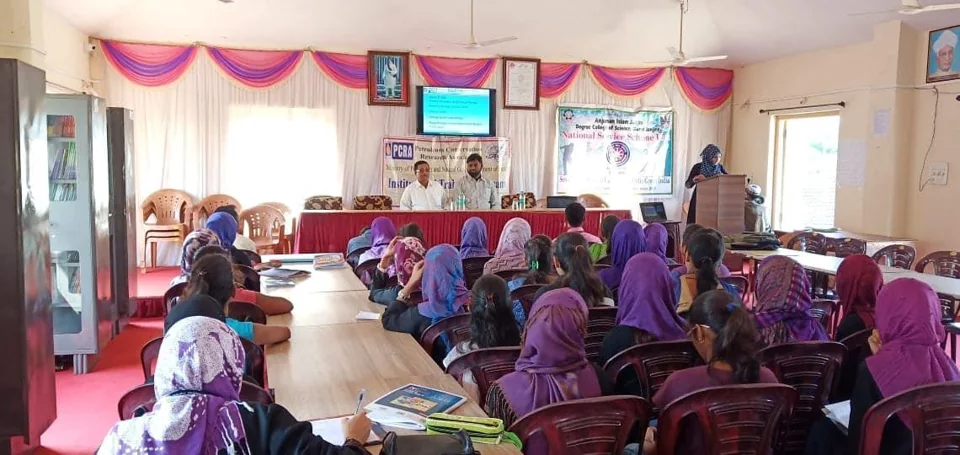
The college’s community-service practice document records activities carried out through student volunteers, faculty, alumni and committees including the National Service Scheme and the Department of Lifelong Learning and Extension. Its educational purpose is to develop awareness of social responsibilities through participation in local activities.
Examples include collecting and distributing educational materials for schoolchildren affected by the 2021 Mahad floods. A July 2022 camp helped residents with certificates issued through the revenue authorities. The document also describes contributions of blankets and other assistance to local communities, with staff and students organising activities together. On Children’s Day in November 2022, schoolchildren from Murud’s municipal school visited the college for science-related learning. These historical examples connect the college with its surrounding community and give students opportunities to work with others on practical tasks outside their regular courses. The emphasis is on participation, cooperation and attention to local needs.
Sources: Institutional Best Practice 1: community service, 2018–2023 evidence ↗