Visa
About Anil Neerukonda Institute of Technology & Sciences
An engineering institute near Visakhapatnam
Anil Neerukonda Institute of Technology & Sciences, usually known as ANITS, is located in Sangivalasa village in Bheemunipatnam Mandal, Andhra Pradesh. Its campus is approximately twenty-seven kilometres from Visakhapatnam and three kilometres from Bheemunipatnam. The institute was established in the academic year 2001–02. Its founder, Dr N. B. R. Prasad, created the institution in memory of his son, Anil Neerukonda. The institute’s educational provision encompasses undergraduate and postgraduate study in engineering and technology, alongside management. Its stated approach brings technical education together with professional expertise and human values. The institutional overview identifies teaching quality and the development of people as priorities, with an emphasis on responding to industrial needs. Its founding objectives also include responsible citizenship and international educational and cultural understanding. The location close to the Chennai–Kolkata highway connects the campus with the wider Visakhapatnam region, while its academic departments provide the main settings for specialist technical study.
Sources: Institute overview ↗
Library support for study and research
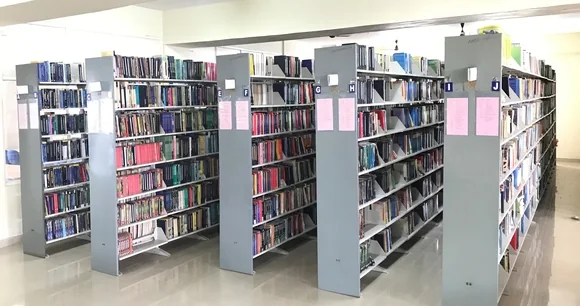
The Central Library organizes its work around access to information and support for academic learning. Its stated mission includes developing and maintaining collections, working with faculty and students, and teaching users how to locate and evaluate resources. The library presents both physical and digital collections as part of its engineering information provision. Reference, journal and digital library areas appear in its published account of the facilities. Its service links include book lending, a book bank, reference assistance, project reports and older examination papers. Electronic journals and NPTEL video lectures complement printed material. The library also emphasizes communication with users and cooperation through wider information networks. These functions connect resource management with instruction, giving the library an educational role alongside its responsibility for maintaining collections.
Sources: Central Library ↗ · Library services ↗
Computing through projects and practical work
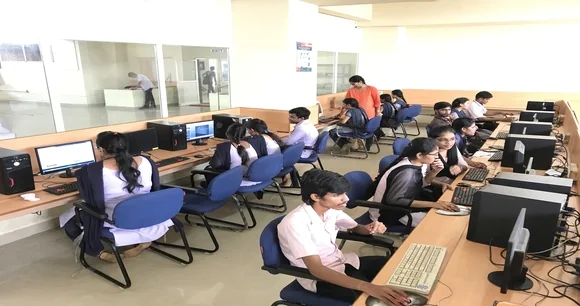
The Computer Science and Engineering department describes a learning environment that combines computing fundamentals with practical work in newer fields. Areas identified in its departmental introduction include artificial intelligence, data science, machine learning, cybersecurity and software engineering. Laboratory work, projects, internships and technical events form part of its published teaching approach. The department also encourages innovation and entrepreneurship, with student development extending to critical thinking, creativity, ethical responsibility and leadership. Its programme description includes a four-year Bachelor of Technology in Computer Science and Engineering. The stated programme aims cover programming and software development, the formulation of computing problems, and the use of knowledge in information security, data engineering and related domains. Its student organization links include coding, analytics, Internet of Things, gaming and cyber-related clubs. Alongside these technical interests, the department lists sporting, cultural and community-oriented groups, placing specialist computing activity within a wider student community.
Electrical engineering and control systems
Electrical and Electronics Engineering has been part of ANITS since the academic year 2001–02. Its departmental programme list includes a four-year Bachelor of Technology and a two-year Master of Technology in Control Systems. The published account describes laboratories, a departmental computer centre and reference books supporting teaching and research. Students are encouraged to participate in professional societies and technical events. The department’s educational aims emphasize connecting theoretical understanding with practical implementation. Its subject-specific objectives include the design of power system components and the design, simulation, fabrication and testing of power switching devices, electrical drives and controls. The department also identifies smart grids, Internet of Things applications, automation and electric vehicles as areas informing its industry-oriented curriculum. More broadly, its programme outcomes address experimental investigation, the interpretation of data, teamwork and technical communication. These stated aims present electrical engineering as a combination of analytical study, practical development and professional responsibility.
Sources: Electrical and Electronics Engineering department ↗
Mechanical design and student engineering activity
The Mechanical Engineering department began in the academic year 2005–06, and postgraduate study in Machine Design followed in 2012–13. Its published facilities include laboratories, a departmental library, electronic classrooms, seminar and drawing halls, project rooms and spaces for student activities. The department’s educational objectives combine mathematics and science with computational, analytical and simulation tools. They also cover the design and development of mechanical systems, materials research, energy conversion and manufacturing processes. Workshops, specialist presentations, internships and projects supplement the regular curriculum. The department records the establishment of an e-Yantra robotics laboratory through collaboration with IIT Bombay’s initiative in 2018. An automotive hub followed in 2019 for student fabrication of electric vehicles and go-karts. Student activities include robotics groups, an entrepreneurship cell and engineering society chapters. Together, these facilities and groups provide practical settings for work that connects mechanical design, fabrication, automation and collaborative engineering.
Sources: Mechanical Engineering department ↗
Civil engineering and the built environment
Civil Engineering was established at ANITS in 2011. The department lists a four-year Bachelor of Technology in Civil Engineering and a two-year Master of Technology in Structural Engineering. Its account of teaching refers to internships, industrial visits and projects, supported by laboratories and software including STAAD Pro and ArcGIS. The stated educational approach combines technical skills with human values, leadership and an understanding of sustainable development. Subject-specific learning objectives address buildings and other structures, soil stability and foundations, transport systems, irrigation and water supply. They also include analysis of pollution affecting air, water and land. The department’s broader programme outcomes cover the use of research literature, experimental investigation, modern engineering tools and the interpretation of data. Communication, project management, finance and working in multidisciplinary teams are also included. This framework connects the design of physical infrastructure with the environmental, social and organizational questions involved in civil engineering practice.
Sources: Civil Engineering department ↗