Visa
About Anhui Zhong'ao Vocational College of Science and Technology
A public vocational college with international origins
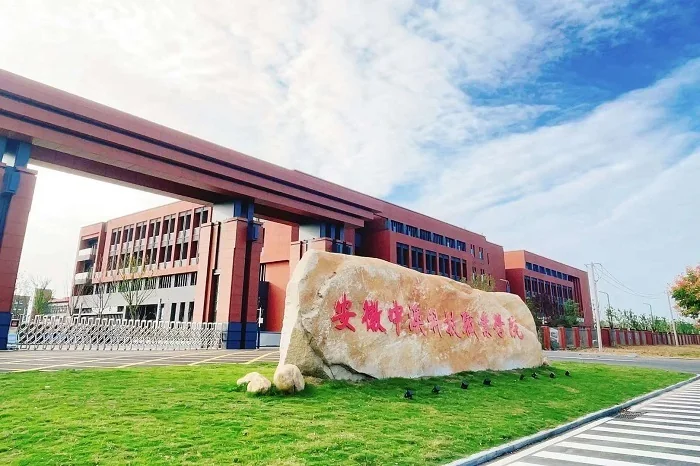
Anhui Zhong’ao Vocational College of Science and Technology is a public higher education institution affiliated with Anhui’s provincial science and technology department. Its Chinese name is 安徽中澳科技职业学院. Its origins lie in a 1998 science and education cooperation agreement between Anhui and Western Australia, under which the provincial science and technology training centre and an Australian TAFE institution established a continuing education college.
The institution began admitting students as an Anhui University specialist teaching site in 2000 and became the present vocational college in June 2003. It now has Luyang and Xinqiao campuses. Luyang is in Hefei’s urban area, while Xinqiao is in the Xinqiao industrial park’s university district. Its academic structure comprises schools of artificial intelligence, modern services, culture and tourism, and education and health. Practical teaching and cooperation with industry are central to its institutional approach.
Sources: Official college introduction ↗
Computing, intelligent technology and practical spaces
The Artificial Intelligence School traces its predecessor to Anhui’s provincial computing centre. Its introduction describes programmes spanning information technology and equipment manufacturing. These include artificial intelligence applications, computer networks, big data, industrial internet applications, software technology, unmanned aircraft applications, new-energy vehicle technology and embodied intelligent robotics.
Practical spaces include an artificial intelligence innovation workshop, industrial internet and new-energy vehicle training centres, a network security workshop, big data and mobile application studios, sensor facilities and automotive simulation resources. These settings support study across computing and applied engineering. Cooperation with iFlytek, Newland and Neusoft contributes to an industrial school concerned with artificial intelligence and smart factories. Other partnerships support new-generation information technology education and the industrial internet training centre. The school describes teaching arrangements involving mentors from both the college and enterprises, alternating study and practical work, and projects connected with industrial processes. Its teaching team also develops textbooks and applied research projects.
Digital skills across modern services
The Modern Services School brings together business, finance, construction and transport-related education. Its introduction, with data current to September 2025, lists areas including electronic commerce, marketing, online marketing and livestream commerce, accounting, financial management, engineering cost, intelligent construction, cabin services and urban rail operations.
The school describes the introduction of big data, artificial intelligence and new media marketing into its curricula so that students examine service and operational tasks in digital settings. Its practical resources include a virtual business simulation room, a livestream commerce centre, electronic commerce facilities, accounting simulation, engineering surveying and building information modelling spaces. Cabin service, movement and presentation training facilities support other areas of study. College teachers and part-time industry specialists contribute to instruction, bringing professional cases into classes. Teaching development is organised through subject teams, while placements and skills competitions provide additional settings for applying knowledge beyond routine classroom exercises.
Sources: Modern Services School introduction, data to September 2025 ↗
Tourism, hospitality and creative disciplines
The Culture and Tourism School combines tourism management with hospitality, culinary study and art and design. Its programmes include hotel management and digital operations, culinary techniques and nutrition, interior art design, advertising art design, personal image design and environmental art design. The school’s account describes alternating periods of study and workplace practice in hospitality education and cooperation with hotel businesses.
Tourism and hospitality facilities include simulated guiding, hotel information systems, restaurant service, coffee and bar, and Chinese cooking teaching spaces. Design resources include materials displays, furnishing and advertising studios, digital media facilities and image design workshops. Some programmes use real enterprise projects and studio-based teaching. The school also draws on Huizhou culture in culinary development, tourism learning and design work. Community activities include volunteer guiding, cultural presentations and experiences of traditional techniques, connecting its vocational subjects with regional culture and local tourism development.
Sources: Culture and Tourism School introduction ↗
Education, care and lifelong services
The Education and Health School’s September 2025 introduction presents an interdisciplinary approach combining education with health and care services. Its subjects address different stages of life, from early childhood learning and childcare to services for older people. The school connects educational ideas with the study of practical service technologies.
Its listed programmes include business English, preschool education, childcare services and management, art education, nursing, modern household services and management, intelligent elderly care services, fitness guidance and social sport. These form a broad collection of education, language and service disciplines within the college. The introduction identifies cooperation with enterprises and integration of classroom learning with practical education as part of its approach. It also describes students’ participation in vocational skills, English and innovation competitions as opportunities to develop and present their learning.
Sources: Education and Health School introduction, September 2025 ↗
Library resources for study and research
The college library organises its work through acquisition and cataloguing, circulation, periodical reading and technology departments. Its introduction describes an integrated arrangement for storing, borrowing and reading materials. Collection development takes account of the college’s subjects, teaching and research, while maintaining resources suited to its vocational identity.
Network services allow readers to search catalogue records, consult digitised books and periodicals, and access full-text information resources through the campus network. The library presents the use of automated and networked management as part of its service model. Its educational role is linked to the provision of an orderly and comfortable study environment and dependable access to literature. Developing collections and information services therefore supports both classroom study and academic work across the college’s different schools.
Sources: Library introduction ↗