Visa

About Anhui University of Technology
An engineering university in Ma’anshan
Anhui University of Technology, known in Chinese as 安徽工业大学, is based in Ma’anshan in eastern China’s Anhui Province. Engineering provides its principal academic focus, alongside science, economics, management, literature, law and the arts. The university has two campuses, Jiashan and Xiushan. Its origins lie in Ma’anshan Iron and Steel Industry School, founded in 1958. Ma’anshan Iron and Steel Institute was established in 1977, became East China Institute of Metallurgy in 1985, and transferred to a management arrangement led by Anhui Province in 1998. In 2000, that institute merged with Anhui Commercial College to form the present university. Its academic profile continues to reflect those industrial origins through metallurgy, materials, chemical engineering and related fields. The university’s April 2026 overview also describes newer academic initiatives in hydrogen energy, intelligent robotics and engineering education, extending its technical emphasis into emerging areas.
Library collections across two campuses
The university library developed from the reading room of the original steel-industry school in September 1958. Its present organization includes the Jiashan campus library and the Zhenhua Library on the Xiushan campus. Collections emphasize steel metallurgy, chemistry and chemical engineering, mechanical engineering, electrical and electronic subjects, automation, computing, economics and management. Printed literature forms one part of a wider system that includes digital and shared resources. Books are arranged by subject using the Chinese Library Classification system, and collections operate on an open-shelf basis. A common management system supports borrowing and returning material across the two campuses. The library’s published services extend to information consultation, document delivery, citation searches, research novelty searches, subject support and reader training. Reading rooms, research rooms, academic lecture halls and self-study spaces support different kinds of work, while network access is available throughout the Xiushan library’s reading and public areas.
Sources: Library overview ↗
Learning to find and evaluate information
Information literacy teaching is another component of the library’s educational role. Its account of information retrieval courses traces undergraduate instruction back to 1985, when literature retrieval and use became part of its teaching provision. A required information retrieval course for engineering master’s students followed in 2007. The courses combine classroom instruction with computer-based practice. Their subject matter includes searching networked academic resources, selecting useful literature and analyzing the information that students find. Reading and evaluating scholarly material sit alongside practical searching techniques. Academic standards and the conventions of paper writing also form part of the course description. The library describes an information literacy teaching group responsible for undergraduate and postgraduate instruction. Its published teaching activities include bilingual information retrieval work and an online examination system, together with projects exploring how students distinguish unreliable information and develop more effective approaches to academic research.
Sources: Information retrieval teaching ↗
Continuing education and community learning
The university’s Continuing Education College traces its work to adult education introduced in 1984, including evening study, correspondence education, self-study examinations and non-degree training. An adult education office became an independent department in 1988, an Adult Education College followed in 1994, and the present college name dates from 2005. Its published institutional account organizes its remit around academic continuing education and non-degree professional learning. It describes training for technical specialists, managers and finance and taxation personnel, drawing on university teachers and practitioners from industry. The history also records the establishment of the university’s Jiashan Community College in 2018. In 2019, a film and reading project involving the college, library and sports department was selected as an Anhui lifelong-learning programme. These initiatives show how the university’s continuing education work developed beyond adult qualification courses into professional training and community-oriented cultural learning.
A practical classroom in a rural community
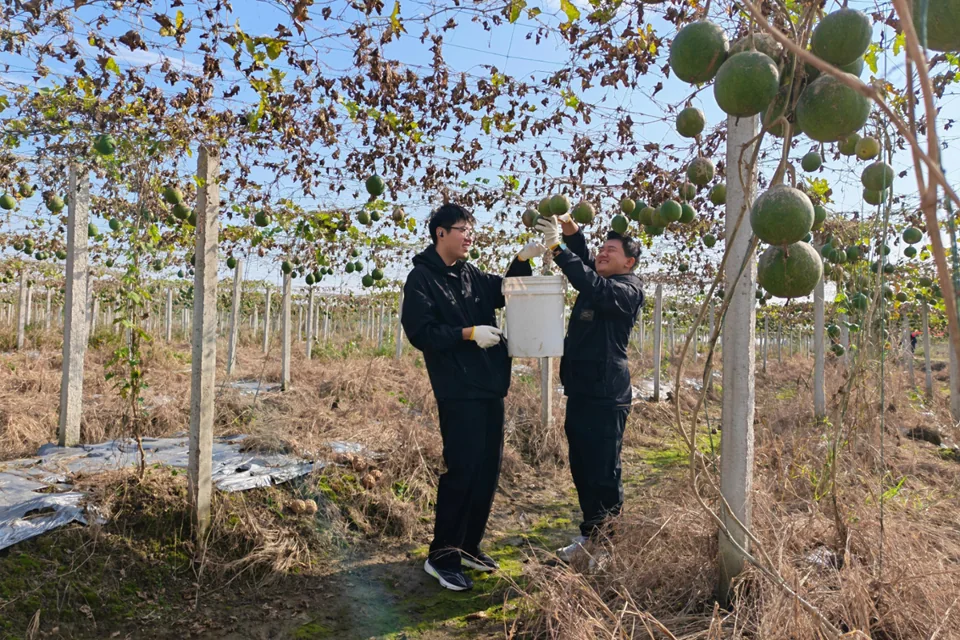
On October 28, 2026, the university organized an undergraduate labour education activity at Hongguang village in Laoqiao town, within the Zhengpugang New District. The participating group included students and teachers from metallurgical and mechanical engineering, alongside staff involved in teaching administration, the university trade union, public administration and law, and labour education. Students helped villagers harvest the seeds of snakegourd, a locally cultivated crop, while teachers delivered instruction directly in the fields. The village’s resident first secretary explained the development of its collective industries and led a visit to a seed-processing workshop. That visit connected the harvesting activity with a discussion of the surrounding production chain. The university’s report presented the exercise as a way to bring practical labour, community engagement and an understanding of rural industry into undergraduate education. It placed students in a working setting beyond the campus classroom.
Sources: Undergraduate labour education activity, October 2026 ↗
Student societies and campus culture
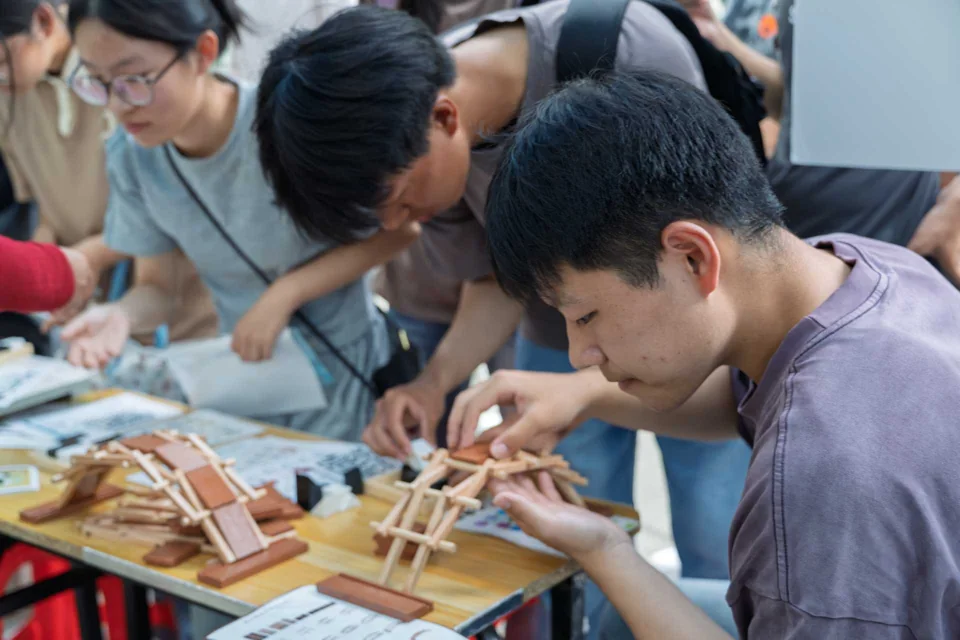
Student organizations contribute another dimension to university life. On September 19, 2026, the Jiashan campus hosted a welcome event for new students alongside celebrations of the institution’s sixty-eighth anniversary. Sixty-six societies took part, presenting their activities through displays, demonstrations, interactive experiences and performances. A dragon dance opened the society recruitment programme, with the performers forming the letters AHUT as part of their presentation. Academic and technology societies offered experiments, innovation and entrepreneurship groups organized games, and cultural and sporting societies staged performances. Students moved between the stands to ask questions and try activities while exploring possible interests and meeting other participants. The programme continued into the evening with a lawn music festival attended by students and teachers. The event brought society recruitment and anniversary celebrations together, giving incoming students a practical introduction to the university’s extracurricular communities and opportunities for shared cultural activity.
Sources: Student societies and anniversary event, September 2026 ↗