Visa


About Anhui University of Finance and Economics
A finance and economics university in Bengbu
Anhui University of Finance and Economics is a multidisciplinary university in Bengbu, Anhui Province, China. It began in Hefei in 1959 as Anhui Finance and Trade College and moved to Bengbu in 1961. Its present name was approved in May 2004. The university's development has been closely connected with commerce, cooperative organisations and regional economic development.
Today its academic remit extends beyond economics and management to law, literature, science, engineering, art and education. Its institutional profile records a progression from bachelor's degree authority in 1981 to master's degree authority in 1986 and doctoral degree authority in 2024. The university operates Longhu East and West campuses in Bengbu and also has a higher research institute in Hefei. The Bengbu campuses are located at 962 Caoshan Road and 255 Hongye Road, respectively, providing the principal setting for its university teaching and student life.
Sources: University institutional profile ↗
Economics and regional development
The School of Economics was established in 1994. Its undergraduate subjects are Economics, National Economic Management and Digital Economy, supported by corresponding teaching departments and an experimental teaching centre. It also lists smaller programmes in low code applications and low altitude economy management, bringing technological and emerging industry topics into its economics provision.
Postgraduate work encompasses theoretical and applied economics, with a doctoral direction in regional and urban economics and a professional master's field in digital economy. Its academic master's subjects include political economy, Western economics, the history of economic thought, population and resource and environmental economics, national economics and regional economics. Research on counties and cities provides a distinctive local focus. The school produces reports on Anhui county economic competitiveness and urban development and undertakes commissioned economic, social development and industry planning work. Its teaching also includes virtual simulation related to development assessment and investment decisions in the Huai River ecological economic belt.
Sources: School of Economics profile ↗
Finance, technology and environmental questions
The School of Finance teaches finance, insurance, financial engineering and financial technology at undergraduate level. Its postgraduate portfolio includes a finance direction within applied economics doctoral education, academic master's work in finance and investment economics, and professional master's fields in finance and insurance. These subjects give the school a spectrum extending from financial institutions and markets to analytical methods and technology.
Its teaching and research infrastructure includes virtual simulation for asset allocation, a financial technology laboratory and a quantitative trading laboratory. Low carbon development and carbon finance form another area of laboratory activity, alongside research institutes addressing finance, carbon finance and industrial finance. Smaller programmes listed by the school include big data financial analysis, wealth management and the operation of government guided funds. Research and advisory work also addresses regional development and rural revitalisation. The portfolio links financial analysis with digital tools, environmental questions and the practical economic concerns of Anhui and the Yangtze River Delta.
Sources: School of Finance profile ↗
Accounting and organisational finance
Accounting has been taught at the university since its foundation in 1959. A separate accounting department was established in 1985 and became the School of Accounting in 2005. Its March 2025 profile describes departments in accounting, auditing and financial management, with undergraduate programmes in those fields and asset valuation.
The school also lists specialist teaching directions and an intelligent accounting experimental class, reflecting different approaches within the broader accounting curriculum. At postgraduate level it provides academic accounting study and professional master's programmes in accounting and auditing. Financial accounting and financial analysis feature among its identified courses. Research encompasses accounting, auditing, management and finance, with staff contributing to academic publications and research projects. The school describes collaboration with Chinese and overseas universities as part of its academic relationships. Its stated educational approach emphasises a broad foundation, providing a framework for studying financial reporting, audit and the management of organisational resources rather than concentrating on a single accounting task.
Statistics, mathematics and data
The School of Statistics and Applied Mathematics was formed in January 2005 by combining the university's statistics and information and computational science departments. Its statistics lineage reaches back to 1959, while mathematics began recruiting students in 2002. The November 2025 school profile describes teaching units for statistics and data science, economic statistics, applied mathematics, university mathematics and experimental training.
Its undergraduate portfolio spans statistics, applied and economic statistics, mathematics, data computing and applications, and data science and big data technology. Postgraduate fields include statistics, economic statistics, quantitative economics, applied statistics and mathematics. Practical laboratories address applied statistics, data analysis, mathematical modelling and big data analysis. Research centres examine management statistics, environmental economic policy evaluation, and complex systems involving energy, the economy and the environment. Listed research projects include digital economy and carbon emissions, statistical monitoring of development, anomalous data detection and income opportunity inequality, illustrating the combination of mathematical methods and economic questions.
Sources: School of Statistics and Applied Mathematics profile, November 2025 ↗
Library resources and learning spaces
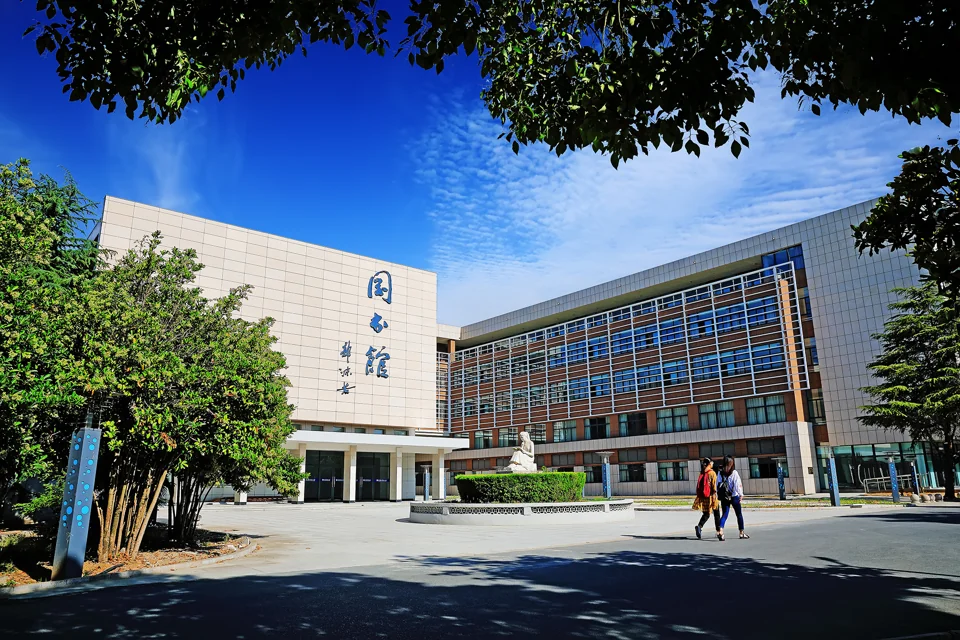
The Library and Information Centre was formed in 2017 through the combination of the university library, modern educational technology centre and textbook service centre. It now brings library provision and digital infrastructure together within a single teaching support organisation. Its buildings comprise the East Campus Library and the newer and older library buildings on the West Campus.
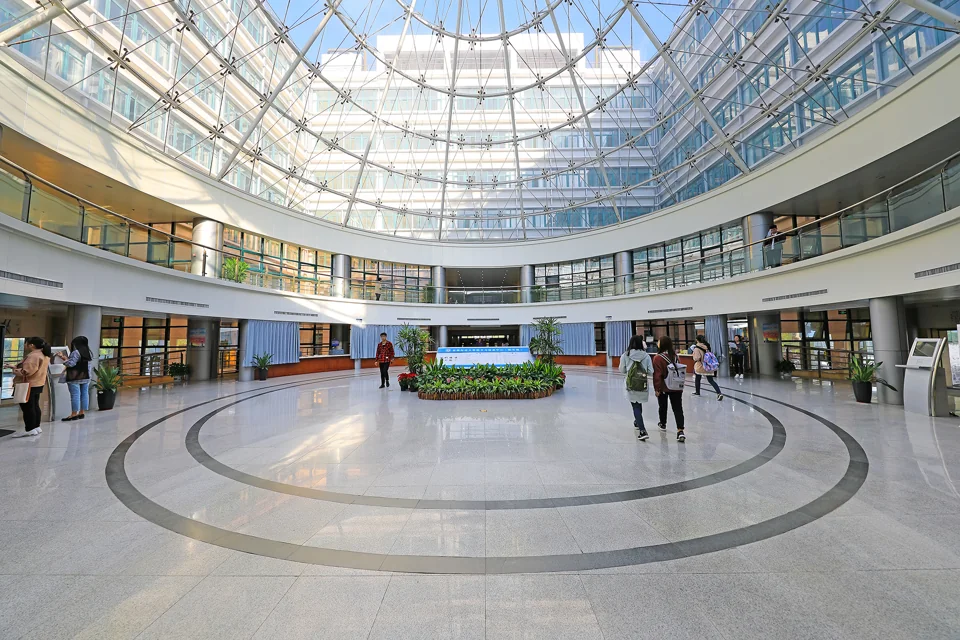
The collection is organised around economics, management and law while also supporting literature, science, engineering and art. It includes printed material, electronic books, journals and databases, with access to shared resources through Anhui's higher education library network. Learning spaces include reading and study areas, seminar rooms, a lecture hall, meeting facilities and multifunctional rooms associated with Longhu Academy. The centre also provides reference consultation, reading promotion, textbook services, network and information services, and document lending. This combination supports both independent reading and collaborative academic work across the university's subject areas.
Sources: Library and Information Centre overview ↗