Visa
About Anhui University of Arts
An arts university in Hefei
Anhui University of Arts is a public undergraduate arts institution in Hefei, Anhui Province, China. Its Chinese name is 安徽艺术学院. The university's institutional history traces an earlier Anhui arts college to 1959. Its more recent development included the establishment of Anhui University's School of Arts and Media in 2013 and the creation of the independent Anhui University of Arts in 2019.
The institution places applied arts education and the cultural resources of Anhui at the centre of its work. Huangmei opera, Huagudeng dance, the Xin'an painting tradition, local music and intangible cultural heritage feature in its academic identity. Its campus is located on Huaihai Avenue in Hefei's Xinzhan district. The university's September 2026 introduction describes teaching, artistic creation, research and cultural service as connected parts of its educational role, with undergraduate education as its principal focus.
Sources: University introduction, September 2026 ↗
Design study and creative practice
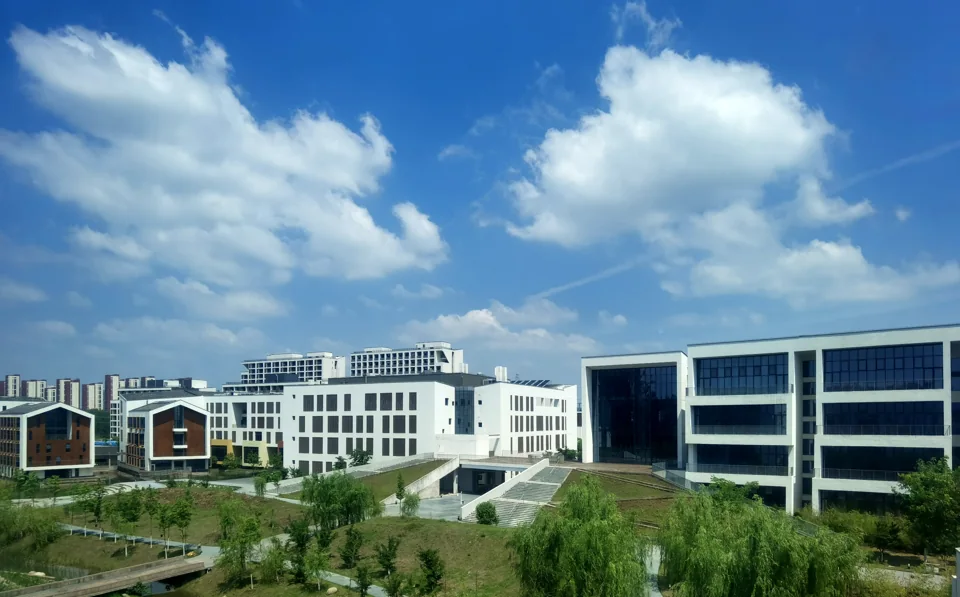
The Design School developed from a media department established in 2014, later the fine arts and design department, and became a separate school in July 2022. Its September 2026 introduction lists undergraduate programmes in visual communication design, digital media art, environmental design, intangible cultural heritage protection, and art and technology.
Its practical spaces include visual communication and digital media workstations, traditional sculpture, carving and lacquerware studios. Cooperation with Chery, Anhui Museum, the provincial art museum and cultural businesses supports practice education. The school describes theme-based workshops using regional culture as a resource, with project assignments developed into creative work. It organises graduation exhibitions, academic seasons and design festivals to present student and staff work. Research and artistic creation are intended to support teaching, while course reports and recurring workshop exhibitions provide settings for examining the work produced through the curriculum and developing students' design skills.
Painting, Chinese art and calligraphy
The Fine Arts School was established in July 2022 from the former fine arts and design department. Its undergraduate programmes are painting, Chinese painting and calligraphy. Painting includes oil painting, printmaking, mixed media and watercolour, while Chinese painting includes figure, landscape, and flower-and-bird painting. Calligraphy study includes ancient Chinese writing and seal studies.
The school has research organisations concerned with the Xin'an painting tradition, calligraphy and expressive oil painting. Its introduction describes recurring exhibitions connected with these areas, including an international calligraphy exhibition and the display of work associated with Huizhou artistic traditions. Practical resources include printmaking, ceramics and sculpture studios, mounting and restoration spaces, copying studios, exhibition rooms and a lecture hall. A studio concerned with contemporary Hui-style printmaking also supports creative work outside regular classes. These spaces connect foundational exercises, the study of artistic traditions and the development and presentation of original work.
Sources: Fine Arts School introduction ↗
Drama education from rehearsal to presentation
The Drama School was formed in July 2022, following the establishment of a drama and film department in 2014. It offers undergraduate programmes in performance, theatre and film art design, and dramatic and film literature. Performance includes Huangmei opera and theatre and screen acting directions.
Its September 2026 introduction describes an educational approach combining academic study, competitions, practical work and creative development. Facilities include a small theatre, rehearsal rooms, stage lighting and sound training spaces, stage design studios, movement rooms, singing and recitation classrooms, dressing rooms and piano rooms. Research and practice platforms include an institute for local Anhui theatre and a film and television centre. Students and teachers develop work through classroom study, professional practice and evaluation, with creative projects ranging from stage drama and Huangmei opera to short films, documentaries and sketches. The school identifies rehearsal and production as part of the teaching process.
Sources: Drama School introduction, September 2026 ↗
Broadcasting, journalism and screen media
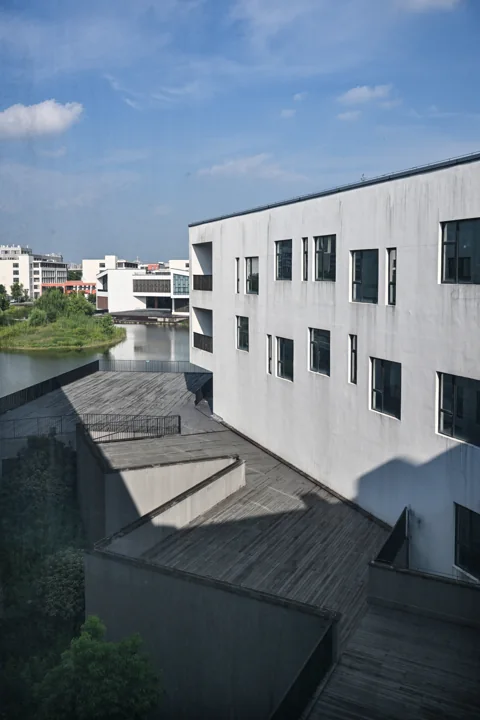
The Media School was established in July 2022 from the journalism and broadcasting department of the former Anhui University arts and media school. It began admitting undergraduate students in 2019. Its programmes cover broadcasting and hosting, journalism, film and television photography and production, and online and new media.
Practical teaching spaces include a converged media training centre, a generative artificial intelligence new media training room, virtual reality facilities and nonlinear editing rooms. The school also describes a documentary and short-video research institute. Its shorter micro-programmes address short video and livestream commerce, digital and intelligent communication, and artificial intelligence with new media. Creative work described in the introduction includes documentaries about historical figures and local cultural subjects. The school's account connects teaching innovation, practical media production and research, with student innovation projects and academic competitions forming additional settings for applying classroom learning.
Sources: Media School introduction ↗
Research and the protection of living traditions
The Anhui Intangible Cultural Heritage Arts Research Centre was established at the end of 2021. Its introduction describes an academic organisation combining artistic research and creation with the protection of intangible cultural heritage. Its work extends across Anhui and includes research, artistic practice and the use of research findings, as well as study of relationships between heritage and rural development.
The centre's December 2024 account identifies involvement in the development of the university's intangible cultural heritage protection programme. It also describes responsibility for national training-plan work and provincial cultural and tourism heritage projects. Another part of its role is supporting the university's provincial heritage transmission base. Its activities include exhibitions, research publications, training, field investigations and heritage programmes brought into campuses and communities, linking academic research with the continued practice and transmission of cultural traditions.
Sources: Anhui Intangible Cultural Heritage Arts Research Centre introduction, December 2024 ↗