Visa
About Anhui University
A comprehensive university in Hefei
Anhui University is a comprehensive university in Hefei, Anhui Province, China. Its Chinese name is 安徽大学. The institution was founded in Anqing in 1928 and moved to Hefei in 1956. Its anniversary falls on 16 September, commemorating the day in 1958 when Mao Zedong wrote the university's name.
The university's academic scope includes science, engineering, literature, history, philosophy, economics, management, law, education, arts, medicine and interdisciplinary study. Education extends across undergraduate and postgraduate levels, with research forming another major part of institutional life. Its published campus addresses identify Qingyuan on Jiulong Road and Longhe on Feixi Road. The university's March 2026 introduction describes cooperation with other universities, research institutions, local government and industry. Its scholarly work includes both scientific and technological research and the study of regional culture, historical documents and ancient writing.
Sources: University introduction, March 2026 ↗
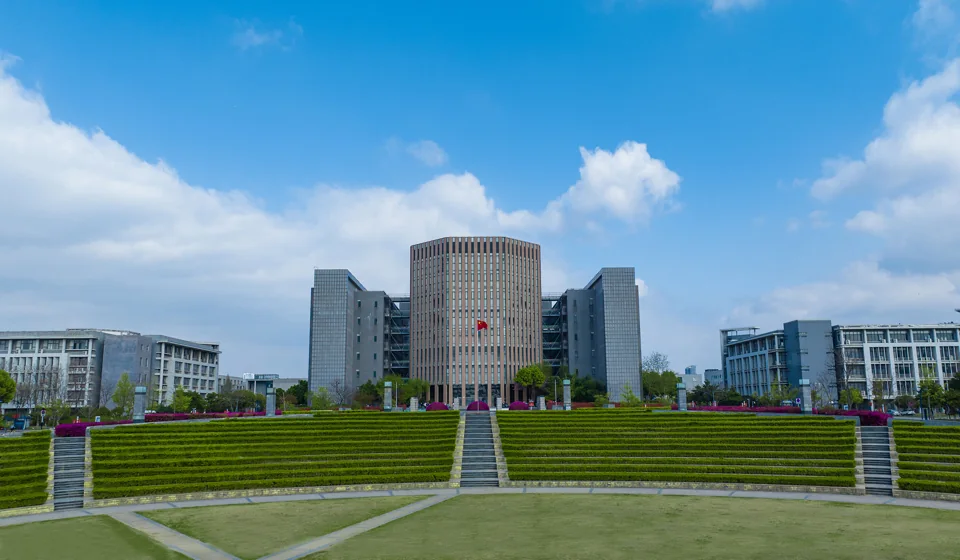
Academic breadth across sciences and humanities
The university's current teaching-unit directory shows the breadth of its academic organisation. Science and engineering units include mathematics, physics, optical science and engineering, chemistry and chemical engineering, materials science, computing, electronic information, electrical engineering, artificial intelligence, robotics, integrated circuits, and data and statistics. Life science and medical engineering, and resources and environmental engineering, also have dedicated schools.
Humanities and social sciences are represented by literature, history, philosophy, journalism and communication, economics, business, foreign languages, law, management, and social and political studies. The arts school also provides public arts education. Wendian College and the New York Stony Brook College appear alongside the Sino-French engineering school. Separate units support international education, continuing education and shared teaching in mathematics and foreign languages. These units provide the organisational setting for specialist study and broader university teaching.
Sources: Current academic teaching units ↗
Discussion-based learning in computing
A September 2026 report illustrates one approach to teaching within the School of Computer Science and Technology, also identified as the cybersecurity school. On 20 September, the university inaugurated an experimental class associated with academician Fang Binxing and held its first demonstration seminar in the ground-floor lecture hall of Qingyuan's Wendian Pavilion.
Students presented recent research in cyberspace security, followed by discussion with teachers and visiting specialists. The format placed student presentations, questions from staff and students, and expert commentary within the same class. The report describes attention to the central ideas of research papers and the development of research thinking and methodology. The event brought visiting academics together with university staff and students, establishing a specific educational setting for reading, presenting and critically discussing current research.
Sources: Experimental computing class and seminar teaching, September 2026 ↗
Research in materials and optical engineering
Scientific research at the university includes work across materials science and optical engineering. In October 2026, a university report described research led by Li Siqi's team on laser processing and structural changes in perovskite materials. A master's student from the School of Optical Science and Engineering was identified as first author of the resulting paper in Advanced Functional Materials.
The project studied the formation of light-emitting structures within a non-light-emitting crystal, combining calculations, simulations and experimental characterisation. It addressed difficulties in producing small three-dimensional structures for optical and electronic applications. The report presented the work as a collaboration between graduate research and academic supervision within the university's materials and engineering organisation. It offers a concrete example of the relationship between postgraduate education, laboratory investigation and scholarly publication.
Sources: Materials and optical engineering research, October 2026 ↗
Language research and regional knowledge
The humanities side of the university includes research on Chinese dialects and the linguistic resources of Anhui. In June 2026, Literature School professor Li Huayi gave a keynote presentation at a national conference for young linguistics scholars organised by the Institute of Linguistics of the Chinese Academy of Social Sciences.
His presentation discussed approaches to Chinese dialect study, including rural dialect surveys, multimodal investigation and the training of younger researchers. Drawing on research in Anhui, he described bringing historical phonology, acoustic study and geographical linguistics together in the analysis of dialect speech. The university's report also identifies investment by the university and Literature School in speech laboratory facilities. This research connects regional language evidence with broader scholarly questions about historical sound changes, the physical characteristics of speech and geographical variation.
Sources: Chinese dialect research and linguistics, June 2026 ↗
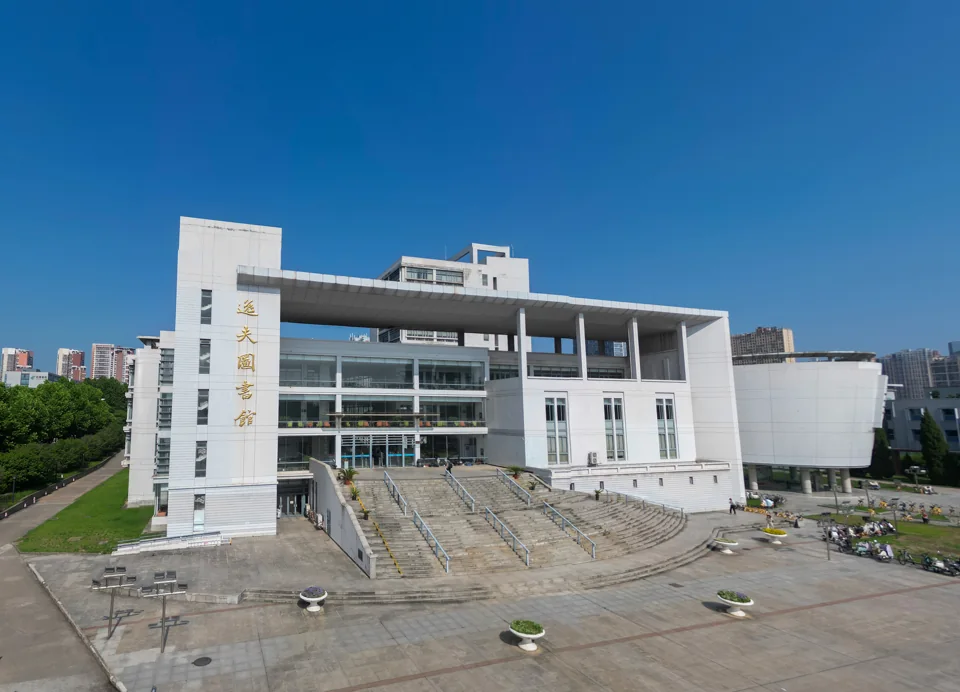
International academic exchange
International exchange also forms part of the university's academic activity. On 16 June 2026, a delegation from the La Salle campus of Spain's Ramon Llull University visited Qingyuan. University representatives discussed possible cooperation in education, with participation from international affairs, computing, electronic information and foreign language staff.
The discussions covered academic standards, student education, curriculum recognition, staff exchanges and the practical organisation of potential joint programmes. The visiting delegation also toured laboratories in computer science and electronic information engineering. These were discussions and planning activities, with further coordination identified as the next stage. The visit provides a dated example of how the university brings academic departments and international cooperation staff together to explore educational partnerships and introduce visitors to its teaching and research environment.
Sources: International academic cooperation discussions, June 2026 ↗
Practical learning and campus participation
University learning also includes activities outside specialist classrooms. Between mid-April and early May 2026, the logistics department worked with academic units and other university offices on a series of practical education activities centred on campus dining. Participants visited food storage, preparation and other kitchen areas with staff guidance.
Students and teachers also joined supervised food-making activities, with participating units including philosophy, foreign languages, computing, artificial intelligence, materials science, journalism and the New York Stony Brook College. Group discussions brought participants together with catering and logistics staff to comment on food choices and service. The programme combined practical work, observation of campus operations and opportunities for students and staff to raise suggestions. It provided a shared setting for cooperation across academic units and the services supporting everyday university life.
Sources: Practical education and campus dining activities, May 2026 ↗