Visa


About Anhui Science and Technology University
History and three-campus setting
Anhui Science and Technology University traces its history to the Wanbei Advanced Agriculture and Forestry School, founded in 1950. It began undergraduate education in 1965 and independent postgraduate education in 2012. In 2026, the institution changed its Chinese name from 安徽科技学院 to 安徽科技工程大学. Agriculture remains a distinctive part of its identity, within an applied educational approach that also emphasizes engineering and management.
The university has three campuses. Fengyang campus is in the historic county town associated with the Ming dynasty's central capital. Longhu campus is in Bengbu's university area, near the university science park and Longzi Lake. Chuzhou campus is in Chuzhou's higher-education and science-innovation area, close to Nanjing's Jiangbei New Area. Research settings listed in the university overview include an agricultural field-observation station, a crop-variety regional testing station, laboratories, engineering research centres and an international forage-crop breeding research centre. The university also describes international exchange projects, professional master's education for international students and cooperation with overseas universities and research organizations. These activities sit alongside its locally oriented research and technical-development partnerships.
Sources: University overview, October 2026 ↗
Library services across the campuses
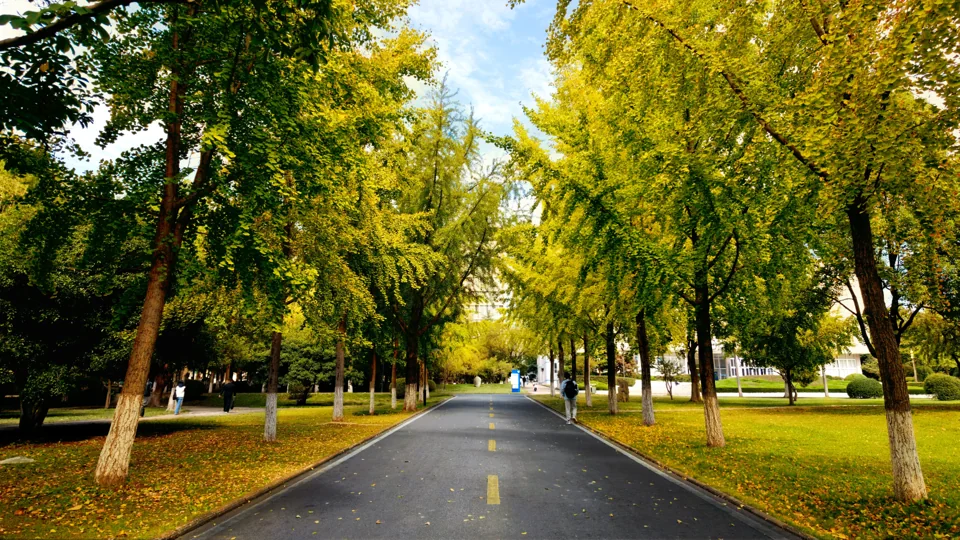
The university library operates at Fengyang, Longhu and Chuzhou. Its history follows that of the institution, beginning with the agriculture and forestry school's library in 1950. Each campus has its own reader-services unit, supported by departments responsible for resources, information technology and general administration.
The collection emphasizes applied material in agricultural science, industrial technology, information science and biotechnology, alongside wider social-science and natural-science coverage. Print and electronic materials support teaching and research. The library's published resources include Chinese and international journal databases, dissertation collections, electronic books, standards and learning resources. It also maintains a collection of undergraduate dissertations. Its service approach includes reader recommendations for acquisitions, reading guidance, resource publicity and subject-tracking support for research. Library social-media channels and the mobile library provide additional ways for readers to learn about and use the collections.
Sources: Library overview, October 2026 ↗
Continuing education and professional learning
The Continuing Education College organizes academic continuing education as well as non-degree training. Its July 2026 overview identifies separate functions for academic provision, training programmes, and project and training-base management. The academic subject range includes law, Chinese language and literature, applied chemistry, mechanical and electrical engineering, computing, agriculture, veterinary subjects and business administration.
Non-degree work includes training for vocational teachers, occupational skills and industry-related capabilities. The college also describes programmes for agricultural technicians working at the local level and for farmers, connecting its continuing-education role with rural development. It led the establishment of the Anhui Modern Agricultural Vocational Education Group in 2012 and works with education authorities, enterprises and other organizations on training projects. Its published remit therefore extends beyond conventional full-time campus study to the learning needs of teachers and people already in work.
Digital support for study and administration
The university's campus network began in 2000. A Network and Information Technology Centre was established in December 2014, and its functions were reorganized into the Information Construction and Management Department in March 2026. The department's responsibilities include institutional information planning, campus networks, digital campus services and information security.
Its published overview describes wired and wireless coverage linking the three campuses. Digital services use a shared identity system to connect university applications and a common portal that brings together systems, tasks, messages and services. The department also works on organizing and sharing data used in teaching, research, administration and campus life. These arrangements support activities across the university's geographically separate locations. The department presents its role as providing the technical and service foundation for changes in the university's educational and administrative work.
Sources: Information services department overview, March 2026 ↗
Resources for teaching volunteers
On 31 October 2026, the library delivered a short resource-training class at the Gengdu reading house in Xiaogang village. The audience consisted of the university's volunteer teachers working there. The session introduced library history, resources, borrowing arrangements and the ability to use collections across all three campuses.
The training addressed a practical problem for volunteers away from campus: carrying printed books and obtaining material for their teaching. It explained the mobile library, electronic-resource access from off campus, the library's public account and online renewal services. The presenter also introduced opening arrangements and reading-promotion activities. The university's November report describes this as a way to make university resources more usable during village teaching placements, while encouraging volunteers to take an active role in local reading culture.
Sources: Library resource training in Xiaogang village, November 2026 report ↗
Developing classroom teaching
The School of Animal Science held a teaching-design workshop for young teachers on 30 October 2026. Six teachers presented their approaches to course design, difficult topics and lesson organization. Five experienced teachers provided specialist feedback, including the head of the university's educational supervision group.
The discussion covered the foundations of teaching, classroom management, delivery and interaction with students. Feedback addressed the pace and rhythm of speech, clear and appropriate language, posture and gestures, and ways to guide classroom participation. Participants also considered how wider cultural and educational themes could be incorporated into courses. The school described the event as an exchange between experienced and newer teachers, with opportunities to reflect on lessons and identify areas for improvement. It planned to continue workshops and teaching discussions as part of its support for early-career teachers.
Sources: Animal Science teaching-development workshop, November 2026 report ↗