Visa
About Anhui Sanlian University
An applied university in Hefei
Anhui Sanlian University is a privately established undergraduate institution in Hefei, Anhui Province, China. Its Chinese name is 安徽三联学院. Anhui Sanlian Investment Group founded the institution in 1997, and its main campus is located near Feicui Lake in Hefei's university district. The university's official address is on He'an Road in the city's Economic and Technological Development Zone.
Its academic profile centres on engineering, with related work in management, economics, arts, literature, science and health-related subjects. The current organisation includes schools for smart transportation, modern health and older people's services, and digital creativity, alongside divisions for new business studies, engineering and literature. The September 2026 institutional introduction describes industry-linked applied education as a central feature of the university's approach.
An independently governed teaching institution
The university charter identifies Anhui Sanlian Investment Group as the institution's sponsor and describes it as an independent legal entity. It records the start of undergraduate recruitment in 2008 and places full-time undergraduate education at the centre of its educational work. The charter also provides for adult education alongside that principal role.
A board of directors makes major institutional decisions, while the president is responsible for educational and administrative management. The charter establishes an academic committee to consider subjects, programmes, teaching, research and technology development, and a degree evaluation committee for academic award procedures. It also provides for staff representation and student support arrangements, including counsellors and financial assistance. Research, social service, cultural exchange and cooperation with other institutions form part of the responsibilities described in this institutional framework.
Sources: University charter, October 2024 ↗
Smart transportation and industrial cooperation
The Smart Transportation School combines transport, mechanical engineering, computing and communications within an applied educational setting. Its introduction identifies intelligent transportation, green transportation and traffic data as its main directions. These areas connect the school's teaching with electric vehicles, connected vehicles and other transport technologies.
The school describes cooperation with Chery, NIO, Anhui Sanlian Traffic Applied Technology and transport infrastructure companies. Joint work includes practical teaching platforms, industrial projects and research facilities. Named research resources include a vehicle driving safety engineering research centre and the provincial traffic information and safety laboratory. The school also describes a jointly developed connected-vehicle safety centre with Tsinghua University. Its curriculum and assessment approach incorporates industry-based coursework and project settings, bringing several engineering disciplines together around transport applications.
Engineering programmes and practical study
The Engineering Division was established in November 2023, bringing together the former electronic and electrical engineering school with related undergraduate programmes from mechanical and computer engineering. University mathematics and physics teaching also became part of this organisation.
Its undergraduate programmes are electronic information engineering, mechanical design, manufacturing and automation, communications engineering, software engineering, automation, building electrical systems and intelligence, and intelligent manufacturing engineering. Practical teaching resources described in the division's introduction include laboratories for testing the mechanical properties of advanced manufacturing materials and for intelligent manufacturing technology. Cooperation with electrical technology, hydraulic equipment and engineering consulting companies supports practical teaching bases. Student development also includes innovation projects and participation in mathematical modelling, electronic design, intelligent manufacturing and other academic competitions. These activities complement the division's programme teaching and laboratory work.
Sources: Engineering Division introduction ↗
Digital arts and creative technology
The Digital Creativity School combines design education with digital production and technology. Its introduction lists undergraduate programmes in environmental design, digital media art, visual communication design, animation, digital media technology, virtual reality technology, and fashion and apparel design. This brings artistic practice and computing-related creative work into the same academic organisation.
The school describes its approach as combining digital arts with traditional culture and using practical projects in teaching. Cooperation with businesses supports studios and practice bases related to digital creative work. Its stated educational focus is the development of applied digital art and design skills in relation to the creative industries. Teaching resources include practical training spaces and research centres at university and provincial levels. The school presents these facilities and partnerships as part of its work connecting design study with production and creative practice.
Library collections and information skills
The university library develops both physical and electronic collections to support undergraduate teaching and research. Its collection introduction describes an approach combining printed literature, electronic materials and other formats, with subject coverage linked to the university's schools and academic divisions.
Resource sharing includes participation in the Anhui university digital library network and cooperation with other university libraries. The electronic collection includes CNKI, VIP journal resources and Chaoxing Duxiu academic search. Alongside maintaining collections, the library organises training in literature retrieval and database use to develop readers' information skills. Its resources therefore support both access to subject information and learning how to locate and use that information. The library's published collection strategy places practical use and the needs of teaching and research at the centre of collection development.
Sources: Library collections introduction ↗
Student participation in campus services
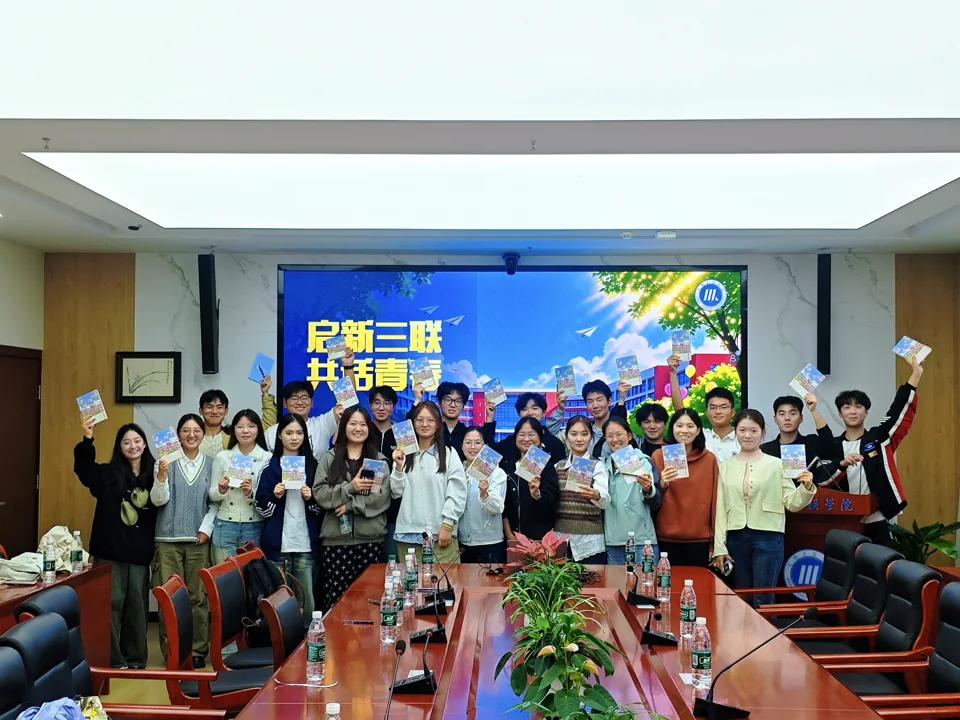
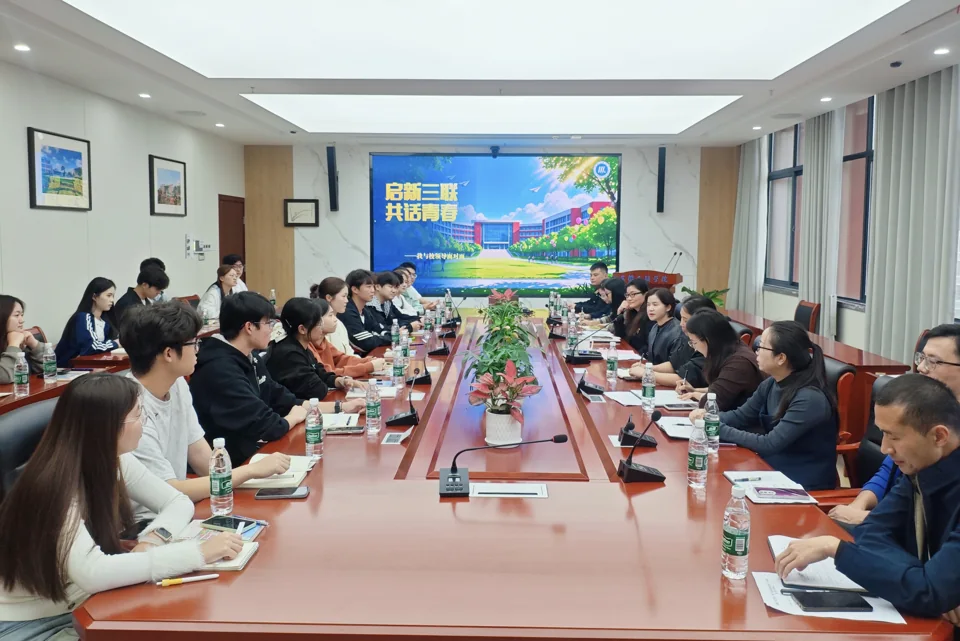
On 29 October 2026, new-student representatives met university leaders and staff for a campus consultation. Participants discussed academic competitions, volunteering, industry-linked study, extracurricular learning and safety awareness.
The student affairs office introduced the university's student community arrangements, including academic assistance, everyday services and personal development activities. Representatives of academic administration, student services, careers, safety and student organisations attended, recording questions and responding during the discussion. The meeting provided a dated example of students contributing their early experiences of university life to discussions about campus services and educational support.
Sources: New-student consultation with university leaders, October 2026 ↗