Visa
About Anhui Professional College of Art
An arts college rooted in Anhui
Anhui Professional College of Art is a provincial arts institution in Hefei, Anhui, China, known in Chinese as Anhui Yishu Zhiye Xueyuan. Its predecessor, Anhui Art School, was founded in 1956. The institution passed through several organisational forms before joining with Anhui University to establish an arts college in 1996. In 2003, the incorporation of Anhui Film School accompanied the establishment of the present vocational arts college.
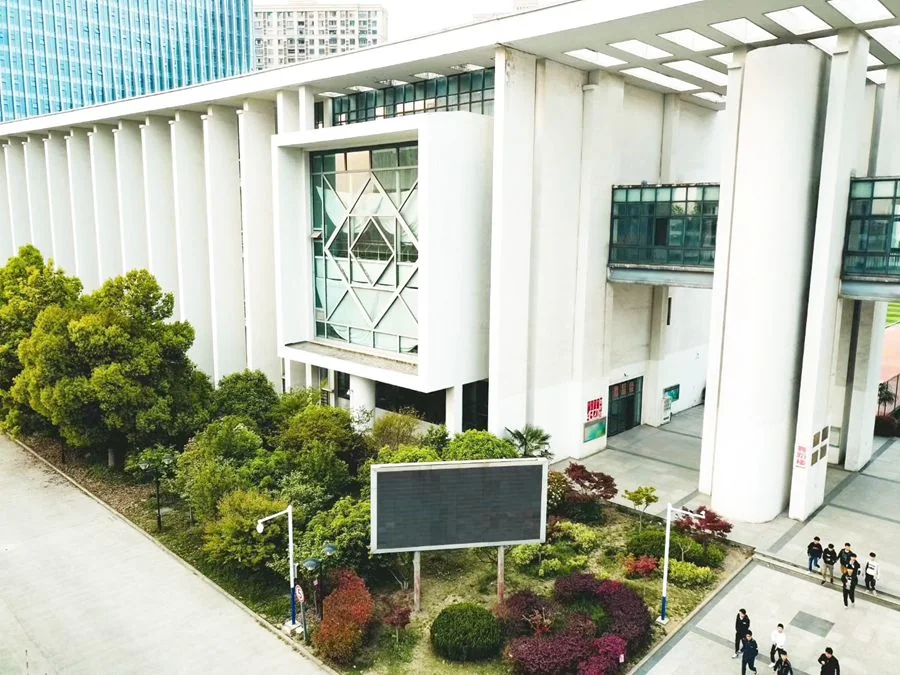
The college has campuses on Xuancheng Road and Danxia Road. Its teaching brings together music, dance, theatre and media, fine arts, comprehensive arts and Chinese opera, alongside a school of Marxism. This range connects performing traditions with visual design and contemporary media production. The college's institutional account places the preservation and development of cultural arts at the centre of its role, drawing on Anhui's regional cultural resources while preparing students through specialist artistic study and practical work.
Sources: Institutional profile, June 2026 ↗
Music education and stage practice
The School of Music traces its history to the music section of Anhui Art School in 1956. That early section organised teaching in orchestral music, theory, Chinese instrumental music and vocal music. It subsequently followed the parent institution's changes, becoming the music department of the vocational college in 2003 and a secondary school within the college in 2018.
Its July 2025 profile describes teaching groups for voice, keyboard, orchestral instruments, Chinese instruments, composition and theory, and popular music. This organisation accommodates different forms of musical practice while retaining a place for theoretical study. The school combines teaching, research and artistic practice, with particular attention to students' broader artistic development and their ability to perform on stage. Its history therefore runs from specialist instrumental and vocal teaching to a wider music school in which performance preparation remains an explicit educational priority.
Sources: School of Music profile, July 2025 ↗
Dance and artistic exchange
The School of Dance grew from a dance section founded in 1958. Its July 2025 account describes an educational approach that combines strong foundations with a principal specialism and additional abilities. The school lists Dance Performance and International Standard Dance as its two subject areas.
Artistic practice is central to its account of teaching. The school works with visiting specialists from institutions and performing companies and uses platforms such as the Hu Huaibei Art Studio to support exchange with other arts educators. Bringing specialists into the school and sending staff or students out for exchange are described as complementary approaches. Alongside its vocational teaching, the unit also reports provision at secondary arts education level, reflecting the different stages at which specialist dance training is undertaken.
Sources: School of Dance profile, July 2025 ↗
Theatre, screen work and presentation
The School of Theatre and Media develops the college's longstanding drama teaching through subjects that span stage and screen. Its July 2025 profile lists drama and film performance, film and television directing, personal image design, and broadcasting and hosting. Performance supplies a central strand, while directing and presentation extend the work into the organisation and communication of productions.
Its facilities include rehearsal halls, rooms for viewing and appreciation, film and television editing rooms, broadcasting and dubbing rooms, and a black box training theatre. These spaces support different parts of the creative process rather than a single mode of performance. Students can encounter rehearsal, recorded production, voice work and theatrical presentation within the school's practical teaching environment. The profile describes an interdisciplinary structure linking writing, directing, acting and broadcasting, with personal image design contributing a further specialist dimension to the wider production and presentation of artistic work.
Fine arts through studio learning
The School of Fine Arts is based at the Xuancheng Road campus and traces its foundation to 1956. Its subjects include calligraphy and painting, digital media art design, animation design, environmental art design, art design, visual communication design, and clothing and apparel design. The range places established visual practices alongside applications in digital communication, space and fashion.
A teaching reform begun in 2017 shifted emphasis from conventional classroom instruction towards studio teaching. The school describes a curriculum combining a broad subject platform, smaller specialist directions and opportunities for further development. Project teaching and work across disciplinary boundaries form part of this approach. Its practical resources include teaching and training rooms, multimedia classrooms, project training spaces developed with enterprises, a three dimensional printing room and a student art workshop. Craftspeople, design directors, artists and industry designers are invited to contribute to course design and teaching, connecting the studios with professional creative practices.
Sources: School of Fine Arts profile, July 2025 ↗
Comprehensive arts and media production
The School of Comprehensive Arts was established in 2003 and combines performance, image production and service-related subjects. Its September 2025 profile lists performing arts, musical theatre performance, photography and videography, film and television multimedia technology, and passenger service fields covering aviation, high speed rail and international cruises. It also describes jointly delivered undergraduate progression programmes with Anhui University of Arts, a relationship distinct from the vocational college's own identity.
Performing arts students train across music, dance, drama and makeup. Photography and videography teaching began in 2004, while film and television multimedia technology was introduced in 2024. The latter addresses digital production, effects and media presentation. Musical theatre first recruited in 2017 and brings singing, dance and acting together through staged work. The school organises teaching around performing arts, passenger services, image production and musical theatre groups, giving its varied programmes identifiable specialist bases.
Sources: School of Comprehensive Arts profile, September 2025 ↗