Visa

About Anhui Modern Information Engineering College
A vocational college in Shouxian
Anhui Modern Information Engineering College is a full-time vocational higher education institution in Shouxian, within Huainan in China's Anhui province. Its Chinese name is 安徽现代信息工程职业学院. The college dates its establishment to 2008 and describes its educational purpose as preparing technical and skilled personnel for regional economic and social development. Its approach brings occupational skills together with classroom study and practical training.
The college's academic organization includes information engineering, electromechanical engineering, economics and management, construction engineering, and art and media. Its published subject range extends from computer networks, big data and numerical control to e-commerce, tourism, construction interiors and digital media design. Training spaces listed in the institutional introduction include electronics simulation, drone applications, early-childhood education, tourism services and numerical control. The library, reading rooms, networked classrooms and sports facilities form part of the supporting campus environment.
Sources: College introduction ↗
Institutional identity and admissions organization
The college's 2026 admissions charter identifies it as a privately run ordinary higher vocational institution offering education at the zhuanke level. It gives the campus address as Tongfei South Road, Shouxian, Huainan. This places the institution in Shouxian rather than treating Huainan's city name as a precise street location.
The charter describes an admissions committee responsible for the college's admissions rules and administrative arrangements, including classified vocational admissions and admissions through the ordinary higher education route. For its 2026 intake, the published selection framework uses examination scores and applicants' programme preferences. The document also provides for checks of new students' entry qualifications after arrival.
Sources: 2026 admissions charter ↗
Office software as a practical skill
A departmental competition provides a concrete example of the college's approach to applied learning. On 20 May 2026, the Information Engineering Department held the final of its first office-software skills competition in computer room 4402. Ten students reached the final after a preliminary selection stage.
The department assigned ten specialist judges to assess contestants individually. Their records covered completion time, the quality of submitted work and whether operations followed the required procedures. Before the tasks began, the principal judge explained the competition rules, assessment standards and conduct requirements. The report connects the contest with routine teaching and the development of practical software abilities, giving students a setting in which to demonstrate skills under structured assessment conditions.
Sources: Office-software skills competition final, May 2026 ↗
Developing teachers technical practice
The Electromechanical Engineering Department reported a practical workshop on 3D printing in October 2026. An external industry specialist demonstrated the equipment to departmental teachers, combining explanations with work at the machines. Topics included slicing three-dimensional models, selecting printing parameters, controlling the forming process and choosing materials for different tasks.
The workshop also covered equipment care, including replacing consumables, cleaning and investigating common minor faults. Teachers worked in groups through modelling, parameter adjustment and printing, following the process through to examination of a finished sample. The department planned to carry the experience into teaching discussions, practical projects and course design. The activity illustrates technical development directed at the teachers who organize the college's workshop-based learning.
Exploring industry cooperation
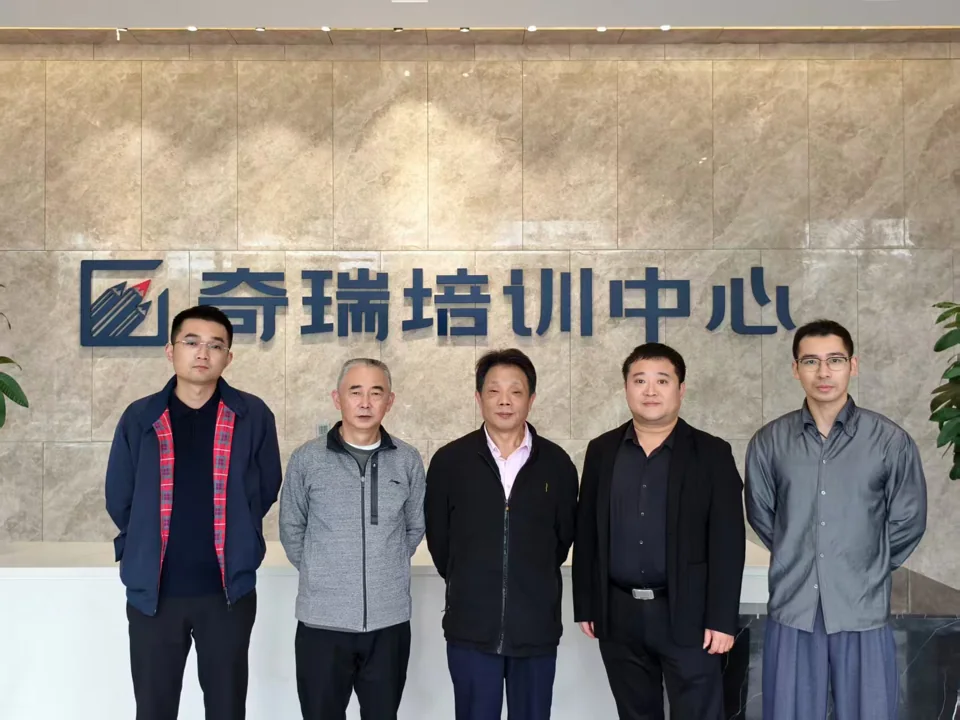
On 29–30 October 2026, a college delegation visited Chery Group to discuss the possible joint development of an industry college. Its itinerary included a vehicle factory's welding and final-assembly workshops and the group's training centre. Delegates also visited the training building of an existing Chery partnership at Anhui Yangzi Vocational and Technical College.
The subsequent meeting examined curriculum development, practical teaching, internships, teacher development and the organization of a proposed partnership. Participants exchanged views on training resources, management arrangements and the responsibilities of the parties. The college's November report presents these as discussions and proposals, with further work planned on the operating scheme and timetable. The visit brought its electromechanical teaching interests into direct conversation with a vehicle manufacturer's training organization.
Sources: Visit to Chery Group, November 2026 report ↗
Induction and teaching responsibilities
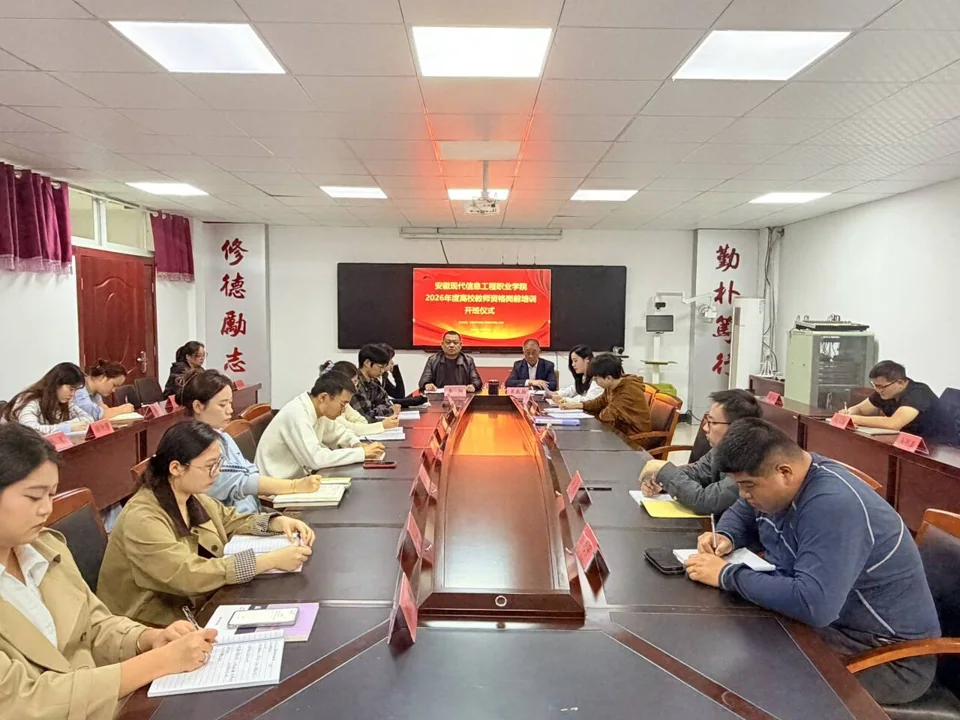
The college opened its 2026 teacher induction programme on 26 October. College leaders, the personnel office and participating teachers attended the opening meeting. Speakers emphasized educational theory, teaching skills and the responsibilities of working in vocational higher education.
The personnel office explained the programme's attendance, study and completion-assessment arrangements. A representative of the participating teachers spoke about applying the training to subsequent classroom work. The principal linked the programme with the particular demands of vocational teaching and the development of teachers' professional abilities. Alongside technical workshops, this induction activity shows a formal route through which the institution introduces teachers to its expectations for educational practice and professional conduct.
Sources: Opening of teacher induction training, October 2026 ↗
Recruitment events and student guidance
On 16 April 2026, the college held a recruitment fair for its graduating class at the campus sports ground. Its report describes employers from information technology, machinery manufacturing, new-energy vehicles, construction, finance and modern services taking part. Students met company representatives to discuss job requirements, working arrangements and development opportunities.
Departmental leaders and graduating-class advisers were present to assist with vacancy information, résumés and questions about applications. The college also reported contact with human-resources authorities in Shouxian and Yingdong District, Fuyang. Their proposed cooperation covered vacancy sharing, policy presentations, employer links and support for graduates needing additional assistance. The event combined direct employer conversations with guidance supplied by the college's own staff.
Sources: 2026 graduate recruitment fair ↗
Sharing classroom methods
An open lesson held by the Electromechanical Engineering Department on 20 October 2026 focused on inspection and diagnosis. Departmental colleagues observed a teacher explain technical principles through comparisons, examples, multimedia materials and board work. The report specifically describes the inspection of major cooling-system components.
The session connected explanations of underlying principles with the practical sequence of examining components and identifying faults. Colleagues attended both to observe the lesson and to discuss teaching methods. This departmental activity places peer observation alongside the college's equipment workshops and formal induction, offering another way for teachers to exchange experience about translating technical subject knowledge into classroom instruction.
Sources: Electromechanical classroom observation, October 2026 ↗