Visa
About Anhui Lvhai Vocational College of Business
Vocational education in Hefei
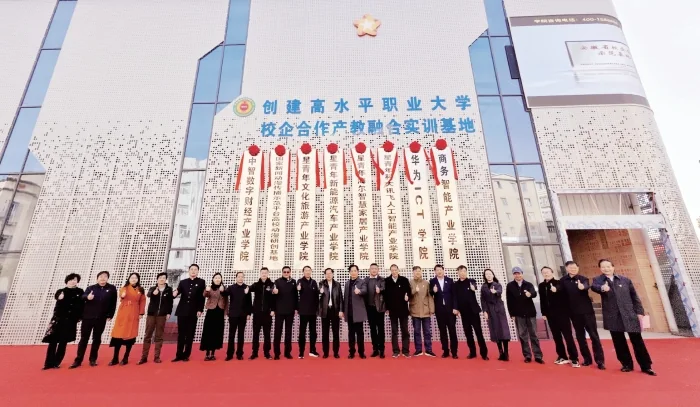
Anhui Lvhai Vocational College of Business is a higher vocational institution in Hefei, Anhui province, China. Its Chinese name is 安徽绿海商务职业学院. The college gives its address as 68 He'an Road in Hefei's Economic Development Zone university area. Its educational approach connects classroom study with practical training and contact with industry, bringing business education together with technical and creative subjects.
The college describes its distinctive student-development model as Xing Qingnian, or 'Star Youth'. It emphasizes knowledge, practical ability and broader personal development, with teaching organized around projects and occupational tasks. Skills identified in the institutional introduction include business communication, foreign-language application, computer use, written and spoken expression, information handling and calligraphy. The model also identifies self-directed learning, practical work, cooperation and coordination, and physical and psychological resilience among the abilities it seeks to develop. Cooperation with enterprises includes joint discussion of programmes, educational plans and teaching materials. Academic fields represented in the introduction include finance and modern services, automotive and intelligent engineering, artificial intelligence, digital creativity and art, and business, tourism and media.
Sources: College introduction ↗
A library partnership with the city
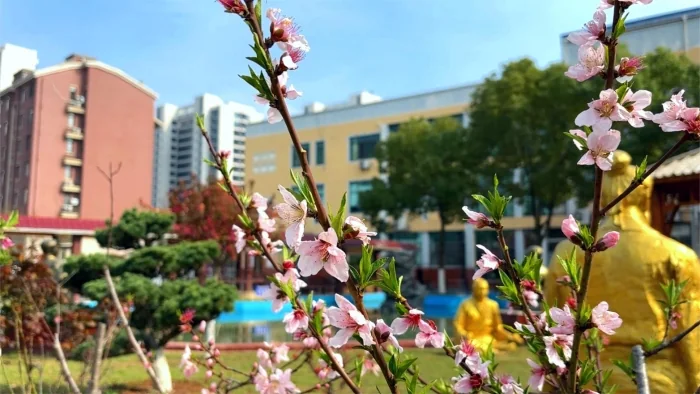
A report published in January 2025 describes the trial operation of the Hefei Library Lvhai branch on the college campus. Under the partnership, the college provided the premises, facilities and equipment, while the municipal library supplied services. The branch created a reading space and arrangements for sharing book resources between the institutions. Its initial on-site collection combined books supplied by the municipal library with the college's own holdings, with further shared paper resources envisaged in the cooperation agreement.
The report explains a smart-book-cabinet service that supports searching, borrowing, returning and reserving books. Readers could request books online and select the cabinet as their collection point. When an item arrived, a text message notified the reader, who could use the available identification or collection-code methods to retrieve it. The partnership also provided for exchanging books and connecting borrowing systems. These arrangements linked a campus reading space with the wider municipal library service and its delivery infrastructure.
Sources: Hefei Library Lvhai branch trial service, January 2025 report ↗
Students learning library service
The library branch also provides a practical setting for student work and service training. On 3 September 2026, it organized induction for students in work-study roles. A teacher explained duties, staffing arrangements, reader assistance and care of the reading environment. The session addressed evening and weekend shifts as part of the students' responsibilities.
Role-play exercises covered approaching readers about behaviour that conflicted with library rules and responding to requests at the service desk. Students practised a sequence from an initial enquiry through registration and borrowing, with feedback on their communication and service procedures. Other demonstrations addressed arranging books and shelves and maintaining the space. A walk through the building introduced closing routines and the responsibilities associated with looking after a shared public learning facility.
Teachers gaining industry experience
The college's Artificial Intelligence school reported that one of its teachers completed a 21-day enterprise-practice training programme between 18 August and 7 September 2026. Organized by Anhui's education department and hosted by Jiangsu University of Technology in Changzhou, the programme combined lectures, company visits, simulation exercises and work on translating experience into teaching resources.
Participants encountered subjects including big data, the internet of things, software development and information security. Company visits introduced industrial production, charging equipment, vehicle manufacturing and telecommunications operations. Practical projects included software development, a smart-parking application and analysis of sales-order data. The participating Lvhai teacher developed a reform proposal for a JavaEE enterprise-development course, using real company projects to reorganize its teaching modules. The report describes plans to bring cases, technical standards and project methods back into classroom tasks and teaching materials.
Sources: Information-technology teacher enterprise training, September 2026 ↗
Debating and communication
An internal debating selection event took place on 20 September 2026 in a third-floor meeting room of the science and technology innovation building. Organized by the student affairs office and Youth League committee, it formed part of preparations for the twelfth Hefei university-student debating competition. The format used individual, one-to-one debate rather than relying on a conventional team structure.
Participants drew lots at the venue to determine opponents, topics and which side they would argue. The contest required a one-minute opening statement and a thirty-second concluding statement. An Artificial Intelligence school teacher reviewed the performances, discussing the construction of arguments, logic, language, composure and choice of perspective. The event placed communication and independent thinking within the college's extracurricular programme, while providing a basis for selecting and training students for the next stage.
Sources: Campus debating selection competition, September 2026 ↗
Sport and shared campus activities
The college opened its fifteenth sports meeting on 3 November 2026 at the campus sports ground. Students, staff and representatives of academic units took part in the opening procession. The programme included creative displays associated with different subject areas, including tourism, hospitality, dance and automotive and intelligent engineering.
The published programme provided for student and staff groups over two days. It combined track and field and ball games with activities such as tug-of-war, coordinated drum-and-ball games and slow bicycle riding. Athlete and official representatives made commitments to the rules and fair competition during the opening ceremony. Performances included dragon-ribbon displays and dance. The event brought academic units and service groups into a shared campus occasion with both competitive and participatory activities.