Visa
About Anhui Jianzhu University
A construction-focused university in Hefei
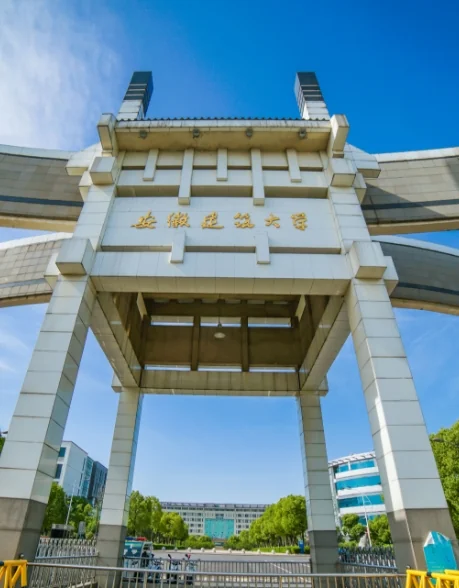
Anhui Jianzhu University is a multidisciplinary university in Hefei, the capital of Anhui Province, China. Founded in 1958, it has developed an academic identity around the built environment while also teaching management, science, art, literature, law and economics. Its educational provision extends from undergraduate study to master's and doctoral research. The university operates campuses at 292 Ziyun Road and 856 Jinzhai Road in Hefei.
Its research connects buildings and infrastructure with the wider development of cities and rural communities. Areas identified in its institutional profile include energy conservation, environmental protection, Huizhou architecture, urban renewal, rural revitalisation and smart cities. Underground engineering, public safety and advanced construction materials provide further points of connection between its technical disciplines and regional development. This combination gives the institution a broader remit than architectural design alone, encompassing how settlements are planned, built, maintained and managed.
Sources: University profile, June 2026 ↗
Civil engineering and water-related disciplines
The College of Civil and Water Conservancy Engineering traces its teaching lineage to the university's industrial and civil construction programme established in 1958. Its organisational history includes a civil engineering department formed in 2002, college status in 2006 and the present civil and water conservancy name adopted in 2026. Civil engineering therefore supplies both an early institutional foundation and a continuing area of advanced study.
Its academic work includes civil engineering doctoral education and a postdoctoral research station, alongside master's study in civil engineering and surveying and mapping. Professional postgraduate fields include civil and water engineering, transportation, and resources and environment. Research platforms address structural health monitoring, disaster prevention, intelligent detection beneath the ground, geotechnical engineering and prefabricated construction. The college also describes work on urban underground space, a subject that links infrastructure design with the practical constraints of expanding cities. Experimental teaching and intelligent civil engineering research form part of its supporting infrastructure.
Sources: College of Civil and Water Conservancy Engineering profile ↗
Architecture, spatial planning and heritage
The College of Architecture and Spatial Planning combines design education with the study of places at building, settlement and regional scales. Its present organisation dates from 2026, bringing architecture and planning together with surveying and geographical information resources. Its listed undergraduate subjects include architecture, urban and rural planning, landscape architecture, remote sensing science and technology, and geographical information science.
Architectural heritage is a distinctive strand of its research. An ancient architecture research institute was established in 1986, followed by a Huizhou architecture laboratory in 2018. Current research themes include digital recording of heritage, analysis of settlement and landscape space, and preventive protection of historic buildings. Other work concerns urban and rural integration, digital twins and spatial information systems. The college also describes construction festivals, design innovation activities and cultural camps connected with its New Huizhou Craftsman educational work. These activities place design exercises alongside the investigation of regional building traditions and contemporary spatial technologies.
Sources: College of Architecture and Spatial Planning profile, August 2026 ↗
Environment, energy and urban systems
The College of Environment and Energy grew from a water supply and drainage teaching group established in 1985. Successive departmental changes led to environmental engineering college status in 2006 and the environment and energy name in 2009. Its teaching covers subjects such as water supply and drainage engineering, building environment and energy applications, environmental engineering, and energy and power engineering.
The college's postgraduate work includes municipal engineering within civil engineering doctoral education, an environmental science and engineering master's discipline, and professional study connected with civil and water engineering and resources and environment. Its research addresses pollution reduction, carbon reduction, new energy and ecological management. A laboratory concerned with pollution control and the use of waste as a resource supports this environmental emphasis. Its research institutes also cover green urban and rural development, urban renewal, ecological civilisation, fire and disaster prevention, smart cities and cultivated land protection. The resulting portfolio connects environmental questions with buildings, infrastructure and land management.
Sources: College of Environment and Energy profile ↗
Economics and management in a changing curriculum
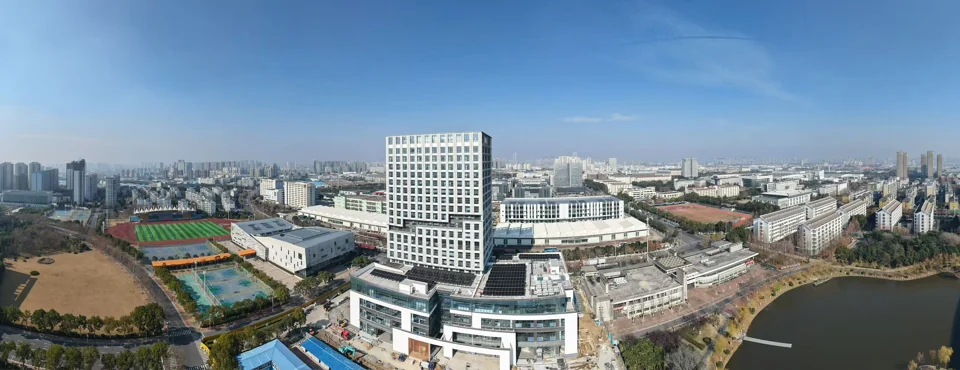
Economics and management provide another perspective on the university's construction and urban development interests. An October 2026 institutional report describes research platforms concerned with real estate, housing provident funds, building economics and property management. Its postgraduate provision includes management science and engineering, alongside professional fields such as engineering management, accounting, asset valuation and digital economy.
The same report records an adjustment of undergraduate economics into Digital Economy, with recruitment beginning in 2025. It also describes smaller programmes addressing digital business and entrepreneurial decision making, intelligent finance and green accounting, future city operations, and financial technology. These subjects show how the college is extending its established management interests into data and digital applications. Teaching developments include artificial intelligence courses, a comprehensive new humanities laboratory, enterprise projects in graduation design and cooperation between academic and external mentors.
Sources: Economics and management development report, October 2026 ↗
Fieldwork with rural communities
A July 2026 university report illustrates how architecture, planning and product design can meet outside the classroom. A team from the College of Architecture and Spatial Planning visited Dawan Village in Huashi Township, Jinzhai County, through a summer social practice programme. Its investigation concerned the relationship between agriculture, culture, tourism and creative product design.
Team members discussed a student competition proposal with village officials, considering whether proposed products would be usable, culturally appropriate and suitable for promotion. The report describes a preliminary intention to cooperate, rather than a completed commercial development. Fieldwork also gathered information about village construction, local industries and cultural resources. The visit offered a concrete setting in which design ideas could be examined against local circumstances. It connected research into rural places with conversations about how cultural material might inform products and visitor experiences, complementing the college's work on settlement space and regional architectural traditions.
Sources: Dawan Village summer social practice report, July 2026 ↗