Visa

About Anhui Institute of Medicine
A medical institution with a new name
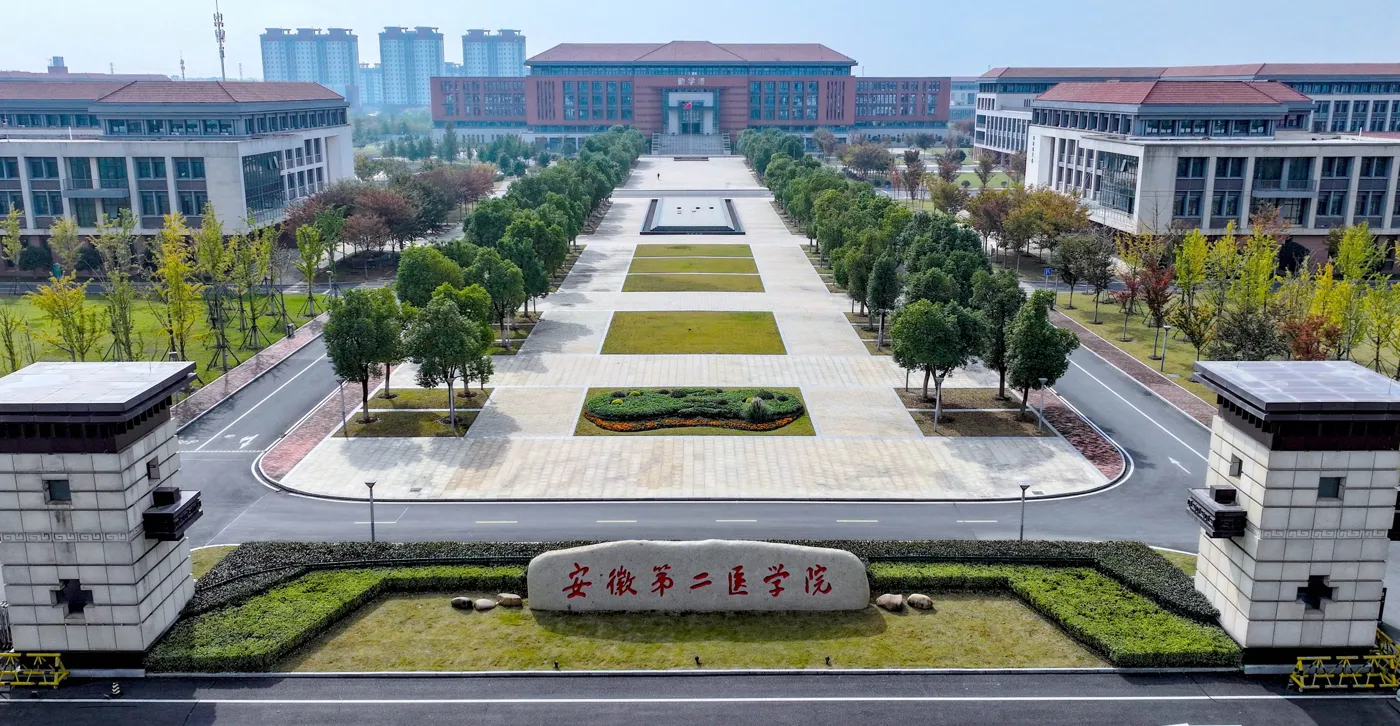
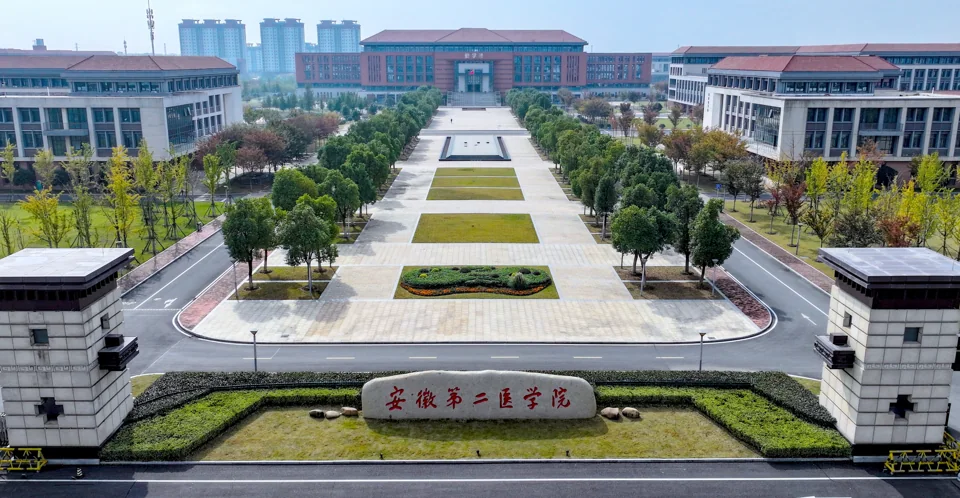
Anhui Institute of Medicine is the directory name for the institution whose official website now identifies it as 安徽第二医学院. The school became a public undergraduate medical institution in June 2025, developing from 安徽医学高等专科学校. It operates under the Anhui Provincial Health Commission and identifies Hefei as its principal location. Its published campus information lists Wuhu Road, Furong Road and Xinqiao teaching locations.
The institution combines medical education with related areas of pharmacy, nursing, medical technology and health management. Its academic organisation includes clinical medicine and general practice, stomatology, medical technology, nursing, public health and health management, and pharmacy. Basic medicine and public foundation teaching provide supporting academic departments. Continuing education, international education and innovation and entrepreneurship also have dedicated organisational units. This structure connects its longstanding vocational medical teaching with the undergraduate institution established in 2025.
Sources: Institutional introduction ↗
A history of health education in Anhui
The institutional timeline begins in 1955, when preparations started for Anhui Provincial Hefei Health School. In January 1969, the school moved to Chaohu and took the name Anhui Provincial Chaohu Health School. A provincial health cadre further education school was established in September 1974, and Hefei Health School was restored in July 1978.
Adult higher education became another part of this history. In 1990, provincial education authorities agreed to temporary college-level adult programmes in clinical medicine and laboratory testing, developed with the provincial health department. A provincial health staff training centre followed in 1992. The timeline records provincial approval for Anhui Staff Medical College in 1993 and approval from the national health ministry's science and education department in 1995. It also records cooperation with other medical colleges between 1999 and 2002. In June 2025, national and provincial approvals established the present undergraduate institution on the former medical college's foundation.
Sources: Institutional history ↗
Library resources and academic information
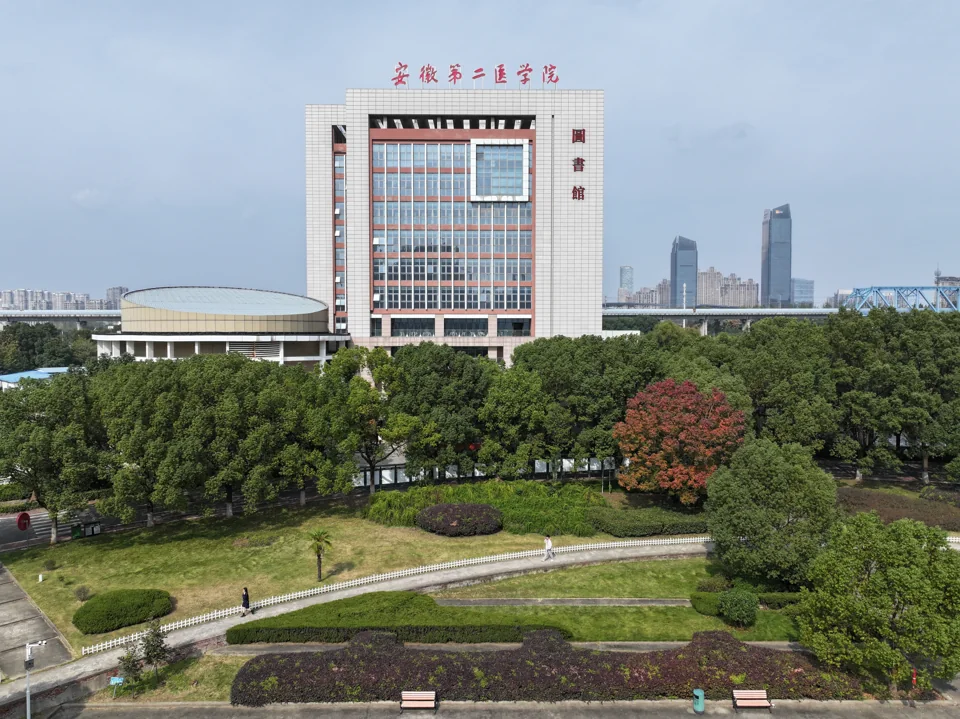
The library describes its role as the institution's centre for literature and information resources, supporting teaching, research and campus culture. Its introduction, published in December 2023, sets out a collection combining printed materials, electronic books, journals, dissertations and teaching resources. Named Chinese databases include the Chinese Biomedical Literature Database, Wanfang, CNKI and VIP. Foreign-language resources include EBSCO and SpringerLink, alongside shared national scientific information resources.
Its services extend beyond lending. The library lists reference enquiries, document copying, interlibrary borrowing, document delivery, literature searching and instruction in information retrieval. It also provides research-related information services such as scientific novelty searching and thesis checking. Printed books and periodicals are organised through the Chinese Library Classification system. Classified shelving allows readers to approach the collection through subject areas, while current Chinese periodicals have fixed positions within their subject classifications.
Sources: Library introduction ↗
Nursing education and simulated practice
The Nursing School's current introduction lists an undergraduate nursing programme alongside three-year specialist programmes in nursing, midwifery, and infant and childcare services and management. Nursing includes an oral nursing direction. The school organises academic work through teaching and research sections in internal medicine nursing, surgical nursing and nursing fundamentals.
Its curriculum development involves the institution, professional associations and healthcare organisations through a programme advisory committee. Practical education includes a nursing training centre at Xinqiao. The introduction describes simulated hospital working environments, demonstration rooms, practical training rooms and integrated classrooms. These spaces bring teaching, learning and practical work together within the curriculum. External placements are also part of the teaching organisation, with the school listing collaborating hospitals in Hefei, elsewhere in Anhui and other provinces. Its teaching staff combine academic faculty with clinical educators from affiliated and partner organisations, linking classroom instruction with the professional settings studied in the programmes.
Sources: Nursing School introduction ↗
Pharmacy and pharmaceutical technology
The Pharmacy School was established in 2005. Its introduction, updated in May 2025, describes pharmacy, biopharmaceutical technology and traditional Chinese pharmacy as its three specialist areas at that time. Teaching and research sections cover chemistry and pharmaceutical quality testing, pharmaceutical business and services, and pharmaceutical production technology.
The school's practical teaching centre includes laboratories for biopharmaceutical technology, pharmaceutical preparations, chemistry, pharmaceutical business, logistics simulation, chromatography and spectroscopy. These facilities support experimental teaching, research and professional training. Equipment described in the introduction includes chromatography instruments and fermentation systems. The school also identifies a biotechnology drug research institute and a jointly developed provincial laboratory. Cooperation with pharmaceutical manufacturers, pharmacy businesses and biotechnology organisations supports placements and apprenticeship arrangements. Continuing professional education is another part of its work: the school describes training for pharmaceutical technical personnel and professional development activities for vocational teaching staff.
Public health, information and health management
The Public Health and Health Management School brings together preventive medicine, health information, older people's services, medical insurance and public health administration. Its detailed introduction describes teaching and research sections corresponding to these fields. Staff experience includes hospitals, disease prevention centres, older people's service organisations, insurance administration and health authorities.
The introduction describes practical rooms for health information management, medical records, health statistics and epidemiology, public health testing, medical insurance, community home-based services and older people's social work. It also identifies problem-based learning classrooms. Its discussion of placements includes an explicitly dated account of partnerships as of December 2020. Academic subjects highlighted in the introduction include preventive medicine, health law, social medicine, nutrition and food hygiene, and health statistics. Research interests include health economics policy, rural medical insurance and public health management. Student development also includes social research, community activities and participation in applied research projects.
Sources: Public Health and Health Management School introduction ↗