Visa
About Anhui Institute of Information Technology
An applied undergraduate institution in Wuhu
Anhui Institute of Information Technology, commonly abbreviated AIIT, is a private, nonprofit undergraduate institution in Wuhu, Anhui Province, China. Its Chinese name is 安徽信息工程学院. The institution is supported by the technology company iFLYTEK and operates under the educational supervision of the Anhui provincial education department. Its current official website gives its address as 1 Yonghe Road in Wuhu’s Wanzhi District.
The institute developed from the electromechanical college established in 2003 within the institution now known as Anhui Polytechnic University. In 2012, iFLYTEK and that university began jointly supporting the college, with the company taking the leading role. In 2016, it became an independently established undergraduate institution under its present name.
Its academic scope centres on engineering while also including management, economics, languages and art. The institutional introduction describes project-based teaching, practical training and cooperation with companies. Computing, electronic engineering, mechanical engineering and design appear alongside business and general education in its academic organisation. The institute connects its applied orientation with regional industries and technological development.
Sources: Institutional introduction ↗
Information services for innovation
The institute’s Technology and Innovation Support Centre forms part of a wider programme associated with the World Intellectual Property Organization and China’s intellectual-property administration. The centre’s own introduction records its formal recognition on 21 October 2021. Its work concerns access to technical information and support for people and organisations engaged in innovation.
The services listed include introductory intellectual-property searches, consultation and training, more specialised information searches, statistical monitoring, analysis and support for transferring technological results. The centre describes serving the Hefei–Wuhu–Bengbu innovation region and the Yangtze River Delta. It also produces information reports and undertakes research or training commissioned by public bodies and enterprises. Its information infrastructure includes academic and patent databases. These activities connect the institute’s technical interests with information skills, research support and services for organisations outside the campus.
Teaching development in artificial intelligence
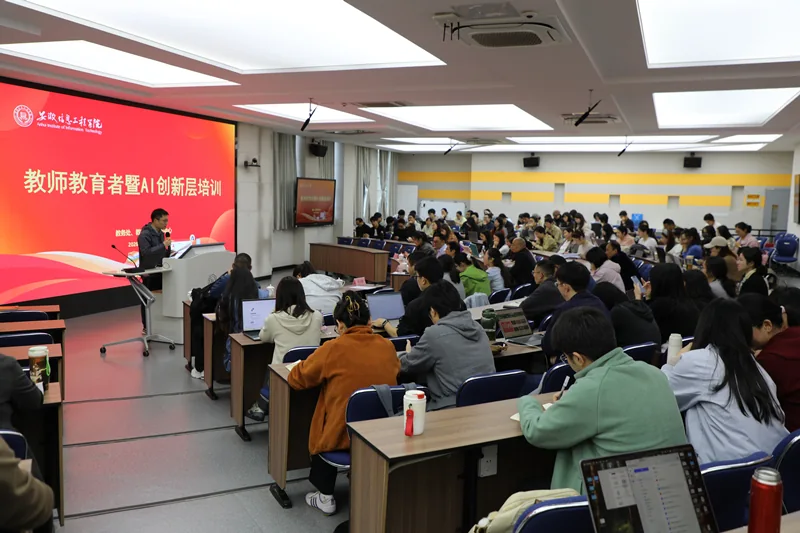
On 29 October 2026, the institute launched a teacher-development programme concerned with artificial intelligence in education. The opening session took place in a classroom in Boxue Building and included a specialist presentation by an education-technology researcher from iFLYTEK. A report published in early November describes the programme as intended to prepare teachers who could subsequently support colleagues’ teaching development.
The presentation considered future teachers, classrooms, schools and learning centres, using examples to discuss preparation, teaching practice and educational management. Participants could respond through a questionnaire and questions during the session. Further arrangements included independent study through online microcourses and practical workshops on creating educational agents. The report presents these as planned stages of professional learning. Its emphasis was on connecting technological tools with educational purposes and on developing teaching experience that could be shared within the institution.
Sources: Teacher development in artificial intelligence, November 2026 ↗
Student leadership and participation
The institute opened a student leadership training programme on 29 October 2026 in the multifunctional hall of its student activity centre. Its November report identifies the course as the tenth edition of its youth Marxist training programme, organised alongside Youth League training. Students and representatives from the institute’s academic units attended the opening ceremony.
The programme combined an introduction to its aims with explanations of the course arrangements, attendance rules and assessment expectations. A student representative spoke about making constructive use of the training and applying it in service to classmates and campus organisations. The opening also included a poetry performance and a collective commitment ceremony. Subsequent activities were planned around theoretical study, practical learning and themed discussion. The report places the course within the institute’s student-development work and its preparation of participants for responsibilities in classes and student associations.
Artistic work alongside technical education
Creative activities also form part of student life. A report published on 2 November 2026 describes the institute’s participation in Anhui’s eighth university student arts exhibition. The provincial education department organised the event, which brought undergraduate and vocational institutions into the same programme. Results were announced on 29 October.
The institute took part in both performance and artwork categories. Its report discusses vocal and recitation performances as well as design, film and visual-art work within the wider exhibition. The Youth League committee coordinated preparations with the academic units, organising teams around the exhibition’s theme. Beyond recording participation, the report sets out an intention to continue providing opportunities for artistic practice and creative work. These activities show an aspect of campus education that complements the institute’s engineering and information-technology subjects.
Recreation, teamwork and campus sport
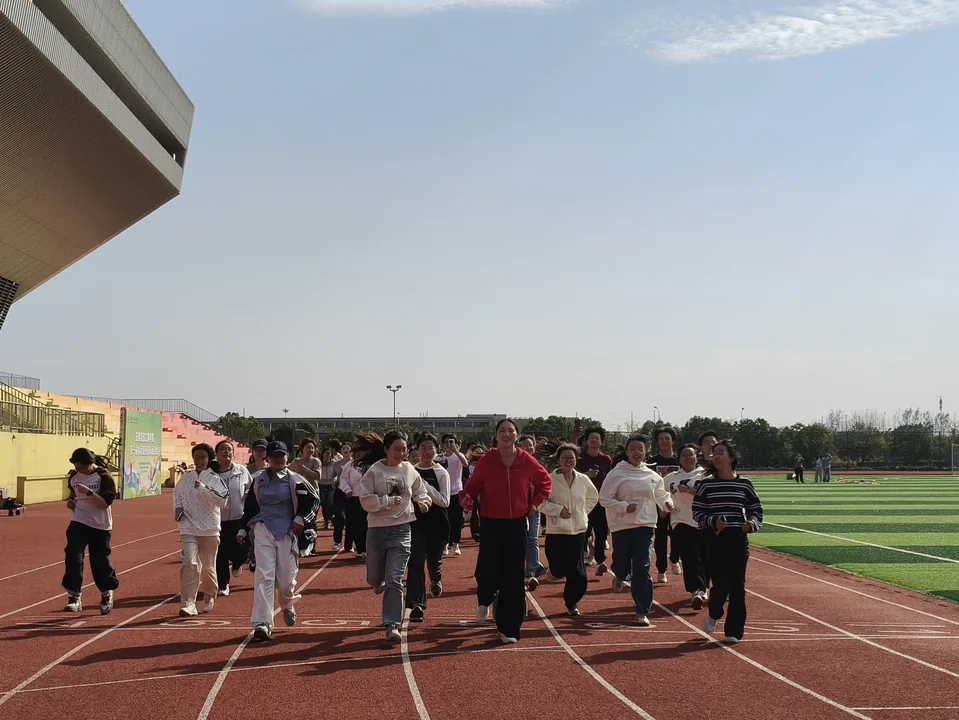
The institute held its first recreational physical-fitness sports meeting on 28 October 2026 at the campus athletics ground. Teams represented the academic colleges, and a visiting athletics specialist led a warm-up run. Before the competitions, organisers explained event rules, scoring arrangements and safety expectations.
The programme mixed relay-style running with cooperative games involving exercise balls, table-tennis balls, hoops and balloons. These formats required participants to coordinate their movements and work together. The meeting concluded with awards and a group photograph. The report describes the occasion as an opportunity for students to meet, participate and demonstrate teamwork through enjoyable physical activity. Its stated intention was to encourage continued involvement in campus sport. Alongside classrooms, laboratories and student cultural programmes, the athletics ground therefore provides another setting for shared university life.
Sources: Campus recreational sports meeting, October 2026 ↗