Visa
About Anhui Industry Polytechnic
An industrial college in Tongling
Anhui Industry Polytechnic is a public higher vocational institution in Tongling, Anhui Province, China. Its Chinese name is 安徽工业职业技术学院. The college traces its origins to 1979 and began offering higher vocational education in 2000. Its educational work combines higher vocational study with technician education, adult education and professional training.
The institution's subject profile reflects its relationship with local industry and the nonferrous-metals sector. Its academic organisation includes mechanical and electrical engineering, information engineering, resource development, management engineering and foundation teaching. The college identifies Tianjing Lake and Xihu as its existing campuses. A separate eastern campus began construction on 27 December 2024, with the institutional development plan anticipating use in 2027. That project represents future expansion alongside the college's established teaching locations and its continuing emphasis on technical education.
Sources: College introduction ↗
From industrial training to higher vocational education
The college developed from Tongling Nonferrous Technical School and Tongling Nonferrous Staff University. The technical school opened in May 1979 and provided secondary vocational education in areas such as electromechanical technology, electronics, vehicle repair, metallurgy, copper processing and computing. The staff university was established in 1984 as an adult higher education institution.
In 2000, the two institutions joined other local schools in an application to develop higher vocational education. They merged in 2002, and Anhui Industry Polytechnic was formally established under its present name in 2004. Another development followed in 2012, when Anhui Nonferrous Metals Technician College was approved to operate alongside the polytechnic through a shared organisation. On 1 June 2019, management transferred from Tongling Nonferrous Metals Group to the Tongling municipal government. The history identifies the institution as a member of Anhui Dajiang Education Group.
Sources: Institutional history ↗
Mechanical, electrical and manufacturing education
The School of Mechanical and Electrical Engineering brings together programmes concerned with manufacturing, equipment, vehicles and automation. Its listed fields include numerical-control technology, mechanical manufacturing and automation, mould design, electromechanical equipment, mechatronics, electrical automation, industrial robotics and new-energy vehicle technology. Internet-of-Things applications and intelligent products also appear in its provision.
Practical teaching is supported by specialist settings for electronics, programmable controllers, machinery, hydraulics and pneumatics, numerical-control simulation, machining, mould production, three-dimensional printing and vehicle systems. The school describes enterprise cooperation and the combination of study with practical work as important elements of its approach. Its links include organisations in manufacturing, vehicle production, electronics, equipment and new materials. Teaching and research activity are connected with these industrial settings, giving students opportunities to encounter the relationship between professional theory and production practice.
Information technology and digital creativity
The Information Engineering Department was established in July 2001. Its programme range extends across computing, digital media and information security. It lists computer applications, computer networks, software technology, big-data technology, information-security applications, digital media, animation, advertising art design and virtual-reality applications.
The department's educational facilities include multimedia classrooms and professional training rooms, supported by practical teaching bases in enterprises. It also describes workshops concerned with technical skills, artistic media and the development of teaching expertise. These settings support learning that brings specialist knowledge together with projects and practical experience. Cooperation with technology companies and network-education organisations forms another part of the department's work. Its account emphasises technical competitions, innovation activities, teamwork and internships as ways of developing students' practical capabilities alongside their academic studies.
Sources: Information Engineering Department ↗
Resources, materials and environmental fields
The Resource Development Department reflects the college's longstanding connection with Tongling's industrial economy. Its subjects include intelligent mining, mineral processing, environmental monitoring, applied chemical technology, engineering surveying, construction engineering, construction costing, architectural decoration and food inspection. Adult education, continuing education and skills training also form part of its activity.
The department describes a mineral-processing programme group developed around several related resource and environmental subjects. Its work has expanded into copper-based new materials and green chemical and environmental education. Enterprise cooperation includes arrangements for teachers and company specialists to exchange experience and for students to undertake practical learning. The department also identifies a research centre concerned with the comprehensive use of mining solid waste. These connections place its educational work across resource extraction, materials processing and environmental development, while linking curriculum planning with regional industrial needs.
Sources: Resource Development Department ↗
Library reading and study spaces
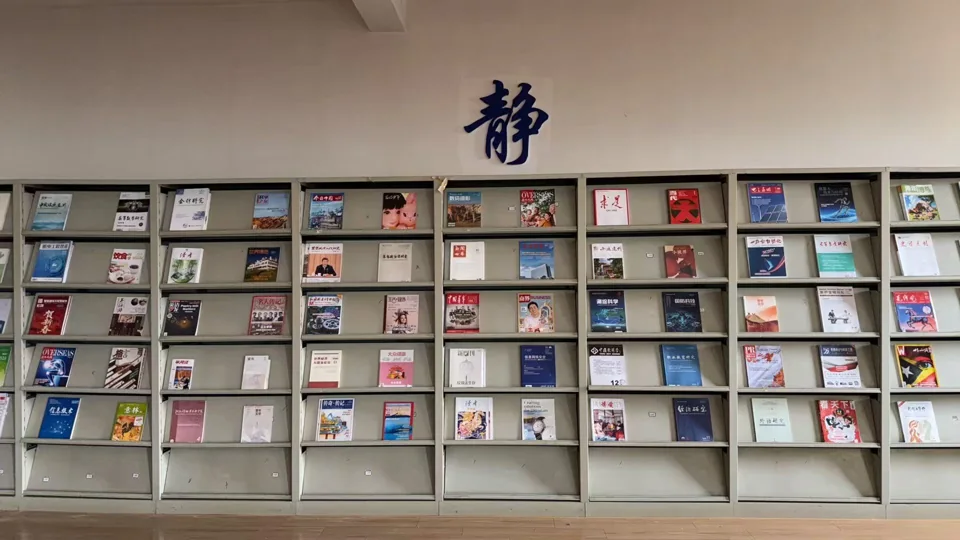
The college library supports both teaching and research and provides a setting for independent study. A March 2026 notice announced its reopening for the semester and described the preparation of periodicals for readers. Newly received magazines were classified and placed on the shelves during the opening week.
The collections described in the notice covered literature, art, science and technology, economics and education. The library invited students to use its reading room, borrow material and make use of quiet study space outside their classes. The notice distinguished the study-room service from the lending-room service, reflecting their different uses. The accompanying institutional photograph shows the arrangement of periodicals on display, illustrating one part of the library's provision for readers.
Sources: Library reopening and new periodicals, March 2026 ↗
Cooperation with the regional economy
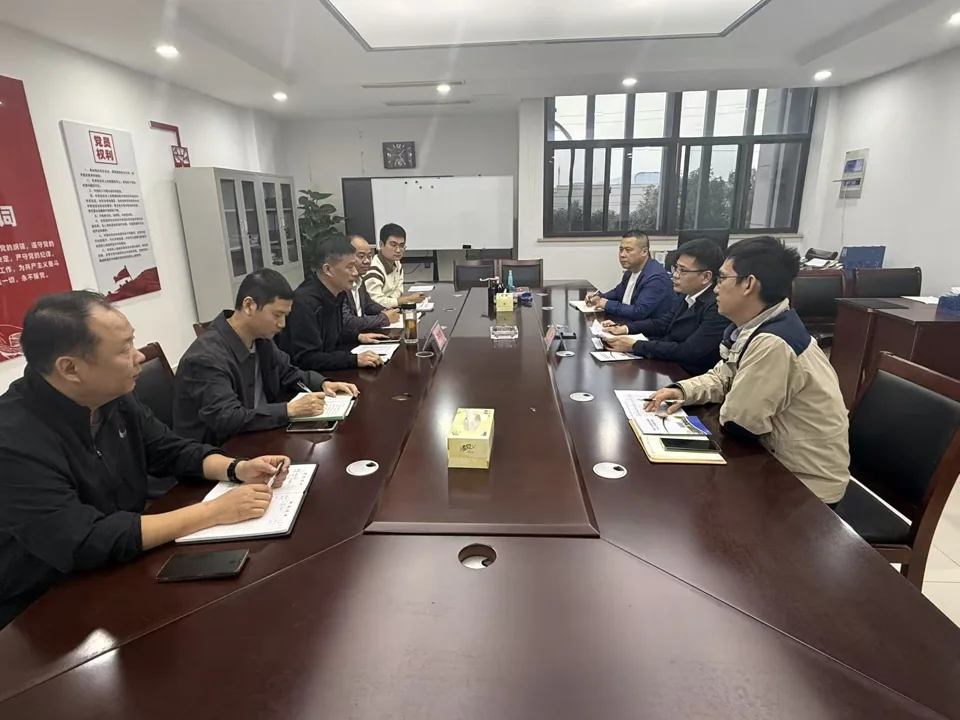
A college delegation visited Tongling Economic and Technological Development Zone on 27 October 2026 to discuss education-industry cooperation. The report identifies work on an Anhui nonferrous-metals industry education partnership and the development of enterprise-linked training classes as central subjects of the meeting.
The discussion covered curriculum resources, practical training bases, company requirements and cooperation mechanisms linking the college, enterprises and the development zone. The college described work in intelligent manufacturing, new materials and equipment manufacturing, with companies participating in the planning of educational provision. Both sides set out intentions to maintain communication and develop further cooperation. The meeting illustrates the institution's regional engagement through discussion of teaching and practical learning, with proposed developments clearly presented as future collaborative work.
Sources: Cooperation with Tongling Economic and Technological Development Zone, October 2026 ↗