Visa
About Anhui Health College
A health vocational college in Chizhou
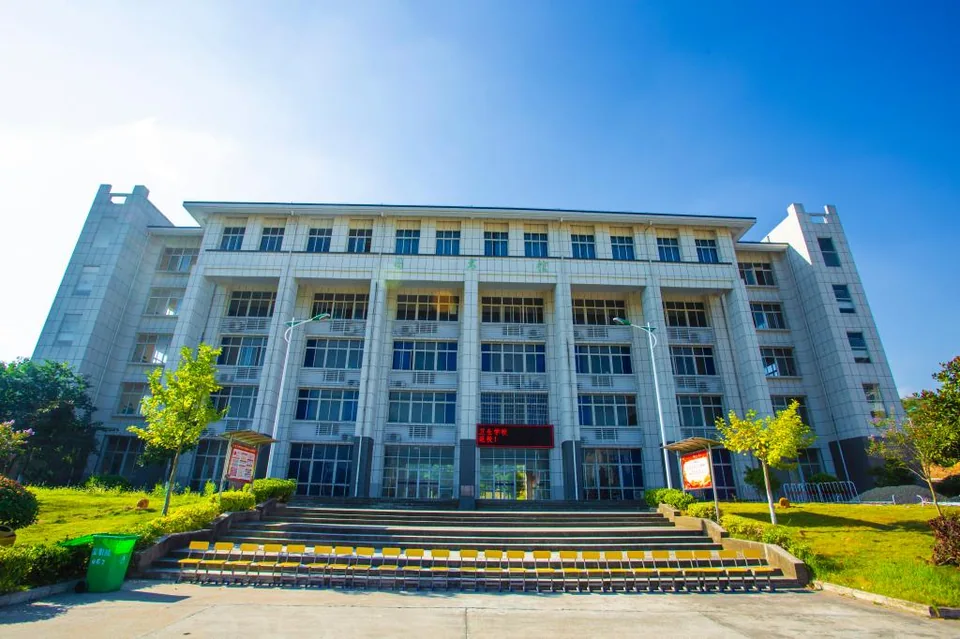
Anhui Health College is the directory name for 安徽卫生健康职业学院, a public higher vocational institution in Chizhou, Anhui Province, China. The college is located in the city’s Education Park. Its institutional introduction identifies the Anhui Provincial Health Commission as its supervising authority, alongside educational guidance from the provincial education department.
Its principal areas of education include nursing, health services, medicine and medical technology. The introduction describes professional groups concerned with clinical medicine, nursing, laboratory technology, and intelligent elderly-health services and management. Practical teaching facilities support fields including midwifery, medical imaging, rehabilitation and pharmacy, as well as nursing and clinical study. The college also works with hospitals in education and training. Its account identifies joint nursing and pharmacy progression programmes with Anhui Medical University. These are collaborative educational arrangements within a vocational institution’s wider provision.
The college’s educational work extends beyond regular student courses to professional training and continuing education. Its introduction records a provincial life-course health vocational-education alliance established under its leadership in June 2022, connecting its specialist focus with cooperation across the health-education sector.
Sources: College introduction ↗
From a hospital nursing school to a vocational college
The institution traces its origins to a nursing school established at Wuhu Hospital in 1926. Its history describes hospital-based education combining classroom instruction with clinical nursing work. The school adopted a commemorative Huairang name in 1936 and subsequently passed through several changes in organisation and responsibility.
During the 1950s, mergers and the addition of medical-assistant and midwifery education broadened its role. It became Anhui Wuhu Health School in 1958. The institution moved from Wuhu to Chizhou in January 1969 and became Anhui Chizhou Health School; admissions resumed in 1972. In July 1987, it was renamed Anhui Provincial Family Planning School.
A new Education Park campus was constructed from 2009 and entered use in 2010. In March 2012, the school became Anhui Population Vocational College, joining the system of public higher vocational institutions offering specialist-level education. The present Chinese name, Anhui Health Vocational College, followed in May 2017. This sequence distinguishes the college’s long nursing-school ancestry from its more recent status and name in higher vocational education.
Sources: Institutional history ↗
Discussion of nursing education and professional development
A report published on 29 October 2026 records a specialist lecture on nursing education and nursing careers. The college invited Ma Yulong, chair of the provincial nursing association, to discuss the development of health services in Anhui. The presentation addressed nursing talent preparation, programme development and professional development. The report connects this discussion with the college’s continuing work on nursing teaching and the preparation of technically skilled health personnel.
Practising communication through workplace scenarios
An October 2026 report describes a student activity using role-play to explore workplace situations. Participants simulated professional communication, teamwork, unexpected problems and practical responsibilities associated with working life. The activity was designed to make workplace expectations more concrete and to connect classroom learning with situations students might later encounter.
Students took the roles of employees and responded to the problems presented in each scenario. Teachers reviewed their performances, identified areas for improvement, and discussed communication techniques and ways of handling situations. The report presents the event as part of employment-guidance education. Its emphasis is on practising expression, cooperation and adaptability through a structured learning activity, with feedback from teachers following the student performances.
Sport and student participation
On 23 September 2026, the college’s foundational teaching department held a skipping competition in the campus gymnasium. A report published later that month describes individual events for men and women, together with a paired skipping event. Each format used a one-minute time period, and the competition concluded with awards in the different categories.
The report describes an energetic setting with participants, supporters and people counting the jumps. It places the event within the college’s efforts to broaden campus cultural and sporting life and encourage students to participate in physical activity. The gymnasium therefore appears as a setting for organised student recreation as well as part of the campus’s physical infrastructure.
Helping new students settle into study
The Medical and Health Technology Department held an orientation meeting for its 2026 intake on 11 September. The meeting took place in a multifunctional lecture hall in Building Four. Its programme addressed personal development, everyday behaviour, study habits, methods of professional learning and career planning.
A visiting officer from the Chizhou public security bureau also spoke about preventing telecommunications and online fraud. The presentation used examples of scams affecting campus communities and discussed protecting personal information and property. The department’s report, published on 18 September, presents orientation as an ongoing process involving academic development and safety education. These activities were intended to help new students become familiar with campus life and establish an approach to their studies.
Sources: Medical technology student orientation, September 2026 ↗
Library and electronic information resources
The college’s library-resources directory brings together links to electronic books, academic literature and shared information services. It lists Chaoxing, Changxiangzhixing, Apabi and Wuche electronic-book resources, alongside China National Knowledge Infrastructure services. It also identifies the Anhui university resource-sharing platform and the CALIS Anhui information service.
Several entries are explicitly labelled as local or campus-only resources, including the college catalogue and some electronic-book collections. The directory therefore provides a guide to the institution’s information infrastructure while distinguishing resources intended for use within its own network. These services complement the teaching departments and the college’s wider emphasis on professional education.
Sources: Library resources ↗