Visa

About Anhui Finance & Trade Vocational College
A finance and trade college in Hefei
Anhui Finance & Trade Vocational College, or 安徽财贸职业学院, is a public higher-education institution in Hefei, Anhui Province. The college traces its foundation to 1964 and is affiliated with the Anhui provincial supply-and-marketing cooperative system. Its institutional profile, published in January 2026, identifies Feicui, Shushan and Heping as its campuses. Their addresses are 900 Feicui Road, 557 Wangjiang West Road and 13 Hugang Road respectively.
The college merged with Hefei’s commercial adult secondary school in 2009. In 2021, it took over ordinary higher-education functions from the Anhui Provincial Party School, also known as Anhui Administrative College, and added the name Anhui Economic Management College. This was a transfer of educational functions within a broader institutional history. The college’s profile describes an emphasis on vocational teaching, cooperation between education and industry, and service to regional development. It also records the college’s role in initiating a national industry–education cooperation community for digital finance.
Sources: College profile, 22 January 2026 ↗
Accounting, finance and practical learning
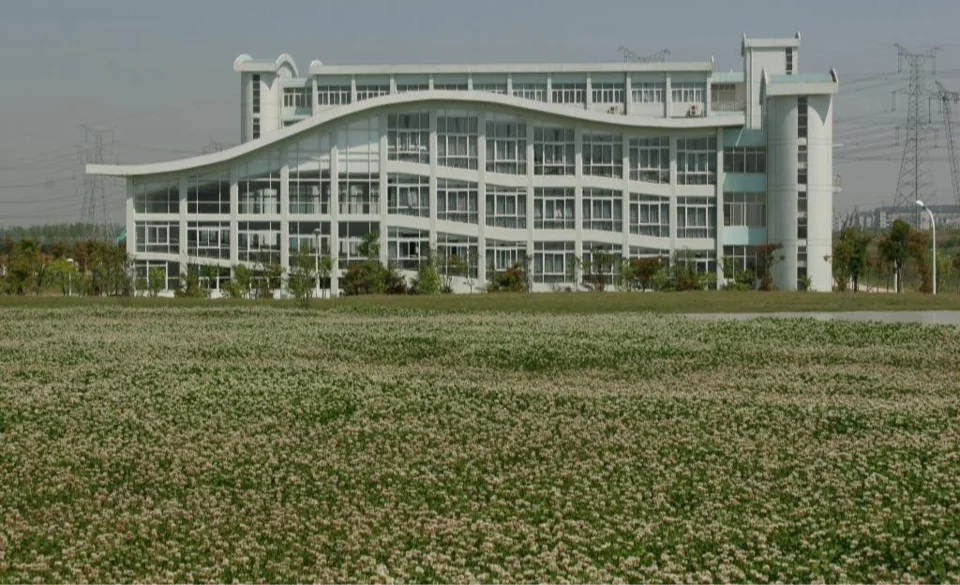
The Accounting and Finance College’s profile identifies big data and financial management, big data and accounting, and big data and auditing among its professional fields. Its account places practical teaching and cooperation with industry alongside subject knowledge. It describes participation in a modern-apprenticeship approach and joint educational work connected with progression from specialist-level study to undergraduate education.
Campus training rooms and external practical-learning bases support this work. The profile names cooperating organisations in financial services, taxation, business software and education technology, including Huilong, Xindao Technology and several finance-and-taxation service companies. These relationships provide settings for student practice and teachers’ experience in industry. The unit also describes plans to develop teaching resources using new technologies, including artificial intelligence, and to strengthen cooperation with enterprises. Its academic focus brings accounting and financial work into contact with changing digital business practices.
Economics and trade education
The Economics and Trade College was formed in 2020 by bringing together the former management and trade colleges. Its profile describes teaching groups concerned with supply chains, e-commerce, business administration, modern services and modern trade. The subjects listed include e-commerce, logistics management, chain-store management, business administration, marketing, business-data analysis, construction-cost management, and agricultural-product circulation and management.
Practical facilities described by the unit include e-commerce, cold-chain logistics, new retail, human-resource management, business-data analysis and modern agricultural-product trade training rooms. This combination connects commercial study with the movement of goods, retail operations and the use of business information. The profile also records joint teaching with Anhui University of Finance and Economics for an e-commerce progression programme beginning in 2020. Its stated educational approach alternates study and practical work, reflecting the college’s wider vocational orientation and links with commercial sectors.
The development of future technology teaching
The Future Technology College was established in January 2024. Its October 2024 account traces its academic lineage through an earlier computing and information-engineering department founded in 2002, followed by several changes in departmental organisation and names. The 2024 unit brought together professional fields previously located within the Information Engineering College.
Those fields were artificial-intelligence technology applications, big-data technology, digital-media technology, Internet of Things applications, industrial-internet technology, intelligent connected-vehicle technology and new-energy vehicle technology. The account describes teaching and research teams in artificial intelligence, big data, digital media and the Internet of Things. It also identifies an industrial-internet and machine-vision practice centre and an industrial-internet industry college. These developments show how the institution’s teaching has extended from its finance-and-trade identity into computing, connected systems and applications relevant to changing industrial processes.
Sources: Future Technology College profile, 12 October 2024 ↗
Library collections and campus reading
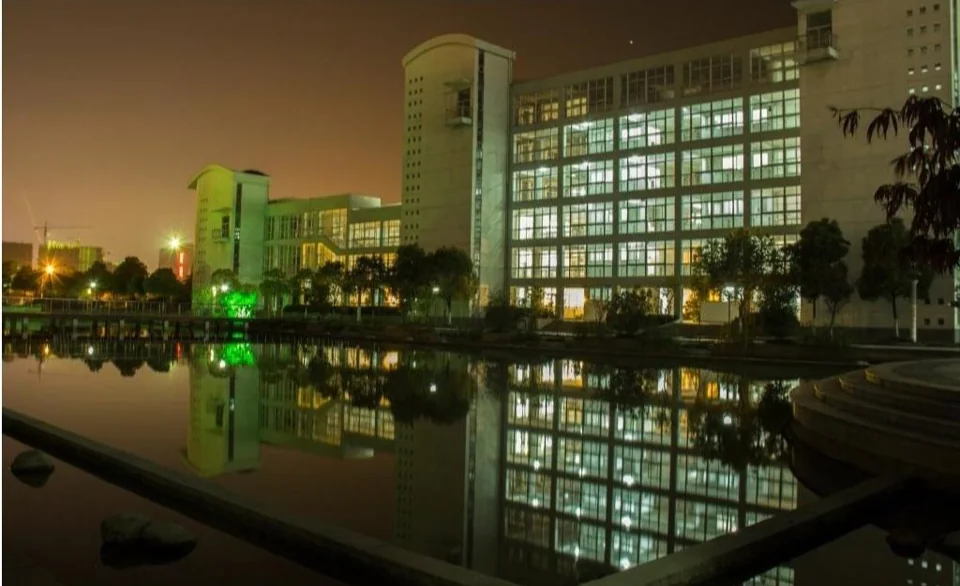
The college library traces its beginning to 1964 and serves all three campuses through a Feicui main library and branches at Shushan and Heping. Its introduction describes a collection developed around the institution’s subjects, with both print and electronic materials. The Feicui building contains book-borrowing rooms, a periodicals reading room and self-study spaces, supported by wireless internet access.
Electronic resources include Chinese and international databases, with services such as China National Knowledge Infrastructure, Wanfang and EBSCO collections named in the introduction. Self-service borrowing and return equipment forms part of the library’s service infrastructure. A bookstore and reading space on the ground floor brings newly published books alongside the library’s existing collections. Another collection area holds facsimile editions of major Chinese historical works, including the Yongle Encyclopaedia, the Siku Quanshu and editions of the Twenty-Four Histories, supporting reading and engagement with traditional scholarship.
Sources: Library introduction ↗
Training for cooperative and rural services
The college’s connection with the supply-and-marketing cooperative sector also appears in its community-training work. A report published on 3 November 2026 described a course held from 28 to 30 October for cooperative personnel from Jieshou and the surrounding Fuyang area. The Jieshou supply-and-marketing cooperative federation organised the course, and the Economics and Trade College delivered it at the local Party School.
Teaching addressed agricultural-product distribution, agricultural social services, digital support for county-level circulation networks, rural e-commerce and the operation of village cooperatives. Other subjects included recycling systems, collective rural economic activity, and the planning and submission of projects. Participants also discussed practical difficulties in cooperative reform and reducing the costs of agricultural-product circulation. The report offers a specific example of the college applying its commercial and management expertise through professional education beyond its regular student programmes.
Sources: Rural revitalisation training report, 3 November 2026 ↗