Visa
About Anhui Academy of Medical Sciences
A provincial institute combining research and training
Anhui Academy of Medical Sciences is a provincial public medical research institution in Hefei, Anhui, China. Its official institutional account traces its establishment to 1959 under the earlier name Anhui Institute of Medical Sciences. It adopted its academy name in 2007. The same account records that Anhui Second Medical College took responsibility for its entrusted management in November 2022.
The academy combines medical research, teaching and scientific services. Its principal tasks concern basic and applied medical investigation, the development of research results for practical use and technical support for external organizations. Its structure includes research institutes concerned with Chinese medicines, pharmacology and toxicology, microbiology, preventive medicine and clinical medicine. Separate centres provide testing, health-technology assessment and laboratory-animal quality services. This is a research and training organization rather than a conventional university offering a general catalogue of undergraduate degrees. Its published address is 15 Yonghong Road, Hefei.
Sources: A provincial institute combining research and training ↗
Professional learning for vocational teachers
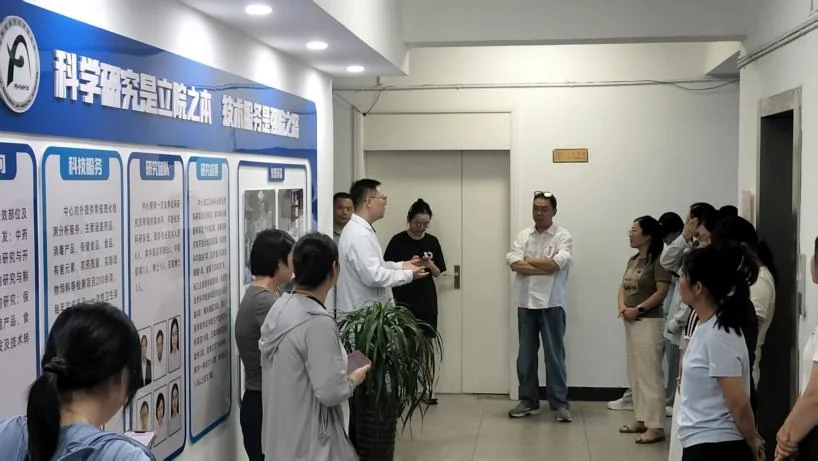
A September 2026 report documents a training programme hosted at the academy for teachers working in vocational education. Held in two groups on 1 and 2 September, the activity formed part of a provincial teacher-development project organized through the education authorities and Anhui Second Medical College. Nearly eighty teachers from secondary and higher vocational institutions took part.
The programme concerned standards in biomedical research and the transfer of scientific results into practice. Teaching drew on expertise in pharmaceutical chemistry, pharmacology and research ethics. It combined thematic instruction with visits and practical learning in research laboratories. The report identifies analytical instruments and quality-testing applications among the subjects introduced. Its account emphasizes interaction between visiting teachers and academy specialists. The activity illustrates a specific educational contribution: allowing teachers to encounter research settings and scientific-service work that can inform their own professional development and teaching.
Sources: Professional learning for vocational teachers ↗
Postdoctoral training and academic collaboration
On 10 October 2026, the academy reported the arrival of the first researcher at its postdoctoral research workstation. The event brought together academy leaders, its academic committee, doctoral-qualified staff and a collaborating supervisor from Anhui University of Chinese Medicine. The report distinguishes the establishment of a platform from the beginning of its active training work.
The academy states that its provincial postdoctoral workstation had been approved in 2024. Its description of cooperation with the university concerns joint postdoctoral development and research in Chinese medicines and pharmacology. The report also identifies basic medicine, public health, testing and related scientific platforms as important parts of its research environment. Academic support, research resources and service arrangements are presented as priorities for the new workstation. This example places advanced researcher development alongside the academy’s established institutional functions, while the proposed directions of collaboration remain research aims rather than demonstrated clinical outcomes.
Analytical research reported in 2026
An October 2026 research report describes a collaboration led by academy researchers with participation from the Anhui disease-control centre. The work was published in Food Chemistry and concerned detecting hydrogen peroxide in food-related samples. The institutional account presents it as an investigation into analytical measurement, rather than a treatment or a medical service for individual patients.
The report discusses the difficulty of obtaining reliable measurements when other substances in a sample interfere with existing tests. It describes complementary fluorescence and colour-based approaches and identifies milk, tea and packaging-rinse water among the samples investigated. These details show the connection between laboratory chemistry and questions arising in food analysis. The academy describes possible future applications in monitoring and screening; those possibilities should be understood as proposed uses. The example illustrates the institution’s interest in developing scientific methods and communicating research through academic publication.
Support for emerging researchers
In August 2026, the academy announced that two applications submitted through its research platform had received National Natural Science Foundation support for young researchers. Its report identifies projects in pharmacological research and medicinal chemistry. One was associated with an academy researcher and the other with a researcher from Anhui Second Medical College, reflecting collaboration between the organizations.
The announcement describes research management and the development of scientific staff as institutional priorities. It refers to preparing potential projects, supporting researchers at different stages and helping promising applications develop. Further investment in basic research and younger scientific personnel appears as a direction for future work. These details describe the academy’s approach to building research capacity, rather than a guarantee that every proposal will secure support. The dated announcement provides a specific example of funded project development within the wider research and training environment.
Sources: Support for emerging researchers ↗
Cooperation between research and hospital practice
A July 2026 report records a cooperation agreement between the academy and Lu’an Hospital of Traditional Chinese Medicine. Representatives met on 28 July to discuss their institutions, research platforms, staff development and priorities for collaboration. The agreement proposed a continuing relationship based on complementary expertise and shared resources.
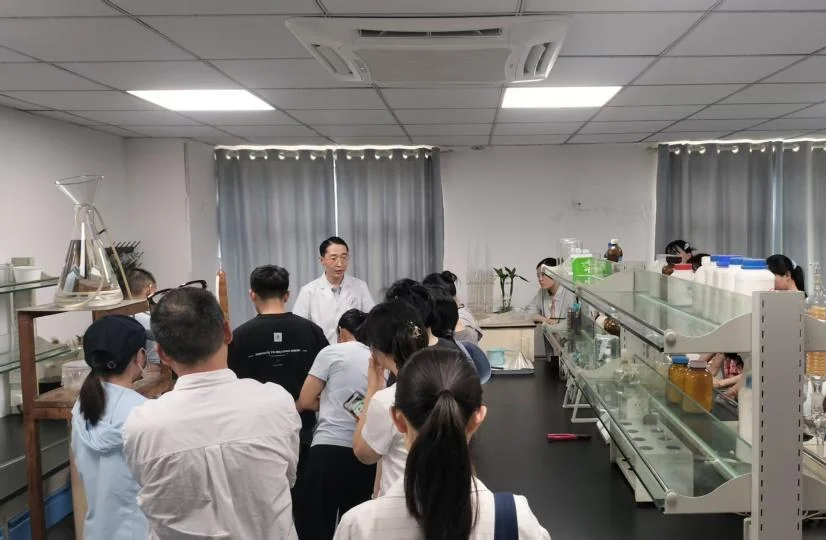
The report identifies joint scientific teams, research-platform cooperation, staff development and applications for research projects among the intended activities. It also describes an interest in connecting questions arising in hospital practice with basic scientific investigation. After the signing, the visiting delegation toured specialist laboratories and research facilities and discussed possible technical cooperation with scientific staff. The academy identified this as its second such partnership with a municipal traditional-medicine hospital, following Anqing. These are documented organizational activities and proposed research relationships; they do not establish that particular interventions have been proven effective or that the partnership’s planned benefits have already been achieved.
Sources: Cooperation between research and hospital practice ↗