Visa
About Angkor University
A university rooted in Siem Reap
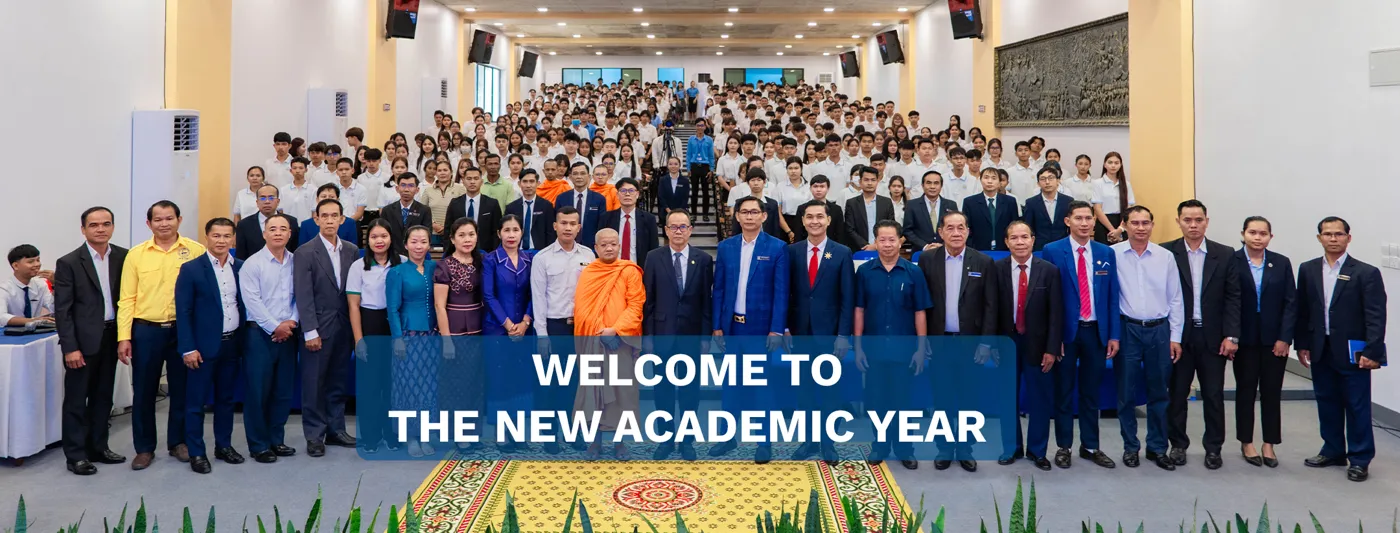
Angkor University, commonly abbreviated A.U., is a higher-education and research institution in Siem Reap Province, Cambodia. Its official history dates its establishment to 2004 and identifies Seang Nam and Sok Tonh among the local investors behind its development. The account connects the university’s creation with the expansion of provincial higher education in Cambodia during the early 2000s.
The institution initially brought together faculties covering business administration and tourism, science and technology, humanities and foreign languages, sociology and law, and agriculture. Its history describes study at associate, bachelor’s and master’s levels, using Khmer and English-language learning materials. It also identifies initiative, teamwork, leadership, practical experiments and internships as parts of its educational approach. This combines academic study with an emphasis on participation and practical learning in a provincial university setting.
Mission and institutional values
The university’s vision places its educational work within Cambodia and the wider ASEAN region. It describes an ambition to develop professional knowledge together with leadership, creativity and innovation. Its stated missions include education in different fields and the provision of an environment for study, research and continued development.
The published core values connect academic purposes with responsibilities toward other people. They include quality, accountability, innovation, social engagement, knowledge, growth and development. Other values concern family and social connections, health and safety, morality, harmony, dignity and conscience. The university presents these principles as a long-term foundation for the quality of its education. They describe the institutional culture it seeks to develop alongside its academic programmes.
Sources: Angkor University: Vision, Mission and Core Values ↗
Science, computing and digital subjects
The Faculty of Science and Technology describes computing education through both theoretical foundations and practical applications. Its computer-science account emphasizes algorithms, data structures, software architecture and programming. The information-technology description addresses networking, databases, application development and computing infrastructure.
The faculty also discusses the relationship between mathematical knowledge and applied computing. Its published subject descriptions include data analysis, machine learning, web and mobile technologies, and the design of information systems. These areas connect different aspects of digital work: understanding computational problems, organizing information, developing software and supporting the systems through which people use technology. The faculty presents practical projects and collaborative learning as part of its approach to these subjects.
Sources: Angkor University: Faculty of Science and Technology ↗
Business and tourism in a regional setting
The Faculty of Business Administration and Tourism places its work within Siem Reap’s tourism setting. Its academic descriptions combine business organization and management with accounting, finance and hospitality. The page discusses case studies, financial modelling, mentoring and practical exposure as ways of connecting theory with professional contexts.
Its listed fields include accounting and auditing, finance and banking, business administration, hotel and tourism management, and digital marketing. The descriptions address subjects such as financial information, organizational leadership, hospitality operations, events and online communication. At postgraduate level, the faculty outlines business-administration study concerned with strategy and decision-making. This range connects the management of organizations with the service, tourism and financial activities discussed in its account of the regional economy.
Sources: Angkor University: Faculty of Business Administration and Tourism ↗
Engineering and the built environment
The Faculty of Engineering and Architecture brings together subjects concerned with buildings, infrastructure and the spaces people inhabit. Its civil-engineering description includes structural analysis, geotechnical topics, transport infrastructure and construction management. The architecture descriptions connect spatial planning and design with cultural heritage, building use and environmental considerations.
The faculty’s account also covers electrical and electronics engineering through power systems, renewable energy and automation. Across its descriptions, digital drafting and building-information modelling sit alongside surveying, materials and structural study. These subjects show the relationship between design decisions, technical calculations and practical construction issues within the faculty’s stated academic scope. Its presentation emphasizes the combination of Khmer cultural context with contemporary approaches to the built environment.
Sources: Angkor University: Faculty of Engineering and Architecture ↗
Reading, writing and literary participation
The Reading and Academic Authoring Club adds a literary and scholarly dimension to student participation. Its stated purpose is to encourage reading, critical thought, academic writing, creative literature and appreciation of Cambodian literary heritage. The club describes opportunities to work on reading techniques, analysis and the structure of written work.
Its published activities include the Indradevi Reading Forum, bringing students, scholars and authors into discussion about literature. Writing workshops address research structure, citation, essays, storytelling and creative composition. The club also describes community literacy outreach, including reading days and book-related activities in local settings. These are presented as ways of linking university reading and writing practices with conversations among students and with the surrounding community.
Sources: Angkor University: Reading and Academic Authoring Club ↗
A study visit connecting education and regional development
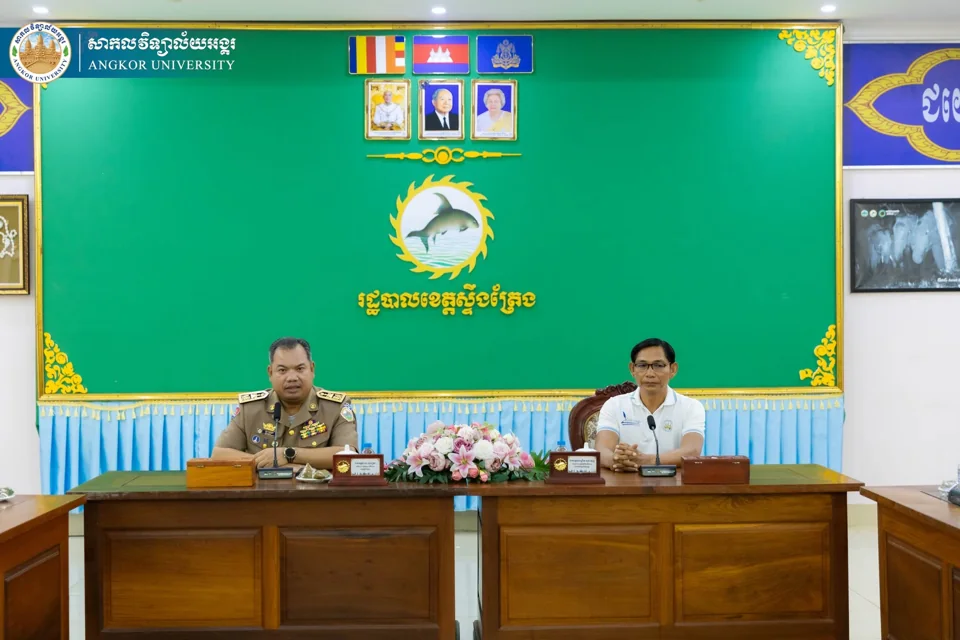
An August 2026 university report describes a delegation’s visit to the Stung Treng provincial administration during a study tour in northeastern Cambodia. University board and management representatives met the provincial governor and discussed connections between academic study and regional development.
The report identifies eco-tourism, cultural heritage and infrastructure as subjects raised in the exchange. It presents the province as a setting for possible academic research and records discussion of higher education for local school graduates. The visit illustrates the university’s reported engagement with places beyond Siem Reap, linking its educational interests with regional institutions. The accompanying photograph documents that visit, rather than a scene on the university campus.
Sources: Angkor University: Stung Treng study-tour report, August 2026 ↗
Orientation for a nursing bridging-course cohort
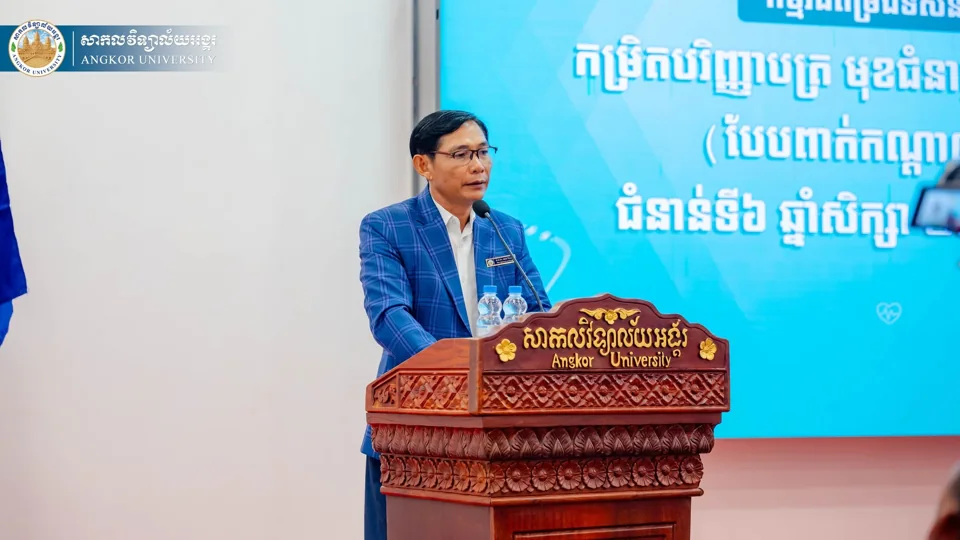
The university also reported an orientation programme on July 11, 2026 for the sixth cohort of its Bachelor of Nursing bridging course for the 2025–2026 academic year. The event introduced students to the programme’s academic organization and professional expectations. The report describes attention to participants’ study alongside their existing professional responsibilities. Its official gallery records the welcome event, providing a dated example of the university’s academic-community activities.
Sources: Angkor University: Nursing bridging-course orientation, July 2026 ↗