Visa
About Andres Bonifacio College
An institution established in Dipolog
Andres Bonifacio College is based at College Park in Miputak, Dipolog City, in the Philippines. Amando Borja Amatong founded its predecessor, Andres Bonifacio Institute, in 1940. Inspired by the Philippine revolutionary hero whose name it bears, he sought to make education accessible to people in Zamboanga and the wider Mindanao region. The institute began with first- and second-year high school classes and vocational instruction in typing and stenography.
Its founder died during the Second World War, and Felicidad Amatong continued the work of reopening and developing the school. The institution later adopted the name Andres Bonifacio College. After using several premises in the city, it moved to College Park following a fire in 1968. Its educational history includes its first high school graduates in 1947, elementary teaching and arts qualifications in 1948, secondary education graduates in 1950, arts graduates in 1952 and law graduates in 1953. Engineering, agriculture and other fields subsequently broadened its academic work.
Sources: College history ↗
Engineering and practical learning
The School of Engineering lists bachelor's degrees in computer, civil, geodetic, electronics, electrical and mechanical engineering. These disciplines place computing and electronic systems alongside the study of structures, land measurement, machines and other physical systems within the college's academic provision.
The school's educational approach combines mathematics, science and engineering principles with practical activities. Its description includes laboratory work, design projects, simulations and field experience, providing different ways to connect technical concepts with applications. Research and collaborative design are also part of its stated approach. The school emphasises the environmental, economic and social implications of engineering decisions, together with safety and ethical responsibility. Communication, teamwork and professional judgement are identified alongside technical understanding. Its educational aims therefore extend from the study of engineering subjects to the way students analyse problems, develop designs and work with others.
Sources: School of Engineering ↗
Preparing teachers
The School of Education offers Bachelor of Elementary Education and Bachelor of Secondary Education programmes. Its stated purpose is to prepare educators through a combination of academic knowledge, professional skills and attention to learners' needs. The school describes student-centred teaching as an important part of its educational outlook.
Areas of preparation include teaching strategies, educational technology, classroom management, assessment and inclusive learning environments. The school also identifies demonstrations, field studies, internships, research and community engagement as ways of connecting educational theory with practice. Reflection is another element of its stated approach: prospective teachers are encouraged to consider how their methods can be evaluated and improved. The school's description links these professional activities with empathy, respect and social responsibility, presenting teaching as work that involves both subject preparation and relationships with learners and communities.
Sources: School of Education ↗
Agricultural study and community connections
The School of Agriculture offers a Bachelor of Science in Agriculture. Its subject description covers crop production, animal science, soil and water management, agricultural technology, agribusiness and the management of natural resources. These areas bring scientific study together with questions of production and rural life.
The school describes classroom instruction, laboratory activity, fieldwork, research and practical training as components of its educational approach. Sustainability is a stated priority, including the relationship between farming, environmental conservation and community needs. Its research aims concern practical agricultural questions such as changing environmental conditions, limited resources and food production. Connections with farmers, communities, public agencies and industry practitioners are also part of the school's described outlook. The programme is presented within a broader interest in food security, rural development and the responsible use of agricultural resources.
Sources: School of Agriculture ↗
Legal education and public service
The School of Law lists the Juris Doctor as its programme. Its educational description places legal knowledge alongside analytical thinking, ethical practice and public service. Students are introduced to legal questions through discussions, legal research, case analysis, writing and simulated practical activities. These methods are intended to develop the ability to examine different perspectives and form reasoned arguments.
The school also identifies communication, advocacy, negotiation and problem-solving among the skills relevant to legal education. Its stated ethical priorities include fairness, accountability, confidentiality, human rights and responsibility toward the wider community. Service is presented as a further part of legal learning, including using knowledge to contribute to communities and improve access to justice. This academic approach connects study of the law with professional conduct and the social responsibilities associated with legal work.
Sources: School of Law ↗
Graduate education
The Graduate School lists programmes in public administration, business administration, educational management and the arts. It describes advanced study as building on students' existing knowledge and professional experience while introducing further theory, contemporary practice and scholarly inquiry.
Research is central to its stated approach. Projects, discussions, seminars and collaborative work are intended to develop systematic investigation, the evaluation of information and the communication of findings. The school also describes case studies and applied projects that connect academic concepts with professional questions. Leadership, independent thinking and collaboration appear among its educational priorities. These themes place graduate learning within an environment concerned with both academic inquiry and the practical settings in which students use their knowledge, including education, administration, organisations and community life.
Sources: Graduate School ↗
Learning spaces and campus facilities
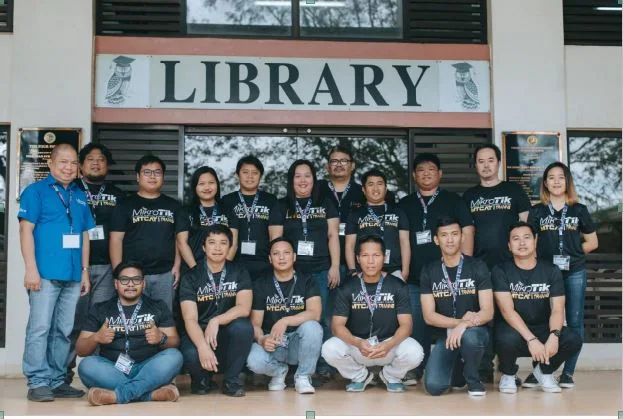
The college's facilities directory illustrates spaces associated with different academic fields. It includes a library, auditorium, audio-visual room and civic centre. Engineering-related entries include microprocessor, hydraulics and computer laboratories, surveying resources, consumer electronics and an automotive workshop. A chemistry laboratory is also listed.
These facilities appear alongside spaces associated with the college's other teaching areas. The directory brings general academic resources and specialist rooms together in one campus overview, reflecting the range of subjects represented across its schools.
Sources: Facilities ↗