Visa
About Anadolu University
Anadolu University in Eskişehir
Anadolu University, known in Turkish as Anadolu Üniversitesi, is a state university in Eskişehir, Türkiye. Its institutional roots lie in the Eskişehir Academy of Economic and Commercial Sciences, established in 1958. The academy became Anadolu University in the restructuring of higher education in 1982. The university combines campus-based study with an established open and distance education system.
Sources: Origins and institutional identity ↗
Faculties with different academic traditions
The current faculty directory illustrates the breadth of Anadolu’s academic work. Fields represented include humanities, education, law, economics and administrative sciences, fine arts, communication, health sciences, pharmacy, tourism, open education, and computer and information sciences. Their histories reflect different stages of the institution’s development.
The Faculty of Education began in 1982 with English and German language teaching programmes. Fine arts developed from a college established in 1983, with early student admissions in graphics and ceramics before the faculty name was adopted in 1992. The communication faculty traces its origins to an institute concerned with closed-circuit television education. The tourism faculty grew from a tourism and hotel management school. More recently, the university established its Faculty of Computer and Information Sciences in 2025, with educational activities beginning in the 2026–2027 academic year. These examples connect established disciplines with newer academic developments.
Sources: Fields of academic study ↗
Accessibility and specialized educational support
A university overview updated in December 2023 describes several units contributing to educational accessibility and specialist support. Its student disability-support unit identifies needs across a student’s period of study and coordinates with academic and administrative departments. The responsibilities described include adapted course materials, classroom arrangements, individual examination arrangements and attention to physical barriers on campus.
The same overview connects these services with research and teaching. It describes an institute working on educational programmes and assessment tools for people with developmental disabilities, as well as educational materials and seminars for specialists and teachers. A school providing university-level vocational and arts education for students with hearing impairments is also included. The open education support unit is described as developing learning materials and researching supplementary technologies. This account shows accessibility as involving educational resources, the physical environment and collaboration among specialist units.
A centre for student organizations and services
The Student Center on Yunus Emre Campus brings together student organizations and several university services. Its published description identifies space for student clubs, the registrar, the Folklore Research Center, project support, alumni activities, careers and international affairs. These functions place administrative and community activities within a shared campus setting.
The centre also provides rooms for conferences, seminars and panel discussions. Yunus Emre and Nasrettin Hoca are named among its meeting spaces, while foyer areas accommodate exhibitions and receptions. The building therefore serves both routine student-related functions and occasions that bring groups together for academic or cultural events.
Sources: Student Centre ↗
Professional theatre within university life
Theatre Anadolu is the university’s professional theatre ensemble. Its official account describes performances at the Atatürk Culture and Arts Center and touring productions that reach audiences elsewhere in Türkiye. This gives the ensemble a presence both on campus and beyond the immediate university community.
The description also explains an educational purpose for maintaining a professional theatre group within a university. It presents artistic and aesthetic perspectives as complementary to scientific knowledge, particularly for a student audience that will later participate in professional and public life. The ensemble is consequently described as contributing to cultural experience alongside formal education. Its work provides a concrete example of how the performing arts form part of Anadolu’s wider university environment.
Sources: Theatre Anadolu ↗
Folk dance, training and cultural collaboration
Anadolu’s Folk Dance Ensemble was established in 1980 through the Folk Dance Unit of the university’s Folklore Research Center. Its purpose was to make folk dance more widely known and promote Anatolian culture. University students learn dances from different Anatolian regions with specialized trainers, connecting performance with instruction in regional traditions.
The ensemble’s history records participation in international festivals in several countries, including Austria, Germany, Canada, Italy, France and the United States. It also describes a collaborative production called From Local to Universal, performed with the university’s Symphony Orchestra, Youth Choir and traditional instruments. This collaboration brings dance and different musical forms together within the institution’s cultural activities.
Sources: Folk Dance Ensemble ↗
Sport and multipurpose campus space
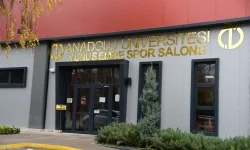
The Yunus Emre Campus Sports Hall supports volleyball, basketball, table tennis, step and aerobics activities. Its official description identifies a role in university-team matches and tournaments organized across the university. Students and staff can use the hall through membership arrangements when it is available.
The building also accommodates concerts and meetings, making it a multipurpose campus facility. Its combination of sporting and other events complements the dedicated cultural venues described elsewhere in the university’s campus guide. The hall’s published uses show how a single university space can serve recreational participation, organized competition and larger gatherings.
Sources: Yunus Emre Campus Sports Hall ↗
A museum documenting the Turkish Republic
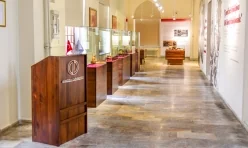
The university’s Cumhuriyet Museum occupies a restored historic building in Eskişehir associated with the early Republican period. Following its allocation to Anadolu University, the building was restored and opened as a museum on 23 April 1994.
The museum’s stated subject is the foundation of the Turkish Republic, presented through documentary material. Its description identifies photographs of the Republic’s establishment and portraits of Atatürk from different periods of his life. The institution therefore adds a historical and documentary dimension to the university’s cultural provision, alongside its teaching, performing arts and campus activities.
Sources: Republican History Museum ↗