Visa
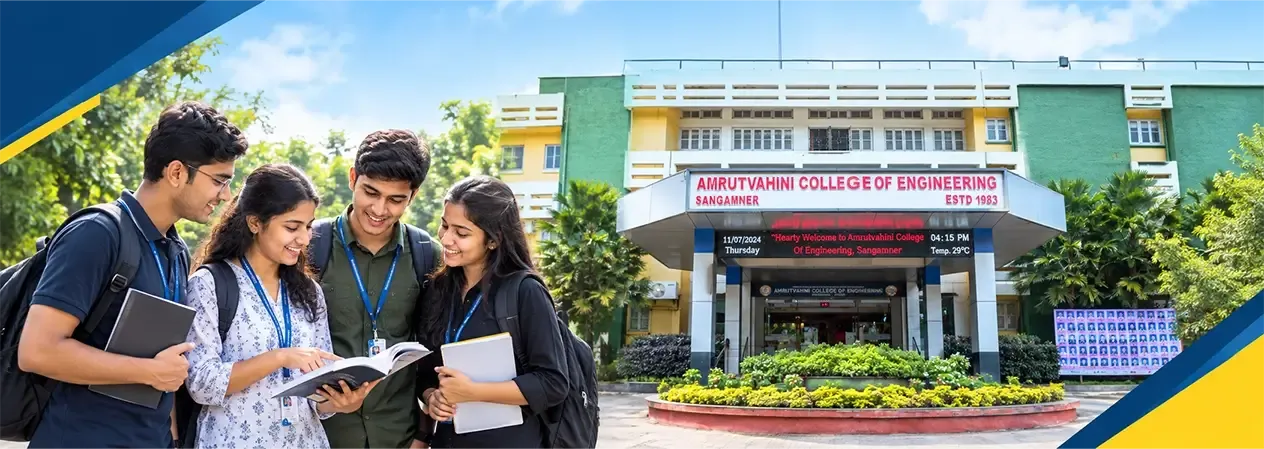

About Amrutvahini College of Engineering
Engineering education in Sangamner
Amrutvahini College of Engineering is based in Sangamner, Maharashtra, India. Commonly abbreviated AVCOE, the college dates its establishment to 1983 under the leadership of Bhausaheb Thorat. Its institutional introduction describes an engineering college with undergraduate and postgraduate education, together with doctoral research activity. Its course history dates civil engineering to 1983–1984 and computer engineering to 1986–1987, showing how its technical provision developed over time.
The academic fields identified in the college’s introduction cover several branches of engineering and technology. Civil, computer, mechanical and electrical engineering appear alongside electronics, telecommunications and information technology. Later additions include automation and robotics and artificial intelligence and data science. The postgraduate listing includes structural engineering, mechanical design and computer engineering, as well as management education.
The college’s introduction also identifies research centers in mechanical and civil engineering. This combination gives AVCOE an educational scope extending from initial engineering study into advanced study and research within selected disciplines.
Sources: Engineering education in Sangamner ↗
An educational purpose rooted in rural opportunity
The college’s published vision focuses on creating opportunities for rural students to become engineers and technologists. It connects that purpose with continued improvement in engineering education. Its mission places technical ability alongside discipline, personal development, moral strength and integrity.
The quality policy describes an environment intended to bring technological competence together with values and a strong academic setting. Its objectives include academic development, the overall development of students and closer interaction between industry and the institution. It also identifies assistance with placement and entrepreneurship development and encouragement for research and development. These statements frame the college’s educational purpose around both engineering knowledge and the responsibilities that accompany its application. Continuous learning is presented as part of how faculty, staff and management pursue that purpose.
Sources: An educational purpose rooted in rural opportunity ↗
The central library and digital resources
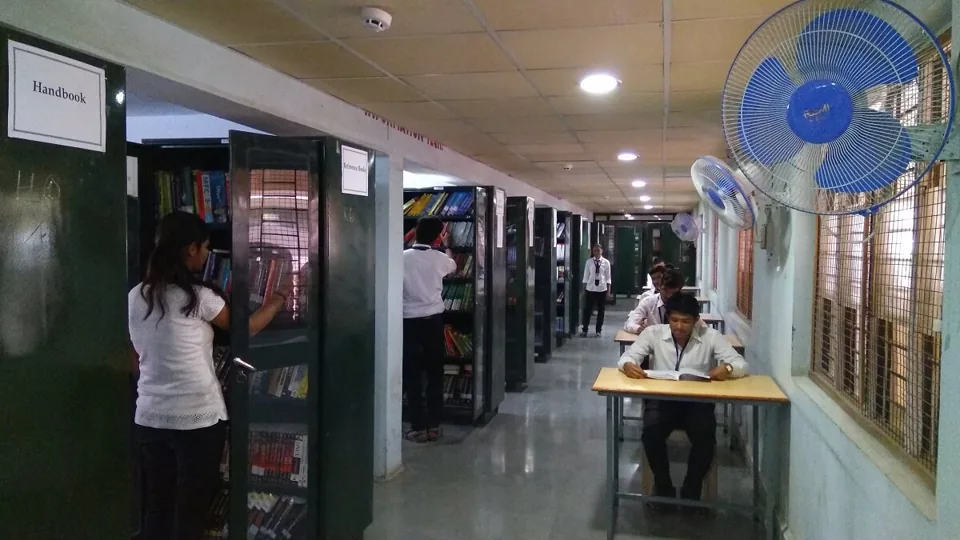
The central library began in 1983 and supports engineering, science, technology and related study. Its account describes successive stages of computerization, followed by a fully automated system using barcode technology for cataloguing, circulation, membership and other operations.
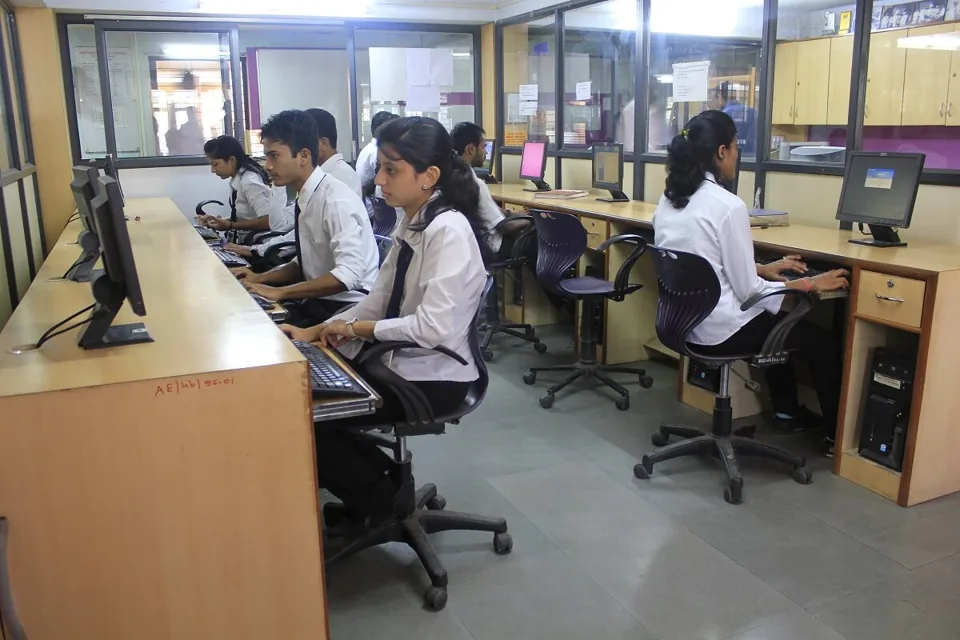
The library combines books and periodicals with electronic journals and books. Its digital library provides computers for academic information, audiovisual material, the catalogue and electronic databases. An institutional repository brings together teaching notes, question banks and practical manuals arranged by department and stage of study.
Services identified by the library include reference assistance, circulation, document delivery, scanning, reading rooms, a book bank and plagiarism checking. Its advisory committee provides a channel for faculty and student views concerning collections and library needs.
Sources: The central library and digital resources ↗
Residence and everyday student support
The college’s hostel account describes accommodation within the campus, with separate arrangements for male and female residents. Rectors oversee the residential blocks, and rooms are provided with basic furniture. Dining facilities, study spaces and common rooms are included in the description of residential life.
The accommodation information also lists drinking-water provision, internet access, laundry and other everyday services. The rules identify the residences as a facility for students of the wider Amrutvahini institutes, making the shared organizational setting explicit. Residents are required to hold appropriate identification and follow procedures for room allocation and use of facilities.
A hostel committee provides designated responsibilities for managing the residential arrangements. The published procedures include a mechanism for recording complaints about facilities. This presents housing as an organized support service connected with study, alongside the academic departments and learning spaces of the engineering college.
Robotics as a shared technical interest
AVCOE’s Robotics Club describes its purpose as encouraging interest in robotics and helping students explore its applications. Its published account links the club with the e-Yantra laboratory initiative of IIT Bombay and with the college’s industrial robotics laboratory. Students from different disciplines are invited to participate.
The e-Yantra connection is presented as a way of supporting practical learning in embedded systems, including projects and opportunities to take part in technical activities. The industrial robotics account emphasizes learning through robot programming and automation. It identifies an industrial robot arm as a resource for academic projects.
The club’s role is to bring interested students together with technical resources, faculty guidance and opportunities to build and test ideas. Its description connects competition and experimentation with the development of practical engineering skills outside the ordinary classroom timetable.
Sources: Robotics as a shared technical interest ↗
Workshop practice and projects for practical needs
The Workshop Department describes itself as a centralized facility established with the college in 1983. Its activities include turning, machining, welding, carpentry, fitting, pattern making, foundry work and sheet-metal practice. The department supports curricular practical work as well as undergraduate and postgraduate projects.
The workshop’s account also describes students using its facilities to prepare models, machine attachments and supporting devices for technical or cultural activities. Its stated mission includes practical training, safety awareness and support for faculty and student research and project work.
An incubation activity connects the workshop with products and components intended for industry and nearby rural communities. Published examples include farm equipment, furniture and appliances, while additional courses cover CNC programming and measurement-related training. The department’s equipment lists identify machining, welding and forming facilities. Together, these activities illustrate a practical strand of the college’s engineering education, linking design ideas with fabrication and experience of manufacturing processes.
Sources: Workshop practice and projects for practical needs ↗