Visa
About Amol University of Special Modern Technologies
From veterinary faculty to a specialized university
Amol University of Special Modern Technologies is a public university in Amol, in Iran’s Mazandaran province. Its official history traces its beginnings to the Faculty of Veterinary Medicine of the University of Mazandaran. Teaching began in the Iranian year 1388, corresponding to 2009–2010. The same account records approval for its development into Amol University of Special Modern Technologies in 1392, or 2013–2014.
The university’s organizational development extends beyond its original veterinary focus. Its history identifies active academic areas in veterinary medicine, biotechnology, medicinal plants and modern engineering technologies. It distinguishes these from additional planned faculties that are described as inactive.
The university also distinguishes its central administration building on Taleghani Street from its campus in the Kolasafa area. Its historical account dates the opening of the central building to 1394 and the campus to 1401, placing the two developments in different stages of institutional growth.
Sources: From veterinary faculty to a specialized university ↗
Veterinary education and applied research
The veterinary faculty combines teaching with research in animal health, food hygiene and diseases shared by animals and people. Its introduction describes a curriculum intended to bring theoretical knowledge together with practical and laboratory skills. The educational fields listed include veterinary laboratory sciences, food hygiene, meat hygiene and inspection, bacteriology and parasitology, across different levels of study.
The faculty’s research account emphasizes questions relevant to livestock production, food industries, diagnostic laboratories and public health. It identifies molecular investigation of pathogens, antimicrobial resistance and food-safety research among areas for development. These are presented as academic and research interests.
Its development goals also include improving laboratories, supporting postgraduate work and strengthening relationships with relevant industries and public organizations. The faculty describes a One Health approach that considers connections between human, animal and environmental health within its teaching and research ambitions.
Medicinal plants in a regional setting
The Faculty of Medicinal Plants places its work within the environmental setting of Mazandaran. Its introduction discusses the province’s forests, rivers, plains and mountains as resources for studying plants. It also identifies the importance of scientific cultivation and the risks associated with excessive harvesting from natural habitats.
The faculty’s stated purpose includes education, research and preparation of people with specialist knowledge of medicinal plants. Its account connects the subject with plant identification, improvement, production and processing. It discusses links between cultivation and the industries that process plant materials.
The introduction also describes development of postgraduate study as a means of responding to changing educational needs. This gives the faculty a role spanning agricultural knowledge, conservation concerns and applied investigation of plant resources.
Biotechnology, genetics and computational study
The biotechnology faculty’s bioinformatics and applied biotechnology page describes a group concerned with both basic and applied research. Its teaching areas include genetic engineering, biochemistry, molecular genetics, medical biotechnology, bioinformatics and computer-related subjects. The page lists biotechnology at bachelor’s and master’s levels and genetics at master’s level among the group’s academic fields.
The research interests described include studying bacterial, animal and plant cells and using modern biological methods to investigate questions relevant to disease and drug delivery. Recombinant proteins and vaccines appear among the group’s stated research objectives.
By including biological investigation and computational topics within the same group, the university’s published account illustrates its broader interest in interdisciplinary technology education and research.
Computer engineering through laboratory subjects
The engineering faculty’s computer laboratory page identifies a series of practical teaching subjects. These include introductory and advanced programming, MATLAB, electrical and electronic circuits, logic circuits and computer architecture. Operating systems, microprocessors and assembly language, computer networks and database design are also listed.
The same page includes a robotics construction workshop. Together, these subjects show how the university describes the practical side of computing education: students encounter both software-related work and the electronic systems on which computing depends. The list provides concrete examples of laboratory teaching associated with the engineering faculty, complementing the university’s more general emphasis on modern technologies.
Supporting technology-based ventures
The university’s technology incubator describes its role in supporting entrepreneurs and small or medium-sized units whose ideas may become commercially useful. Its stated model includes access to information, advice, services and equipment during the early stages of a venture’s development.
Its published objectives include encouraging knowledge-based companies, advancing commercialization and improving connections between university research and industry. It also seeks to make applied university research more effective and to strengthen relationships with industrial and executive organizations. The objectives connect technology development with the university’s regional environment, including the possibility of specialized incubation activity suited to local advantages. Student motivation is another stated concern. This places the incubator alongside the faculties as a route through which academic knowledge may be explored in practical projects.
Sources: Supporting technology-based ventures ↗
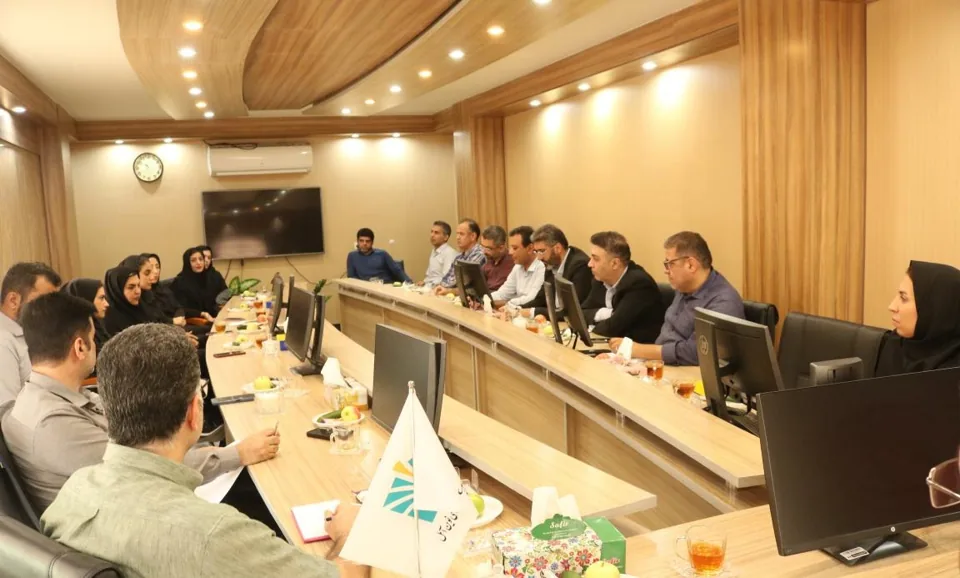
The development of an innovation support unit
The incubator’s separate historical account states that groundwork for the center began in the Iranian year 1400, corresponding to 2021–2022. It presents the initiative within a wider interest in helping new knowledge-based enterprises through the vulnerable early period of their development.
The account identifies knowledge acquisition, technology commercialization and an increased presence of technology units in Mazandaran as intended directions. It describes support for entrepreneurs forming new units around ideas that could lead to knowledge-based technologies. Its emphasis is on creating conditions for the development of those units, including their ability to operate independently. This adds an institutional innovation-support function to the university’s teaching and research profile.