Visa

About Ahlul Bayt International University
An international university in Tehran
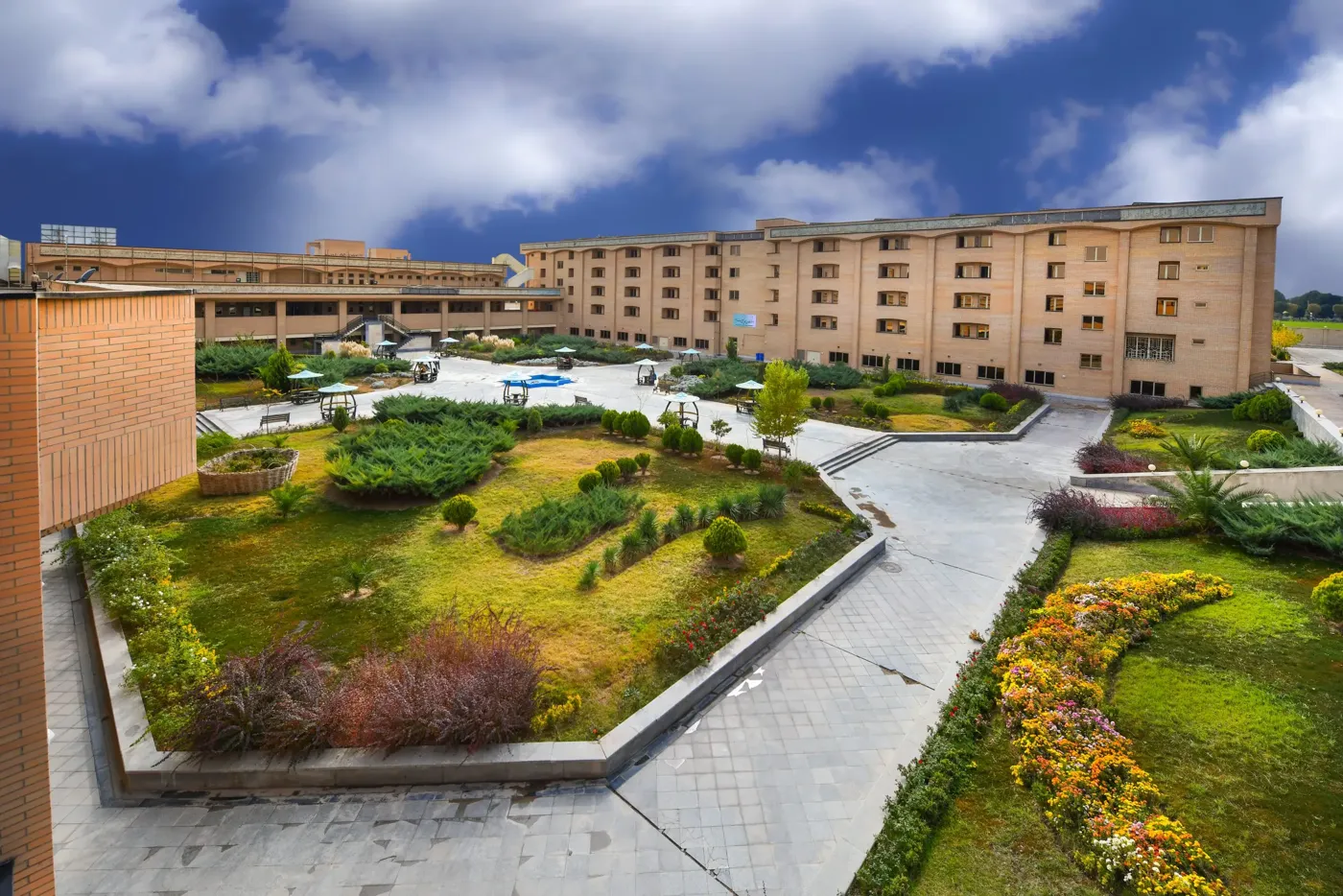
Ahlul Bayt International University is based in Tehran, Iran, near the Tehran–Qom toll area on the Persian Gulf Freeway. The university’s official history dates its establishment as a university centre to 2004 and its development into a comprehensive university to 2011. Its stated educational purpose combines the advancement of knowledge with the research and professional needs of students and scholars.
The institution describes an international academic community, with students from different national backgrounds and faculty working across several disciplines. It also identifies opportunities for visiting scholars and academic collaboration as part of its work. Its academic range includes engineering, economics and management, international relations, and Islamic historical studies. These subjects give the institution a broader educational remit than its religious name alone might suggest.
Sources: University history ↗ · Department of Islamic History ↗ · Department of International Relations ↗ · Industrial Engineering: Futures Studies ↗ · Faculty of Economics and Management ↗
Economics, management, and business education
The Faculty of Economics and Management provides teaching and research in economics, management, and commerce. Its published provision spans undergraduate, master’s, and doctoral study. The undergraduate subject is business management. At master’s level, the faculty lists economics with an Islamic economics specialisation and business management focused on international commerce. Its doctoral provision includes business management with a marketing-management specialisation.
The faculty’s stated objectives emphasise economic knowledge, managerial skills, and specialist study of domestic and international commercial activity. It organises teaching through separate economics and business-management groups. This academic structure connects the analysis of economic ideas with the management of organisations and the study of markets, while providing routes for more specialised postgraduate work in commerce and marketing.
Industrial engineering and the study of possible futures
Industrial Engineering is presented as an interdisciplinary subject drawing on engineering, management, and mathematics to analyse and improve complex systems. The university’s master’s specialisation in Futures Studies examines scientific, technological, economic, and social trends. Its purpose is to identify possible and desirable futures and to support strategic planning and informed decisions under uncertainty.
The department connects this perspective with recognising opportunities and challenges facing organisations and industries. Rather than treating future change as a single prediction, the published description places attention on analysing developments and considering alternative directions. The combination of systems thinking and futures studies distinguishes this particular engineering pathway from programmes concerned primarily with the design of a single physical product.
Computer engineering and digital systems
The Computer Engineering department belongs to the Faculty of Technology and Engineering. Its subject description includes software and hardware analysis and design, computer networks, information security and privacy, embedded systems, and digital-system design. It also identifies the processing of text, sound, and images, parallel and distributed computing, biological computing, and large-scale data processing among the areas encompassed by the discipline.
The department relates these subjects to the expanding role of computers in everyday services and manufactured systems. Its examples include online commerce, electronic banking, digital education, and computer-controlled equipment. The educational objective is to develop the ability to analyse, design, implement, and carry out computing projects. This creates a technical strand within the university’s wider mix of professional and scholarly subjects.
Sources: Department of Computer Engineering ↗
Architecture through studios and practical work
Architectural Engineering combines artistic judgement with design techniques and building technology. The department’s description connects the design of buildings and surrounding spaces with functional requirements, aesthetics, cultural understanding, and the human and physical geography of a place. Theoretical subjects are taught alongside workshop activity and architectural software, linking conceptual learning with the development of design skills.
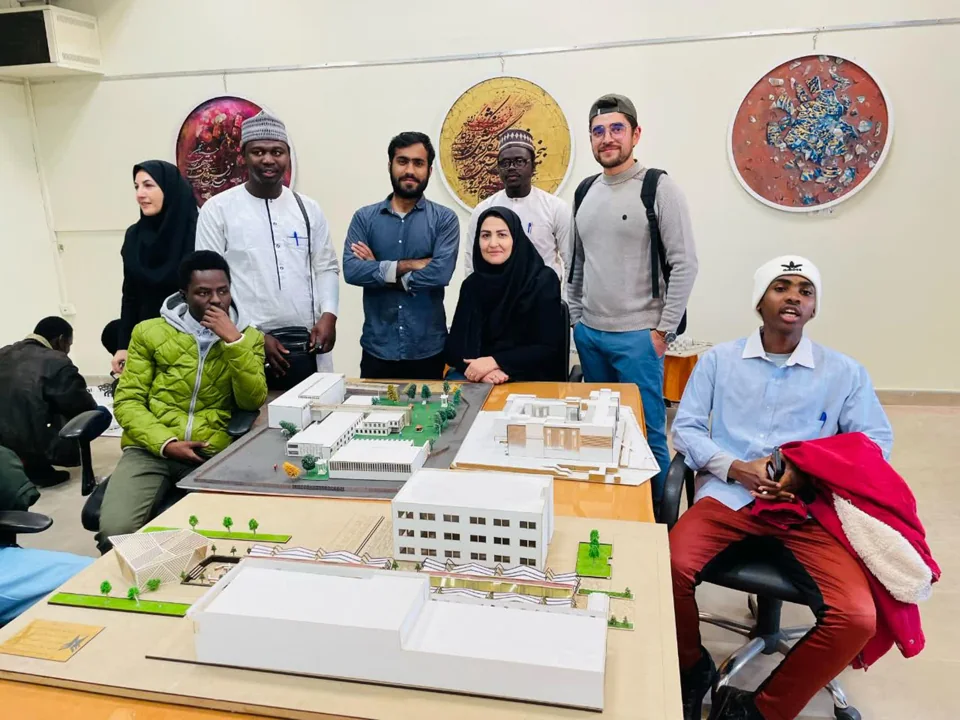
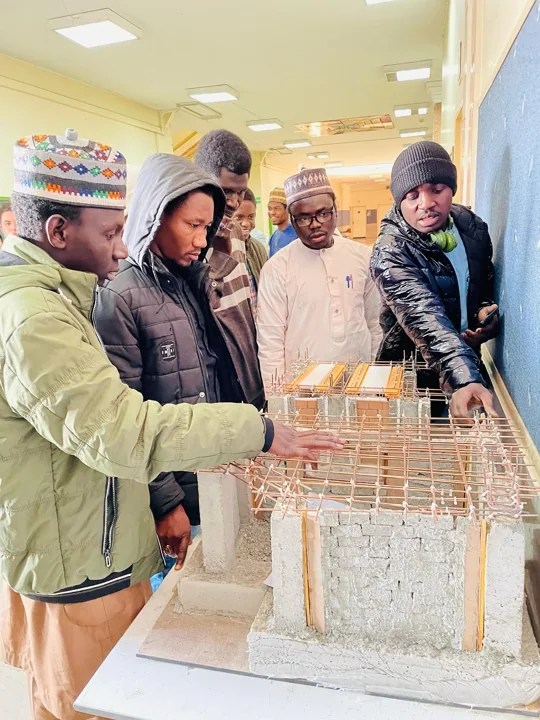
Its published facilities include design studios, computer workspaces, a materials laboratory, and model-making workshops. Semester-end reviews bring teachers together to examine student projects. Visits to construction sites, historic places, and contemporary buildings add further settings for learning, while seminars enable exchanges with invited specialists. The department also describes practical experience in architectural offices. Within the studios, students from different countries can share perspectives as well as learning from their teachers.
Sources: Department of Architectural Engineering ↗
Islamic history and international relations
The Islamic History department offers master’s-level study with a particular emphasis on the history of Twelver Shiism. Its programme examines historical questions concerning Islamic culture and civilisation, including Shiite states and political communities from earlier periods to modern times. Study of Islamic historical geography helps place these developments in their regional settings, particularly in the eastern Islamic world.
The programme also emphasises working with historical sources. Its published subjects include an introduction to sources and references for Islamic history, together with historical texts in Persian and Arabic. These elements connect interpretation with the documents and literature on which historical research depends. The programme assigns separate subjects to Shiite political history, allowing study of states and emirates across different periods. Its account of historical geography further links political developments with the distribution of communities and centres of power.
International Relations, within the Faculty of Law and Political Science, addresses global questions including war and peace, foreign policy, economic interactions, diplomacy, security, and international crises. Its educational focus is on analysing the behaviour and decisions of international actors and the relationships among them. Alongside the historical, economic, and engineering subjects, it adds the study of contemporary international systems to the university’s academic range.
Sources: Department of Islamic History ↗ · Department of International Relations ↗