Visa
About Amity University Madhya Pradesh
A university in Gwalior
Amity University Madhya Pradesh, commonly abbreviated AUMP, is located in Gwalior, India. Its institutional history identifies Ritnand Balved Education Foundation as its establishing body and records a Madhya Pradesh government notification dated 30 December 2010. The campus is opposite Gwalior Airport. Its educational provision spans areas including engineering, architecture, biotechnology, law, management, communication, psychology, fashion and pharmacy.
The university describes an educational approach connecting professional study, practical learning and research. Its AMIZONE intranet supports academic and administrative information, including lesson plans, examinations, attendance and study material. Mentoring and counselling form additional parts of the support described for students. The institutional account also identifies innovation and research themes associated with environmental conservation, biodiversity, urban development and the study of misinformation. These illustrate the range of interests surrounding the university’s taught programmes, while its wider educational purpose is linked to the needs of Madhya Pradesh and the region.
Sources: A university in Gwalior ↗
Curriculum, choice and assessment
AUMP describes a semester-based curriculum reviewed through boards of studies involving academic and industry perspectives. Its account of outcome-based education distinguishes programme outcomes, subject-specific outcomes and course outcomes. Teaching and assessment are intended to develop understanding, application, analysis and the ability to create new work. The university’s quality-assurance arrangements include examining gaps between intended and achieved learning.
The Choice Based Credit System offers disciplinary and interdisciplinary minor tracks and opportunities to select courses beyond a single programme. Projects, workshops and community work provide additional settings for learning. Assessment includes examinations alongside quizzes, assignments, presentations, seminars and project work. The academic account also describes the implementation of undergraduate arrangements associated with the National Education Policy, including multidisciplinary study and multiple entry and exit pathways. Behavioural science, communication, foreign languages, environmental study and professional ethics appear among the wider curricular elements. Together, these provisions connect subject specialisation with broader academic and personal development.
Sources: Curriculum, choice and assessment ↗
Mentoring and development beyond subject courses
The university’s account of activities beyond academics includes communication, business etiquette, negotiation and preparation for interviews. Mock interviews and group discussions are described as opportunities for students to practise communicating ideas and receive feedback. Foreign-language learning, including French, provides another element of this educational approach. These activities supplement the technical or professional content of individual programmes.
Faculty mentoring is a distinct part of the support structure. The university describes assigning a mentor when a student joins, with regular opportunities to discuss academic and personal difficulties. The stated purpose is to recognise potential and help students build confidence. Counsellors also provide individual support for concerns affecting students’ experience. Values and ethics are addressed through induction, a code of conduct and behavioural-science teaching that includes community service. This account places personal guidance, responsible conduct and communication alongside the work students undertake in their chosen subjects.
Libraries and information resources
Library provision at AUMP includes a central library and departmental collections for engineering, management, law, architecture and psychology. The university describes books, digital databases, electronic journals, printed periodicals, magazines and newspapers in Hindi and English. Computer terminals allow users to reach online resources as part of their study and research.
The library account identifies links with services including DELNET, Shodhganga and the National Digital Library. It also refers to legal information resources and databases serving scientific and technical subjects. AMIZONE provides a route through which students can reach journals and papers. This combination of physical collections, departmental subject resources and electronic access supports different stages of academic work, from locating background reading to consulting specialised material for projects and research.
Laboratories and practical learning
The university’s laboratory directory extends across engineering, sciences and creative subjects. Civil engineering provision includes surveying, hydraulics, geotechnical work, materials testing and structural studies. Electronics and communications facilities address digital systems, circuits, communication technologies and control. Mechanical engineering includes manufacturing, thermodynamics, fluid systems and mechatronics.
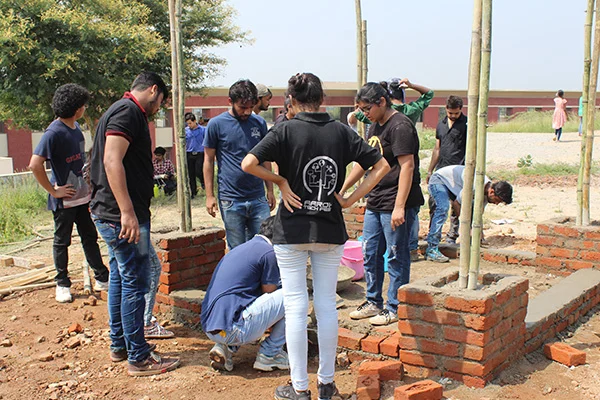
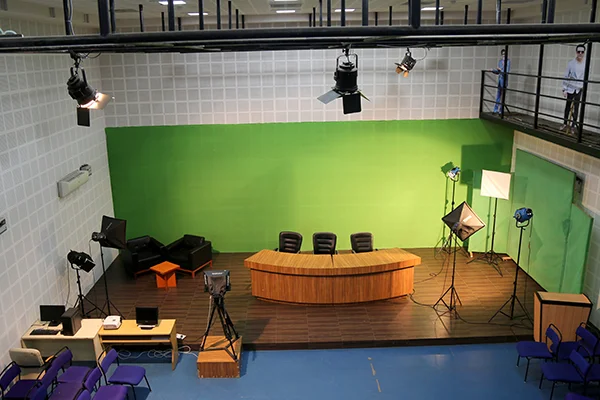
Computing laboratories cover programming, databases, networks, software engineering, artificial intelligence and related applications. Biotechnology facilities include molecular biology, microbiology and tissue culture. Architecture and planning use settings such as carpentry, model making, climatology and a construction yard. The communication school lists editing, multimedia, radio production and production-studio facilities. These spaces provide several ways to connect concepts introduced in teaching with observation, experimentation and the production of practical work. The directory illustrates how hands-on learning takes different forms across the university’s academic areas.
Sources: Laboratories and practical learning ↗
Living on campus
The university describes on-campus hostel accommodation organised into apartment-style suites. Bedrooms share a lounge and bathroom, with individual study furniture and storage provided for residents. Television facilities are associated with common rooms, while wireless connectivity extends to accommodation areas.
The accommodation account also identifies laundry provision and arrangements for water, power and access to a medical room. These are aspects of the residential setting described by the university. Living spaces sit alongside teaching buildings and academic facilities, allowing residential students to organise their studies and daily routines within the campus environment. The hostel description concerns the form of accommodation and its associated services.
Sources: Living on campus ↗
Digital spaces for learning
The campus network links academic facilities, the library and hostels. Its information-technology account describes wireless connectivity and backup power for laboratories. An Open Learning Area is intended for interaction and collaborative work, including digital media, visual experiments and open lectures. The university describes a bring-your-own-device approach in this space. This adds an informal digital setting to the rooms used for scheduled classes and practical work.
Sources: Digital spaces for learning ↗
Sport and recreation
Sports provision includes cricket, football, basketball, lawn tennis, volleyball and other outdoor activities. Indoor opportunities include table tennis, chess and carrom, while yoga also appears in the facilities account. The university connects these activities with recreation, teamwork and personal development. They provide additional settings for students to meet and participate in campus life beyond the academic timetable.
Sources: Sport and recreation ↗