Visa
About Amity University Jaipur
Amity University Rajasthan in Jaipur
Amity University Jaipur is the Jaipur-based institution also identified on its official website as Amity University Rajasthan, or AUR. It was established under the Amity University Rajasthan Act of 2008. Its campus sits in the Aravalli landscape, combining academic buildings with residential, recreational and student-service facilities. The university offers undergraduate and postgraduate study as well as doctoral programmes in selected fields. Its account of teaching describes a progression from broad foundation study toward more advanced, practical and specialised work. The campus also includes a water-harvesting lake, linking its physical setting with efforts to conserve resources. Student facilities include dining areas, shops, laundry services and a gymnasium. These features belong to the Rajasthan institution, whose academic and campus provision is described through its dedicated Jaipur website.
Sources: About Amity University Rajasthan ↗

Educational purpose
AUR's vision links contemporary education with values, innovation, research and productivity. Its mission places academic study alongside technology-supported learning, cross-cultural exposure and social and environmental responsibility. The university identifies several related objectives: developing critical professional capabilities, offering industry-oriented programmes, encouraging socially relevant research, supporting innovation and nurturing entrepreneurship. Ethics, international understanding and community engagement also form part of this framework. The mission therefore presents university education as more than the acquisition of specialist knowledge. It seeks to connect academic development with responsibility toward other people and the environment, while maintaining a relationship between modern methods of learning and the cultural values that the institution describes as part of its educational approach.
Sources: Vision and Mission ↗
Curriculum and assessment
The Jaipur academic overview describes a semester-based structure with regular curriculum review. Proposed changes move through subject experts, the relevant Board of Studies and the Academic Council. The review process considers developments in technology, feedback on programmes and applicable academic requirements. Teaching is supported by a combination of continuous assessment and end-of-term examinations. Assessment activities may include tests, oral examinations, quizzes, case discussions, presentations, assignments, projects, seminars and term papers. Academic results are represented through letter grades and semester and cumulative grade-point averages. This structure connects the planning of a programme with the evaluation of work completed during it. The overview also describes credit choices across disciplines, giving students opportunities to combine their principal subject with other areas of study.
Sources: The Academia ↗
Library and information resources
The university's library was established in 2008 as an integrated Knowledge Resource Centre supporting reading, teaching and research. Its organisation distinguishes circulation and reference functions, while a web-based public-access catalogue helps members locate materials. Print resources include textbooks, reference works, journals and periodicals. The library also provides electronic resources through Amizone, the Amity intranet, and maintains computer terminals for using digital collections. Its listed resources span scientific, technical, computing, legal and multidisciplinary publishers and databases, including IEEE Xplore, ACM Digital Library and legal research services. CDs and DVDs supplement the printed and online materials. This combination makes the library both a place to consult physical collections and a point of access to electronic information used in academic work.
Sources: Library ↗
Laboratories and practical study
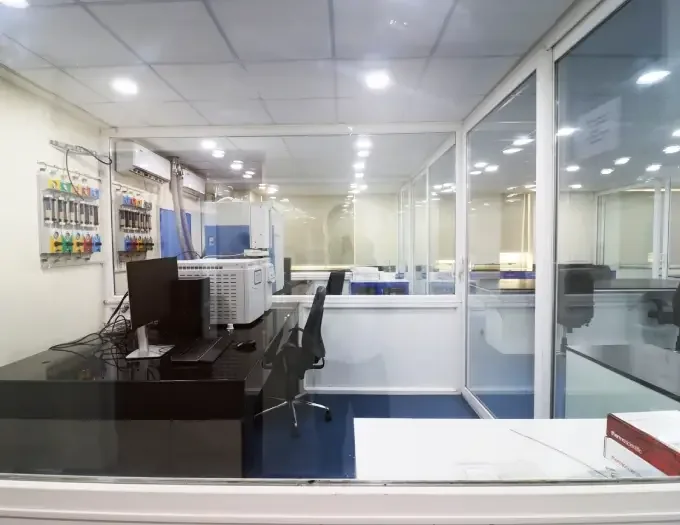
Jaipur's laboratory provision supports several different kinds of teaching and research. The DST-PURSE facility brings together scientific instruments for molecular, structural, chemical and trace-element investigations. The university identifies electron microscopy, chromatography, particle analysis and spectroscopy among the techniques supported there. Its Internet of Things laboratory provides resources such as sensors, microcontrollers, actuators and wireless modules for projects connecting electronics, computing and communication. Media facilities include a television studio and editing resources used for student productions, while architecture facilities include studios, surveying equipment, a climatology laboratory and a carpentry workshop. These examples show how practical resources vary by discipline: some support scientific measurement, others the development of intelligent systems, communication projects or the study and production of built environments.
Sources: Laboratories ↗
Research interests across disciplines
AUR's research overview identifies a broad set of subject areas rather than a single research specialism. Plant and microbial biotechnology, natural products, metabolomics, bioinformatics and bioremediation appear alongside food technology and sustainable agriculture. Environmental interests include weather and climate modelling, monsoon dynamics, water technology, environmental monitoring and wastewater treatment. Materials and engineering work encompasses nanotechnology, composites, manufacturing, solar energy and heat transfer. Computing subjects include image processing, machine learning, data engineering, network security and software engineering. The list also extends to fashion, graphic and product design, tourism, hospitality and psychology. The research page links these areas with records of publications, projects, collaboration and doctoral work, providing an institutional framework for activity across scientific, technical, creative and social disciplines.
Sources: Research and Publications ↗
Mentoring, languages and life beyond classes
The university's student-development account describes a mentor–mentee system in which a faculty member remains assigned to a student during their studies. Meetings provide an opportunity to discuss academic difficulties and other concerns. Counselling offers a separate source of individual support. Workshops address areas such as communication, negotiation, leadership, teamwork and analytical skills, while clubs and committees provide settings for participation outside the classroom. Foreign-language study includes French, Spanish, German and Chinese. Language activities extend beyond lessons through exhibitions, films, presentations and cultural performances, connecting verbal communication with wider cultural experience. The page also describes a language laboratory and flexible credit choices, bringing additional learning opportunities together with academic and personal support.
Sources: Beyond Academics ↗