Visa

About American University of Beirut
From Syrian Protestant College to AUB
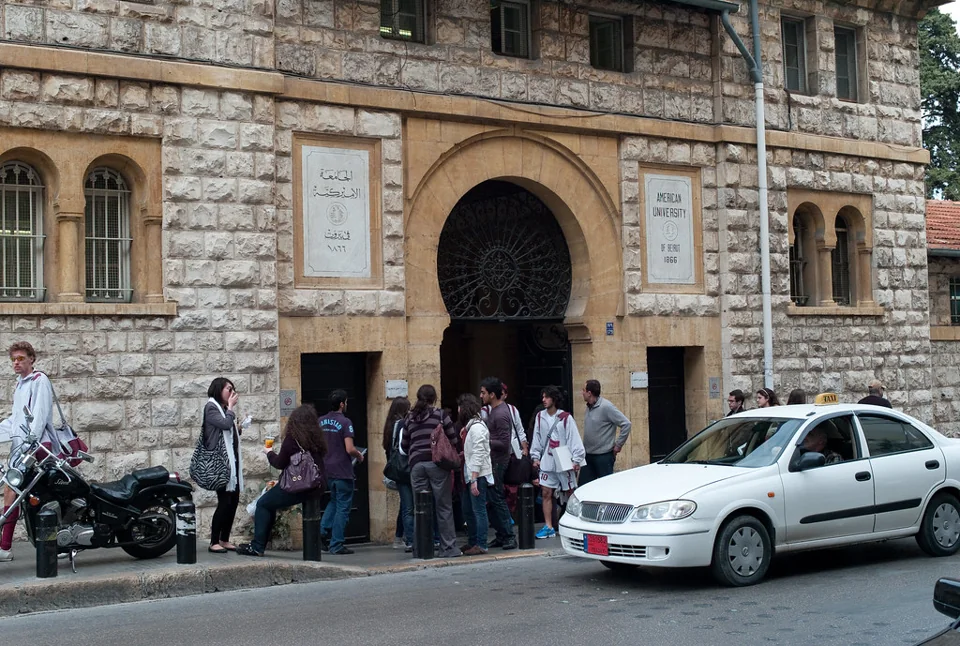
The American University of Beirut, commonly known as AUB, is a university in Beirut, Lebanon, with roots in the Syrian Protestant College. New York State granted the college its charter on April 24, 1863, and teaching began on December 3, 1866. Daniel Bliss led the fundraising effort that preceded its opening. The institution adopted the name American University of Beirut on November 18, 1920, following action by the New York State Board of Regents.
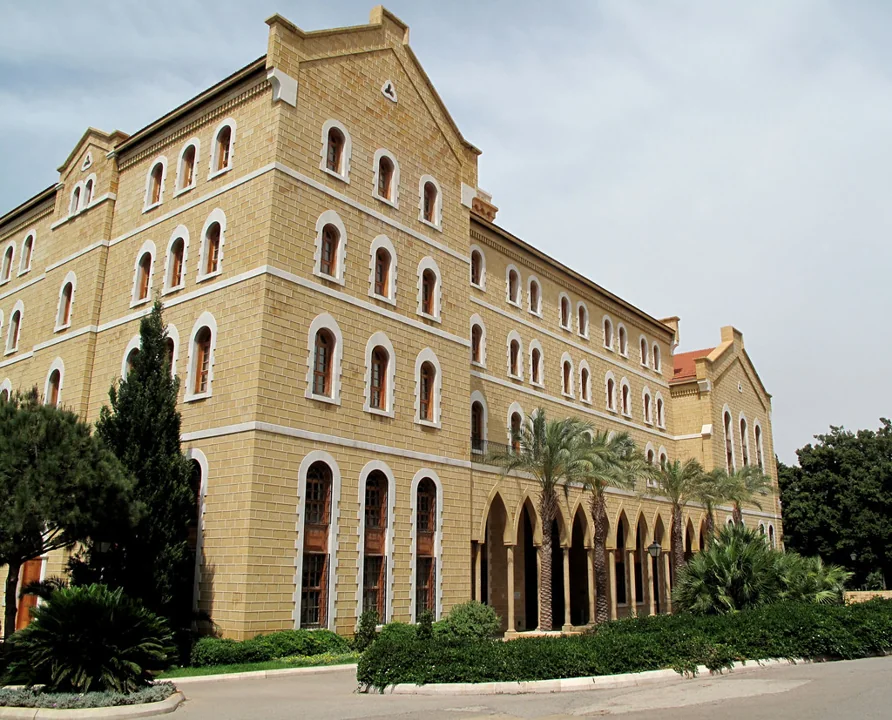
Its academic development extended across several fields. Medicine began in 1867, while pharmacy and a preparatory school followed in 1871. Engineering and architecture were established in 1951, agriculture in 1952, and public health in 1954. College Hall, an early landmark on the Ras Beirut campus, was completed in 1873. After severe damage in 1991, it was rebuilt, with the replacement inaugurated in spring 1999.
Sources: History ↗
An educational mission grounded in liberal learning
AUB places the American liberal arts model at the centre of its educational philosophy. Its mission brings together teaching, the advancement of knowledge through research, and service to communities in the Middle East and beyond. Freedom of thought and expression, dialogue, tolerance and respect for diversity are explicit elements of that institutional purpose.
The university describes the qualities it seeks to develop in graduates in terms of critical and creative thinking, continued learning, integrity, civic responsibility and leadership. Its vision connects education with ethical participation in society and with challenges at local, regional and global levels. AUB’s published core values include accountability, empathy, equity, excellence, integrity and teamwork. These statements present scholarship as both an intellectual undertaking and a form of public responsibility, with collaboration and consideration for different perspectives forming part of the university’s stated educational aims.
Sources: Mission, vision and core values ↗
A coastal campus within Beirut
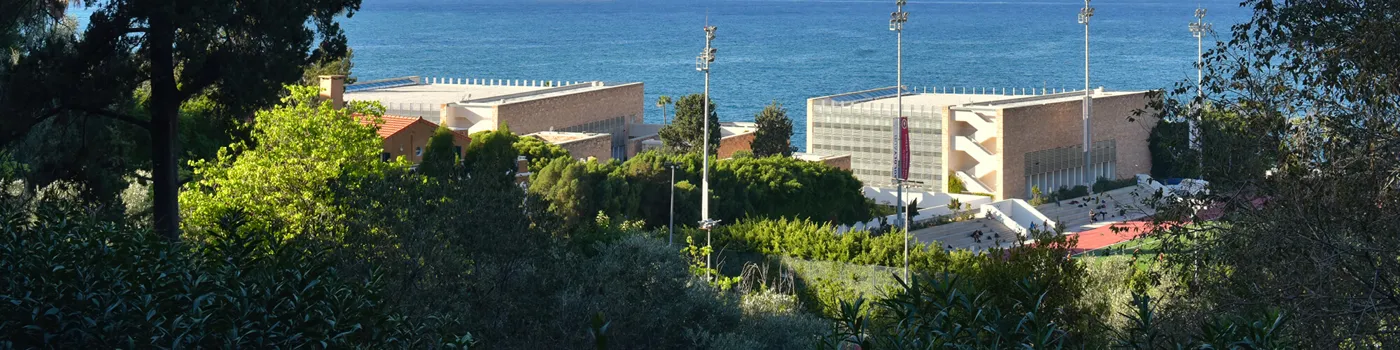
AUB’s main campus is in Ras Beirut, overlooking the Mediterranean. Its main entrance faces Bliss Street, named after Daniel Bliss, while entrances on the seaward side face Paris Avenue, also known as the corniche. The campus is therefore embedded in Beirut’s urban fabric while retaining landscaped grounds and a coastal setting.
The university’s facilities account describes athletic fields, a beach, a bird sanctuary and collections of native and non-native trees and shrubs. Academic and student facilities include residence halls, computer laboratories, the Charles W. Hostler Student Center, the Archaeological Museum and Natural History Museum. The American University of Beirut Medical Center is also part of the campus setting. AUB’s agricultural research and educational facility in the Beqa’a Valley provides a separate field-based location. The coastal Beirut campus and the Beqa’a site consequently support different kinds of academic activity within the university’s Lebanese setting.
Sources: Beirut campus and facilities ↗
Libraries, regional collections and research support
The University Libraries combine a central library with specialist provision. Nami Jafet Memorial Library is the main library, alongside the Engineering and Architecture Library, Saab Memorial Medical Library, and Science and Agriculture Library. An annex serves the agricultural research and education site in the Beqa’a Valley.
Their collections extend across the subjects taught at AUB and include material on Lebanon, the Arab world, Islam and the wider Middle East. Archives and Special Collections preserve manuscripts, maps, posters, photographs, theses and other records alongside the university’s print and electronic resources. Librarians work with faculty to incorporate information instruction into courses. The library’s contemporary description also emphasises support across the research process, from finding literature to assessing scholarly impact. Preservation and digital access connect its regional heritage collections with research and teaching, giving the libraries a role in both academic study and the stewardship of cultural records.
Sources: About the University Libraries ↗
Community engagement shaped by relief work
AUB’s Center for Community Engagement traces its origins to volunteering during the 2006 war in Lebanon. Students, faculty and staff participated in relief activities that led to a university-wide reconstruction task force. The centre was established in 2008 after this period of coordinated and developing engagement.
Its institutional account describes further expansion after the severe winter storm Alexa in 2013. A clothing donation initiative grew into a longer-term intervention addressing livelihoods, education and psychosocial services for refugees facing prolonged crises. The Beirut port explosion on August 4, 2020, was another important point in the centre’s development. Across these examples, the centre connects university participation with organised responses to community needs. Its history places student volunteering alongside contributions from faculty and staff, showing how civic activity became an established university function rather than remaining a sequence of isolated donation campaigns.
Sources: Center for Community Engagement ↗
Conservation research and community participation
The AUB Nature Conservation Center brings environmental research, education and community-based work together. Its stated focus includes biodiversity conservation, sustainable use of natural resources and responses to environmental challenges, including climate change. The centre describes collaboration with partners at local, regional and international levels as part of its approach.
Its mission places communities within conservation work, including efforts to care for natural heritage and develop solutions through research and education. The programme structure spans Water and Life; Earth, Society and Wellbeing; Eco-Transition and Circularity; Citizenship and Nature; and Regenerative Planning. This range links ecological questions with social participation and the organisation of places and resources. The centre also publishes resources in formats such as manuals, reports, scientific publications and online tools. Within AUB, it provides a specific example of research that crosses disciplinary boundaries and connects environmental scholarship with public-facing initiatives.
Sources: Nature Conservation Center ↗