Visa
About American University College of Technology
From university college to university
American University College of Technology is the former name of Lebanon's American University of Technology, now generally known as AUT. Ghada Hinain founded the institution in 1998. Its official history records a license in January 2000 and the transition to full university status, with the current name, in January 2008.
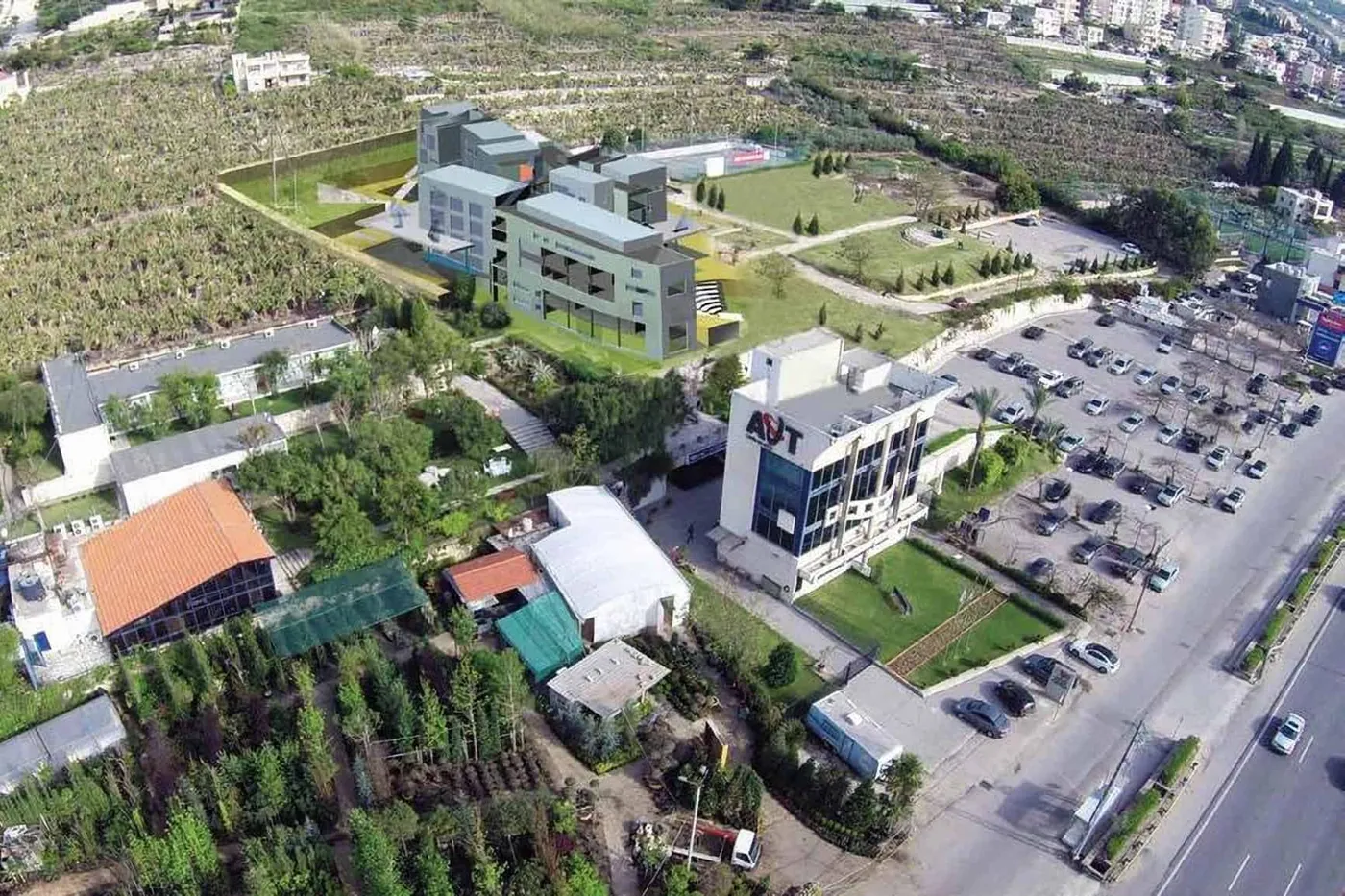
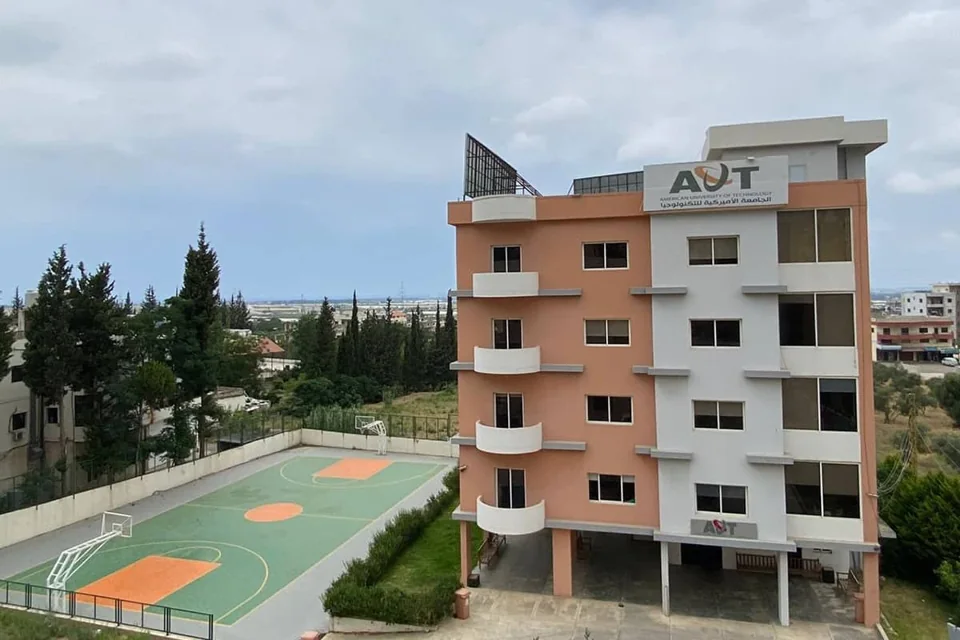
AUT's main campus is in Halat on the Byblos highway, approximately 38 kilometers from Beirut. Its North Campus occupies the historic Arida Palace in Ras Masqa, near Tripoli, and includes a reading room, student lounge and green space. A third campus, established in 2015, serves the far north from Halba Main Road in Akkar. Together these locations define a university extending along Lebanon's coastal and northern regions, with Halat remaining the main institutional base.
Sources: University history and Lebanese campuses ↗
Academic fields and faculties
AUT organizes its academic work across Business Administration, Arts and Humanities, and Applied Sciences and Technology. Its subject range crosses professional, technical and creative disciplines. Business fields include accounting, finance, management, marketing, hospitality and transport logistics. Arts and humanities subjects include audiovisual arts, graphic and interior design, English, journalism, public relations and translation.
Applied-sciences fields include computing, information technology, nutrition, and water resources. The university also lists postgraduate study in business administration and computer science. This combination places technology within a broader institution that includes communication, organizational studies, environmental questions and creative practice, rather than limiting the university's scope to a single technical discipline.
Sources: Faculties and academic fields ↗
Computing, laboratories and research projects
The Computer Science curriculum connects mathematical foundations with the design and implementation of software. Its published 99-credit structure includes discrete mathematics, linear algebra, probability and statistics, as well as programming, computer architecture and data structures. Database systems, networks, operating systems and information security add further technical foundations.
Several lecture subjects have accompanying laboratories, including programming, networking and operating systems. Students also encounter systems analysis, algorithm design and the theory of computation. Elective options extend into subjects such as software engineering, mobile applications, cloud computing and game development. The outline includes artificial-intelligence and data-science tracks, while senior-project or undergraduate-research sequences and an internship connect advanced study with practical investigation and professional settings.
Sources: Computer Science curriculum ↗
Water and environmental study
Water Resources and Geo-Environmental Sciences brings the natural sciences together with questions of management and policy. The program addresses water scarcity through subjects including hydrology, hydrogeology, geology, soil science, environmental microbiology and oceanology. Biology and chemistry laboratories provide foundational scientific work, while statistics supports the interpretation of evidence.
The specialized curriculum includes geographic information systems and remote sensing, environmental impact assessment, water chemistry and wastewater engineering. Water policy and economics examine the social and economic dimensions of water supply, drought and flood management. A seminar and internship appear alongside classroom and laboratory subjects. This multidisciplinary structure connects the study of water's physical properties and movement with the decisions made by communities, institutions and public authorities.
Sources: Water Resources and Geo-Environmental Sciences curriculum ↗
Transport, trade and logistics
The Transport and Logistics program studies how goods move through shipping, storage and distribution systems. Its curriculum combines a business foundation with a specialized sequence concerned with maritime and transport activity. Accounting, business law, economics, finance, management, statistics and information systems establish the broader organizational context.
Specialized courses examine transport economics and policy, maritime law, marine technology, shipping economics and port management. Further subjects address transport finance, logistics and supply-chain management, and relationships between shipping services and terminal operations. The published internship description requires students to discuss their workplace experience in class and prepare a written report. That reporting component makes reflection and academic analysis part of the practical experience described in the program.
Sources: Transport and Logistics curriculum ↗
Student support and campus participation
AUT's Student Center describes support covering both academic adjustment and participation in university life. First-year assistance addresses academic, social and emotional difficulties during the transition into higher education. Peer tutoring pairs students who need help in particular courses with senior or academically strong students, with faculties involved in organizing the sessions.
Other services include guidance when considering a change of major, personal counseling, résumé preparation and interview training. The work-study scheme describes part-time campus roles arranged around course schedules and institutional needs. Beyond these services, the center oversees student clubs and helps establish new ones. Artistic, cultural, humanitarian and sporting activities form another part of the university's approach to personal development and engagement with the wider community.
Undergraduate research in practice
A university report describes undergraduate research that grew out of a Research Methodology course and reached publication in June 2026. The project examined social media, mental health, body image and eating habits among adolescent girls in Lebanon. The report describes an anonymous survey alongside a review of existing literature, and notes that the research did not establish causation.
The project illustrates a route from a taught course to published research. The university describes students learning to formulate questions, engage with academic literature, choose methods, collect and analyze data, and communicate results. Collaboration and responsible interpretation of evidence were part of the experience presented in the report.
Educational outreach beyond campus
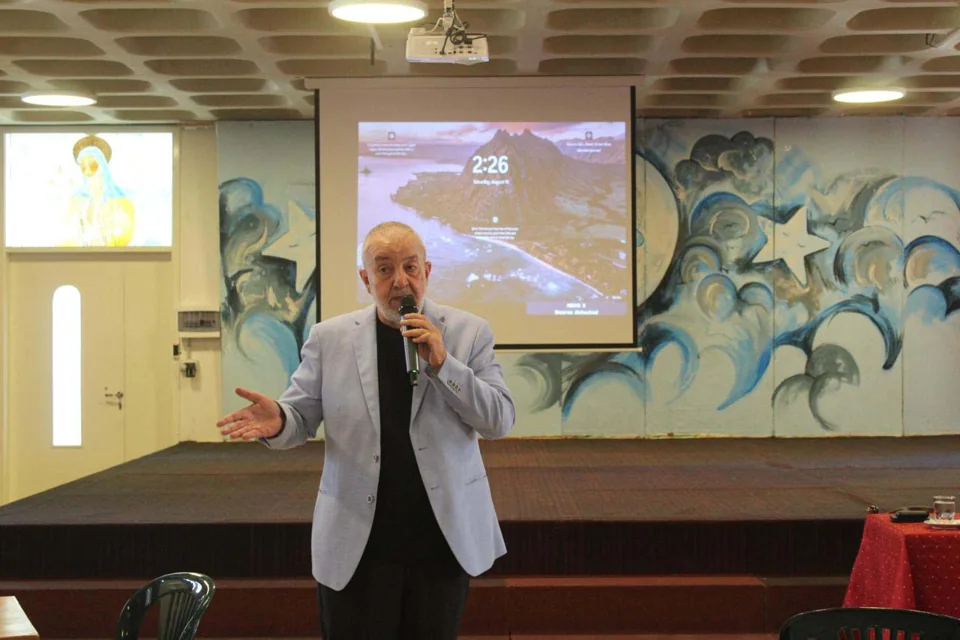
AUT also documents educational work with schools. On 8 September 2026, Saint-Jean Secondary School in Okaïbé hosted a staff assembly that included a workshop led by AUT's Pierre Khoury. The session considered how educators could understand and support Generation Z, connecting discussion of student behavior with practical approaches to classroom engagement.
The school gathering included exchanges between the trainer and teachers, simulation exercises, classroom scenarios and discussion of specific action plans. It concluded with a synthesis of the recommendations developed during the session. The university presents this event as part of a wider series of workshops delivered at Lebanese schools, illustrating an outreach activity focused on educators and their teaching practice.
Sources: Saint-Jean School teacher workshop, September 2026 ↗