Visa
About American College, Madurai
A Christian college in Madurai
The American College is a higher education institution in Tallakkulam, Madurai, Tamil Nadu, India. Its educational identity combines a Christian foundation with an intention to serve students across different creeds. The college describes service to humanity, pluralism, inclusiveness and responsible citizenship among its guiding commitments. Its history records the move to the present Madurai campus in 1909 under Principal W. M. Zumbro. Originally affiliated to the University of Madras, it came under the jurisdiction of Madurai Kamaraj University in 1966. Teaching extends across undergraduate, postgraduate and research-level study in several disciplines. The institution's mission also connects subject knowledge with individual competencies, aesthetic expression and service to poor and marginalised communities.
Sources: Institutional history ↗ · Vision and mission ↗
Buildings that record the campus history
The main campus brings together buildings associated with different periods of the college's development. Main Hall, designed in the Indo-Saracenic style by Henry Irwin, was dedicated on 24 February 1909. It accommodates administrative offices and an upstairs assembly hall used for meetings and examinations. James Hall has a cornerstone dated March 1912 and houses science departments. Binghamton Hall is associated with botany, zoology and biochemistry teaching, while Flint House, formerly a principal's residence and later a women's hostel, became a home for undergraduate English. The Centenary Block was built in 1983 and accommodates postgraduate departments. These buildings show how existing spaces have been adapted for administration, teaching and student life as the college has developed.
Sources: Main campus buildings ↗
The Daniel Poor Memorial Library
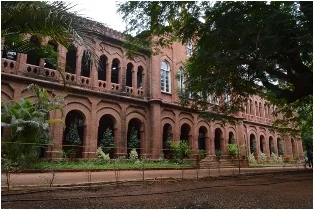
The college library dates its formal beginning to 28 June 1915, when its first book was accessioned. The collection initially occupied Main Hall. A donation from Daniel Poor's granddaughter made a separate building possible; its cornerstone was laid in January 1926 and the library opened in January 1933. A mezzanine added in 1987–88 expanded shelving and reading space. The library's published layout combines general and digital collections with reference, technical and circulation services. It identifies reading areas, an online catalogue, computer terminals, periodicals and rare materials, including palm manuscripts. Faculty, students and staff can borrow under registered membership arrangements. The library's stated purpose is to meet users' information needs and intellectual curiosity through its collections, services and physical environment.
Sources: Daniel Poor Memorial Library ↗
Botany and the development of plant science
Botany's departmental history begins in 1931, when it supported biology and zoology teaching. It started offering botany as a major subject in 1968, introduced postgraduate study in 1987 and became a research department in 1993. In 1998 it adopted a vocational emphasis in industrial microbiology with UGC sponsorship. Its published description explains a movement from conventional botany towards professional training in plant biology and plant biotechnology. The history therefore documents successive changes in the department's teaching and research role. Undergraduate study, postgraduate development and the later research department represent distinct stages in the growth of plant-science education at the college.
Sources: Botany department history ↗
English language and literary study
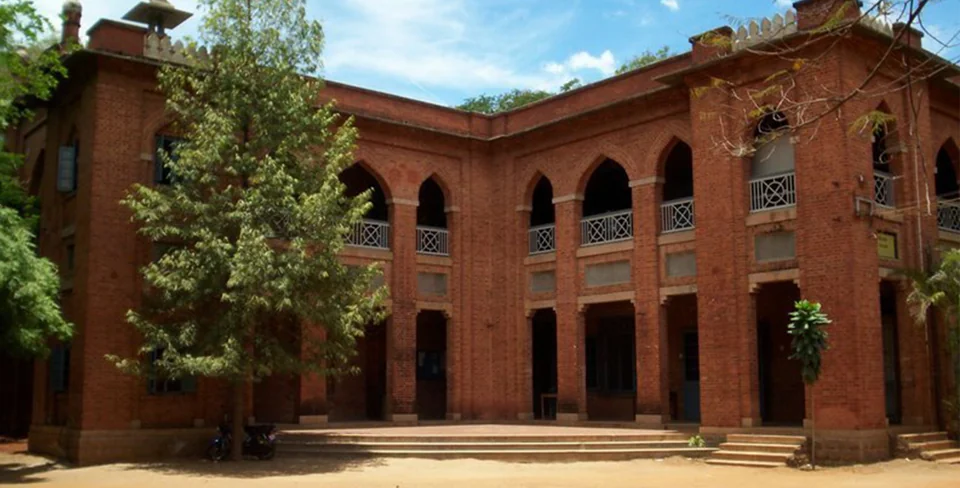
English teaching developed alongside the college because English-language study was required across degree programmes. A separate undergraduate programme in English Language and Literature began in 1968. Postgraduate teaching followed in 1980 as part of the college's centenary period, and the department became a research centre in 1994. Its history also records the introduction of an M.Phil. programme in 2005. These milestones describe the department's development from a shared language-teaching responsibility into specialist literary study and research. The published departmental account identifies both aided and self-financed provision, placing language and literature within the college's wider range of undergraduate and postgraduate subjects.
Sources: English department history ↗
Computer science and laboratory learning
The Computer Science department's account traces computer teaching to Apple II equipment imported from the United States before the college gained autonomy. It describes the subsequent introduction of application-oriented courses and the establishment of the B.Sc. Computer Science programme in 1993. Laboratory development and the preparation of a subject-specific syllabus were important parts of this expansion. The current departmental listing identifies bachelor's and master's study in computer science and an undergraduate computer science programme with an artificial intelligence focus. This published account links the department's development with changes in computing equipment, laboratory provision and the academic organisation of computer-related study.
Sources: Computer Science department ↗
Research organisation and scholarly work
The college's research policy connects teaching with independent and group investigation, dissertations and multidisciplinary enquiry. It describes common instrumentation facilities and support for faculty seeking external research funding. Its framework assigns roles to research guides, departmental committees and the dean responsible for research. Research Advisory Committees review study design, methodology and scholars' progress. The policy also addresses publication ethics, collaboration, documentation and the preservation of completed work. Departmental and library repositories are intended to retain research papers and theses for reference. This account provides an organisational context for research rather than presenting it solely as an individual activity: supervision, review, shared facilities and the recording of results form part of the college's published approach.
Sources: Research policy and practice ↗
Vocational education through the Community College
The American College Community College adds a vocational dimension to the institution's educational work. Its published subjects include aquaculture, food processing and preservation, media technology, horticulture, data science, industrial biotechnology, health and sanitation, and medical laboratory technology. The description connects subject teaching with computer operations, communication and practical skills. It also explains the involvement of industry partners in curriculum design, training, internships and evaluation. Laboratory practice takes place on campus and through partner facilities. Bachelor's and master's vocational programmes appear in the published provision, with the latter including aquaculture, food processing, media technology and laboratory technology. The Community College's stated purpose relates this practical education to community needs and continuing learning.
Sources: Community College ↗
Service and participation beyond the classroom
The National Service Scheme provides another connection between education and community participation. The college reports that its NSS programme began in 1969, among the early participating colleges under Madurai Kamaraj University. Its stated objectives include leadership, shared responsibility, democratic attitudes and understanding the relationship between the individual and the community. Students are encouraged to apply their education to practical social problems and develop the capacity to respond to emergencies. The programme presents personal development through service as its central educational purpose. This complements the college's wider emphasis on knowledge and social responsibility by giving community engagement an organised place alongside academic study.
Sources: National Service Scheme ↗