Visa
About Amasya University
A public university with older academic roots
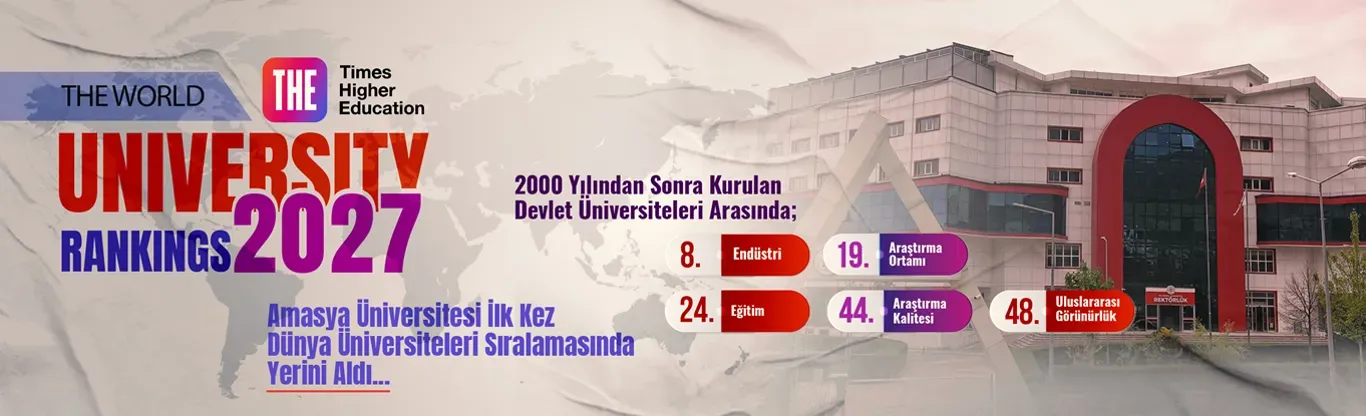
Amasya University is a public university in Amasya, Türkiye. Its official history identifies the law published on 17 March 2006 as the basis for its establishment. The university brought together institutions with earlier histories under Ondokuz Mayıs University, including teacher education dating to the 1974–75 academic year and vocational education beginning in 1975–76. Health education and the Merzifon vocational school provided further foundations in the early 1990s. The university’s development therefore combines a relatively recent institutional establishment with several decades of predecessor teaching. Its historical account also describes the expansion of faculties, graduate institutes, vocational schools and research centres, including provision outside Amasya city. These developments connect teacher education, technical study, health subjects and other academic fields within the same university.
Educational purpose and institutional values
The university’s mission links education with service to society through scientifically grounded work. It aims to develop people with subject knowledge, analytical skills, initiative and an ability to investigate questions independently. Its published values include academic freedom, student-centred education, cooperation, participation and social responsibility. Environmental awareness and respect for cultural and artistic activity also appear in this statement. The accompanying vision addresses teaching quality, innovation in research and attention to the needs of stakeholders. These are institutional aims that explain how Amasya frames its educational role: developing individual capabilities while working with people and organisations beyond the university.
The development of engineering education
The engineering faculty’s history records the establishment of a Faculty of Technology in 2009. A subsequent reorganisation in 2021 created an Engineering and Architecture faculty in its place, followed by adoption of the Engineering Faculty name in 2022. These changes are part of the faculty’s own institutional history. Its current website organises teaching around computer engineering, electrical and electronics engineering, and mechanical engineering. Separate departmental pages provide programme information, study plans and contacts. The faculty also publishes information about internships, workplace education and graduation projects, indicating several ways in which its academic organisation connects classroom teaching with practical engineering work.
Sources: The development of engineering education ↗
Computer engineering as a published programme example
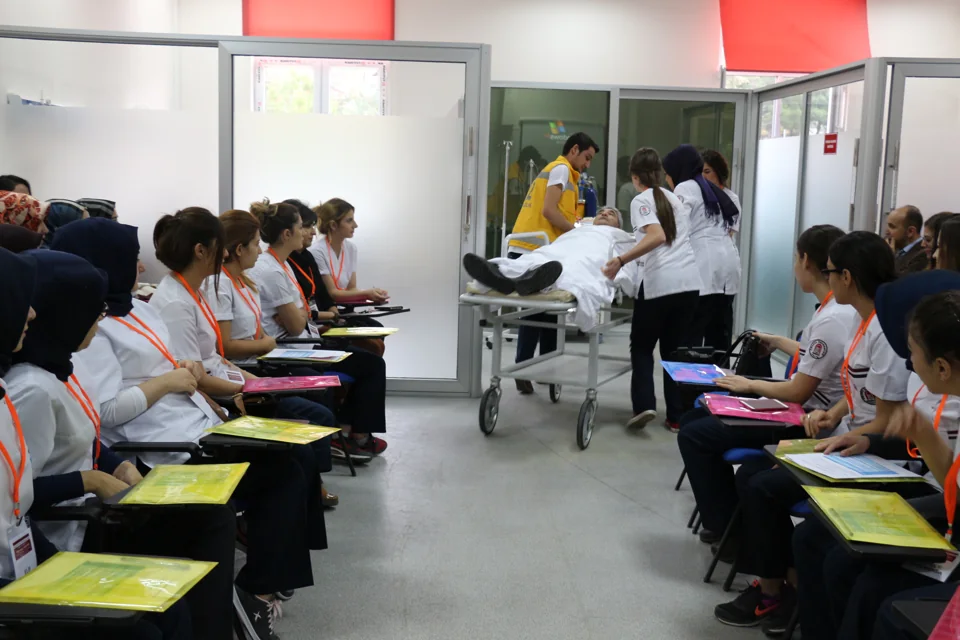
The computer-engineering department’s published description outlines a four-year course of study across eight semesters. Subjects include algorithms, programming, data structures, databases, operating systems, computer networks and architecture. Electrical and electronic circuits, microprocessors, artificial intelligence, graphics and image processing broaden the stated curriculum. The description emphasises project-based learning and assessment through practical work, with the aim of helping students develop projects collaboratively. Ethics, communication, critical thinking and continuing learning appear alongside technical subjects in its educational objectives. The page also discusses shared access to facilities in related engineering fields. Its references to proposed additional laboratories and student activities are development plans, while the curriculum description provides an example of how the department presents the relationship between computing theory and application.
Sources: Computer engineering as a published programme example ↗
Library membership and access to collections
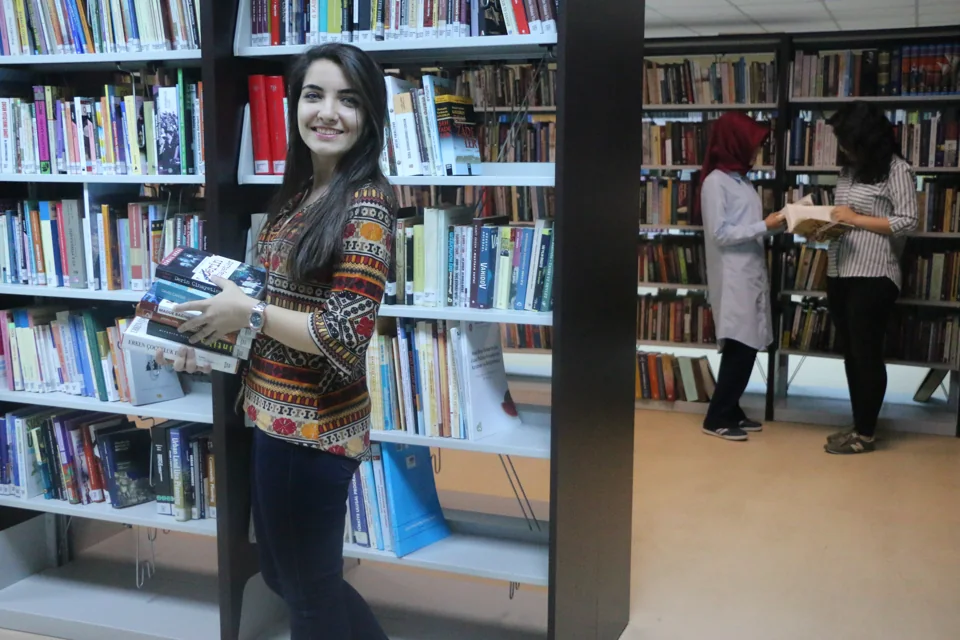
The university library’s lending service covers students and academic and administrative staff. Its published policy distinguishes borrowing arrangements by user group and requires a university identity card for loans. Members can reserve material that is already on loan and request renewals when other readers have not reserved the item. The policy also explains responsibility for returning and caring for borrowed resources. Reference works, periodicals, rare materials, maps, reserved books and certain other categories are retained for use within the library. The website provides catalogue and account access alongside these procedures. This combines discovery of academic material with arrangements for sharing a collection among different users, while preserving access to resources that need to remain available on site.
Sources: Library membership and access to collections ↗
Access beyond the local library collection
An interlibrary-loan service extends access to books held by other university libraries in Türkiye. The published procedure asks university academics to check the local catalogue first, then search the national union catalogue and confirm whether the holding library can lend the item. Requests are submitted through the library’s designated form. The lending institution’s conditions govern the loan, and the requesting user bears transport charges. This is a separate service from ordinary borrowing: it links Amasya’s academic users with collections elsewhere when a needed publication is not available locally. The policy identifies university academics as the users eligible to request books through this arrangement.
A dated example of student research
A university report published on 3 November 2026 describes an undergraduate research project concerning environmentally oriented anti-icing formulations. Students from the Merzifon Faculty of Economics and Administrative Sciences worked under an adviser associated with the vocational school’s civil-aviation cabin-services programme. The project investigated starch-based coatings and examined ice-melting performance under experimental conditions. The report presents the study as completed and identifies submission of its results to TÜBİTAK as a planned next step. This is an example of student investigation bringing together different academic units and a practical aviation-related question.
Music and engagement with local cultural heritage
A report published on 30 October 2026 describes the university’s Dini Musiki Medrese Meşkleri programme at the Çelebi Sultan Mehmet Medrese Science, Culture and Art Centre in Merzifon. Students and members of the public joined university participants for performances from the Turkish religious-music tradition. The account connects the activity with passing musical heritage to later generations through the practice of meşk, a tradition of learning and performance. The historic venue forms part of that cultural setting. This dated example shows another aspect of university activity beyond degree teaching: bringing students and local residents together around music, interpretation and participation in a shared cultural tradition.
Sources: Music and engagement with local cultural heritage ↗