Visa
About Amal Jyothi College of Engineering
An engineering college in Kanjirappally
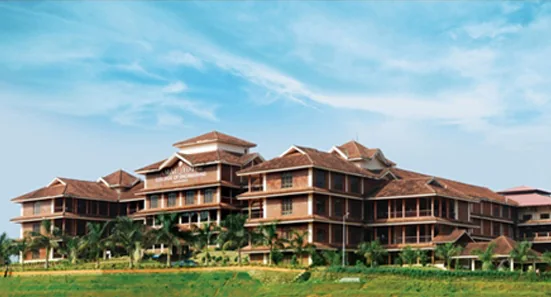
Amal Jyothi College of Engineering is a Christian minority institution in Kanjirappally, in Kerala’s Kottayam district. It is owned by the Catholic Diocese of Kanjirapally and administered by the Diocesan Educational Trust. Its campus is at Koovappally, overlooking the Kanjirappally–Erumeli road. The college’s name combines words associated with purity and light, expressing its dedication to enlightenment through Mary Immaculate. Its educational vision links technical higher education, research and support services with individual and societal development. The official profile records affiliation to APJ Abdul Kalam Technological University from 2015 and autonomous status conferred in July 2023. These institutional arrangements accompany a mission that emphasises technical preparation together with social commitment.
Sources: An engineering college in Kanjirappally ↗
Academic routes and levels of study
The college presents undergraduate engineering, postgraduate engineering, computer applications, business administration and doctoral study within its academic portfolio. Its B.Tech subject range includes established engineering fields such as chemical, civil, electrical and electronics, electronics and communication, and mechanical engineering. Computing-related routes include computer science, artificial intelligence and data science, and cyber security. Food technology and metallurgical and materials engineering broaden the technical portfolio further. At postgraduate level, the published M.Tech listing includes computer science, energy systems, environmental engineering, structural engineering with construction management, electric-vehicle technology, and VLSI with embedded systems. Computer applications is represented through BCA, regular MCA and integrated MCA routes. The main programme information also lists BBA Honours. These are separate educational routes, allowing the institution to combine its engineering focus with computing and organisational study. The main programme page describes four-year B.Tech and BCA courses, two-year M.Tech and regular MCA courses, and a five-year integrated MCA route.
Doctoral research within the KTU framework
Amal Jyothi’s doctoral information describes research conducted within the framework of APJ Abdul Kalam Technological University. It identifies engineering and technology disciplines alongside basic sciences, mathematics and allied areas. The college’s list of available research fields includes civil, mechanical, chemical, electrical and electronics, electronics and communication, computer science, metallurgical and materials engineering, food technology, and computer applications. The page distinguishes full-time research from part-time study by faculty and external researchers working in research organisations or development centres. It also links to registered supervisors, doctoral students, research facilities, publications and research regulations. Registration, supervision, thesis evaluation and the viva are described as university-regulated processes. This places doctoral activity within a research and supervision structure rather than presenting it simply as an extension of undergraduate teaching. Its research-resource links also include a consultancy policy, a machine-consultancy handbook and records of doctoral guidance, providing supporting documentation for research activity.
Computer science and emerging technologies
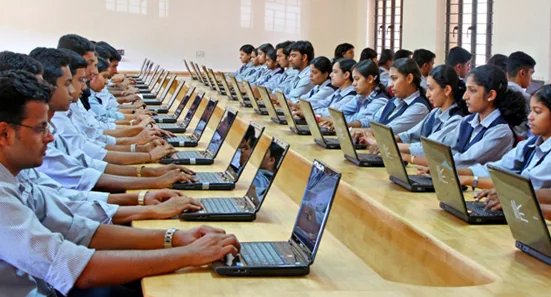
The Department of Computer Science and Engineering was established in 2001. Its undergraduate teaching includes programming, data structures, operating systems, networks, databases and compilers. Its current programme descriptions also address artificial intelligence, machine learning, cloud computing and cyber security. A dedicated cyber-security undergraduate route was introduced in 2024, with topics such as network security, cryptography, digital forensics and incident response. The department also describes postgraduate engineering study and an artificial intelligence and data science certificate curriculum developed with Elmhurst University. That curriculum includes machine learning, deep learning, natural-language processing, optimisation, data engineering and visualisation. Student activity extends to coding, open-source work, robotics and special-interest groups. The department’s description therefore connects the foundations of computing with specialised study and opportunities to practise technical skills through projects and organised activities.
Sources: Computer science and emerging technologies ↗
Civil engineering, testing and applied work
Civil Engineering began at Amal Jyothi in 2006. The department’s history records the introduction of postgraduate programmes in structural engineering with construction management in 2009 and computer-aided structural engineering in 2014. Its teaching covers drawing, surveying, soil mechanics, structural design, transportation and environmental engineering. The department describes involving students in consultancy projects and testing work for public and private construction organisations. Materials and samples listed include concrete, bricks, cement blocks, soil, water, bitumen, aggregates and steel reinforcement. Its Centre for Research in Civil Engineering provides loading frames, universal testing machines and concrete and bitumen testing facilities. The departmental association organises technical events, visits and invited talks, while additional training addresses surveying and design software. These activities connect analytical coursework with materials, measurements and construction practice. Listed software and surveying training includes Total Station, AutoCAD, Revit, BIM and STAAD.Pro, linking measurement with computer-assisted design methods.
Food technology and laboratory education
The Food Technology Department offers undergraduate study concerned with the scientific and engineering properties of food and beverages. Its description combines biological, microbiological, chemical, physical, sensory and nutritional knowledge with processing and product development. Laboratories support food chemistry, microbiology, processing, analysis and quality control. The department also describes consultancy and testing support for small-scale food processors, including analytical work, shelf-life studies and product development. Its published curriculum introduces a Smart Food Systems approach, connecting food applications with artificial intelligence and data tools. Examples include quality testing, shelf-life prediction and product improvement. Sustainability and waste-to-value processing feature alongside food safety and engineering. Workshops, guest lectures, industry visits and student-led activities provide additional settings in which students can connect scientific concepts with the practical challenges of producing and evaluating food.