Visa

About Alzaiem Alazhari University
Origins of a university in Khartoum Bahri
Alzaiem Alazhari University is a Sudanese university associated with Khartoum Bahri and named for Ismail al-Azhari. Its official history traces the idea to discussions in 1990 about renovating a school bearing his name. A proposal for a university followed, and a presidential decision provided for its establishment through community effort. The university became a government institution under a 1993 decision, with its first intake admitted in the 1993–1994 academic year. It began with medicine, engineering, education, agriculture, and political science with strategic studies. Students initially entered a preparatory college before moving into those fields. The history also describes the incorporation of the Amiriya intermediate school premises, which subsequently became the Bahri complex. These dates distinguish the university’s planning stage from its public institutional establishment and first teaching cohort.
Computing education and its intellectual foundations
The Faculty of Computer Science and Information Technology describes computing through both its theoretical foundations and the development of practical systems. Its account includes programming languages, operating systems, networks, distributed systems, intelligent systems and the organisation and protection of data. Algorithms for scientific and engineering problems, mathematical modelling and simulation form another part of its subject description. Alongside technical competence, the faculty’s published objectives include respect for intellectual property, security, privacy and professional ethics. Teamwork, self-directed learning and continuing professional development are also identified. Applied studies that address software and systems problems in society connect these educational aims with community needs. The faculty therefore presents computing as a combination of analytical reasoning, system development and responsible professional practice.
Sources: Computing education and its intellectual foundations ↗
The published computer science study plan
The faculty’s published honours bachelor’s plan in computer science specifies 164 credit hours across eight semesters. It describes a four-year programme that combines computing with supporting mathematics, statistics and other subjects. Programme aims include understanding computer systems and networks, developing and managing systems, solving problems and learning how to write scientific research. Assessment combines work during the academic year, including practical exercises and small projects, with end-of-semester examinations. The curriculum lists software engineering, databases, operating systems, algorithms, artificial intelligence, modelling and simulation among its subject areas. A graduation project is included in the plan. The published structure provides a detailed example of the university’s academic provision, with theoretical concepts linked to practical work and independent investigation.
Digital services for teaching and research
The university’s electronic-services portal brings together systems serving students, staff and research activity. Its registration system is described as supporting new and continuing students with registration, fees and academic procedures. Moodle provides a setting for course materials, digital lectures, activities and assignments. A faculty platform supports academic profiles, timetables and teaching materials, while a separate system handles academic promotion applications. For research, the portal links to supported-project proposals and a university journals and publishing service. Its DSpace repository is described as preserving theses, dissertations and other scholarly output. These are distinct functions within the university’s digital infrastructure: teaching delivery, administrative processes, research management and the preservation and dissemination of knowledge.
Developing staff capabilities
A university report published in November 2026 describes a human-resources development programme on artificial intelligence in the workplace. The training covered intelligent tools, prompt engineering, preparing reports and correspondence, summarising meetings, planning tasks and automating work. Professional and ethical controls and the protection of data were also part of the subject matter. The report places the event within an institutional plan to diversify training opportunities with specialists from Sudan and elsewhere. This provides a concrete example of professional development directed at the university’s own personnel. Its emphasis was on practical administrative uses of technology alongside the judgement needed to handle information responsibly, rather than on introducing a new degree qualification.
Sources: Developing staff capabilities ↗
Academic discussion of Sudanese issues
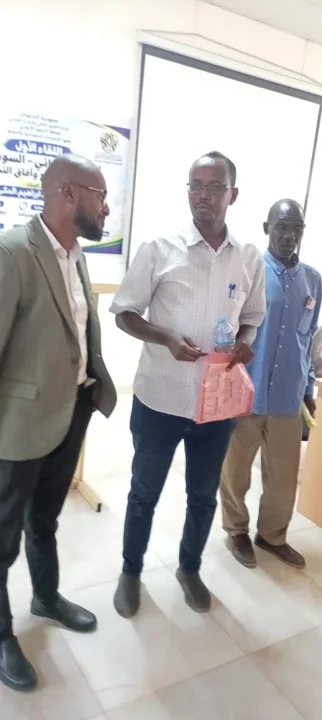
The Institute of Sudanese and International Studies organised a workshop in October 2026 on Sudanese dialogue, its challenges and prospects. According to the university report, the meeting took place in the Faculty of Medicine hall at the Bahri complex, with additional participation through Google Meet. Topics included difficulties in earlier dialogue rounds, trust between participants, overlapping initiatives and the contribution universities and research centres can make to discussion. The report also describes consideration of the involvement of young people, women and civil society. The workshop was presented as the first in a planned series of academic and intellectual meetings. It illustrates the institute’s use of discussion and scholarship to engage with contemporary public questions.
Sources: Academic discussion of Sudanese issues ↗
Recovery and the return to university activity
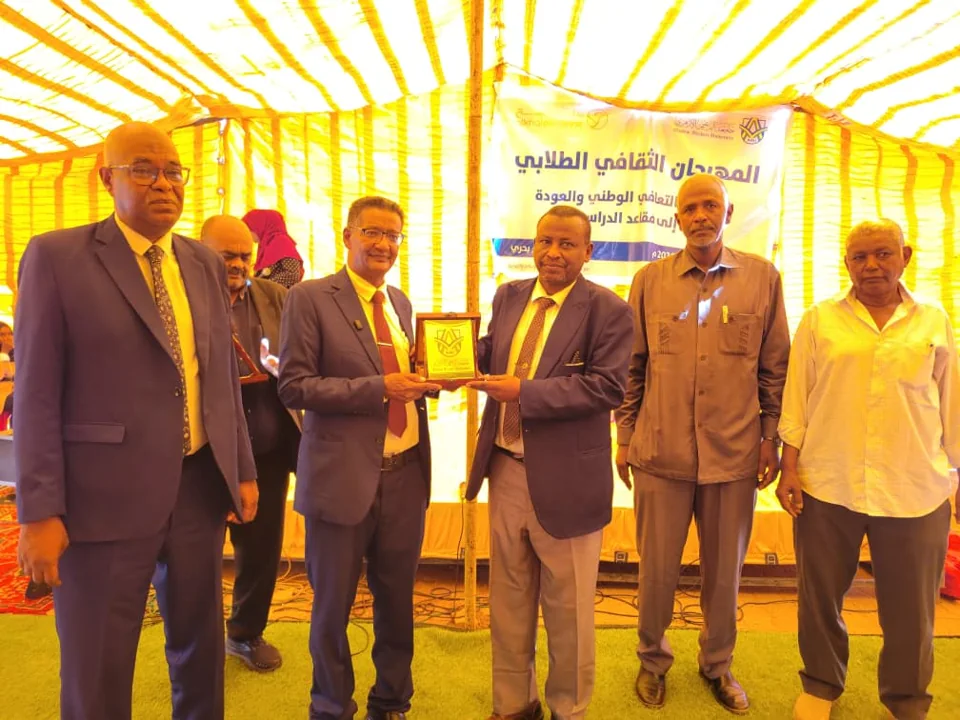
The university’s account of a cultural festival at the Bahri complex on 15 October 2026 explicitly describes a return to study and the recovery of academic and cultural activity. University staff, students and representatives of supporting institutions participated. The report recognises work by faculty, employees and other personnel in reconstruction efforts and describes the contribution of banking partners. The programme included singing, poetry and student performances, with participation by the university choir and other groups. This is a dated account of activity at the Bahri complex during recovery. It documents the university’s own report of renewed campus life at that point, while the references to reconstruction remain part of the context of the event.
Sources: Recovery and the return to university activity ↗
Institutional development priorities
The university’s published objectives organise development around academic programmes, internal operations, learning and growth, and financial resources. They include engagement with local communities, knowledge creation, educational programmes responsive to a knowledge-based society, and regional and international exchange. Infrastructure, university computing and improvements to academic and administrative performance appear among the operational priorities. Human-resource development and careful use of financial resources are also included. These are stated institutional aims, showing how the university connects its educational role with the systems and people needed to support it.