Visa
About Al Fashir University
A public university in North Darfur
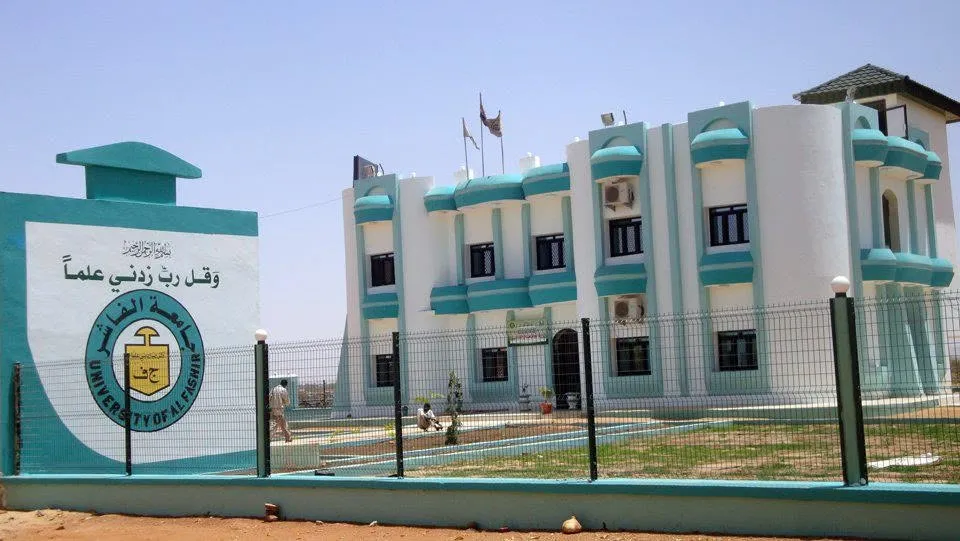
Al Fashir University, also known as the University of Alfashir, is a Sudanese public university associated with Al-Fashir in North Darfur. Its institutional history traces the idea of a university for Darfur to November 1975. The institution formally opened in Al-Fashir in February 1991, and the colleges located there became the nucleus of the present university following Darfur's administrative division in 1993.
War has profoundly affected the university. The vice-chancellor's message on its official website acknowledges destruction and damage while describing the continuation of academic programmes through both in-person and electronic arrangements during the conflict. It identifies remote education, digital administration and cooperation with other universities as priorities. These statements describe an institution adapting its educational work to exceptional conditions, with its historical connection to Al-Fashir remaining central to its identity.
Sources: University of Alfashir: University history and vice-chancellor message ↗
Humanities and social inquiry
The Faculty of Arts brings together nine fields: Islamic studies, Arabic, English, French, history, geography, sociology, psychology and media. Its published account places humanities and social sciences within the university's teaching, research and community responsibilities. The faculty describes the study of Sudan's social, cultural and political changes as an important part of its academic purpose.
Its development plans give particular attention to peace, social cohesion, displacement, migration, identity and cultural diversity. These are presented as priorities for research and interdisciplinary work. The faculty also proposes further digital and blended learning, curriculum review and academic partnerships. Support for students affected by war and displacement appears among its stated objectives. Its emphasis on critical thinking and responsibility to society gives a common framework to subjects that otherwise range widely across languages, historical study and social analysis.
Sources: University of Alfashir: Faculty of Arts ↗
Preparation for teaching
The Faculty of Basic Education began in 1995 as a programme within the general education faculty and became an independent faculty in 1999. Its account describes an integrated approach in which academic subject study and professional preparation for teaching proceed together from the beginning of the course.
The faculty sets out competencies in lesson planning, assessment, classroom communication, educational technology and understanding children's development. Attention to differences between learners and the selection of appropriate teaching approaches are also included. Its subject structure pairs major and minor specialisations, with examples including mathematics and computing, physics and mathematics, and Arabic and Islamic studies. The published model allocates three quarters of the subject weighting to the major and one quarter to the minor. Preschool education adds a distinct focus on child development, learning through play and planning suitable activities for younger children. The preschool competencies also address positive guidance of children’s behaviour, communication with families and the organisation of classroom activity areas for creative work, reading and independent exploration.
Sources: University of Alfashir: Faculty of Basic Education ↗
Postgraduate study and research
The Faculty of Graduate Studies describes its purpose in relation to advanced academic work and the development of research in Darfur. It links postgraduate education to sustainable development and peacebuilding, placing the university's research role within the wider needs of Sudanese society.
Its published introduction emphasises cooperation with universities and research centres inside and outside Sudan. It also encourages work across disciplinary boundaries, rather than treating advanced study solely as a continuation within isolated subjects. The faculty's stated concern with research quality and innovation complements that emphasis on collaboration. Its account presents advanced education as a means of developing scholarly capacity in the region and producing studies connected to contemporary social questions. Research, institutional cooperation and the development of specialist knowledge are consequently recurring themes in its explanation of the faculty's role.
Sources: University of Alfashir: Faculty of Graduate Studies ↗
Computing programmes
The Faculty of Computer Science and Information Technology publishes five-year honours bachelor's programmes in computer science and information technology. Its account links theoretical knowledge with practical work in analysing technical problems, developing software systems and managing information technology infrastructure. The academic objectives also include teamwork, critical thinking, research and continuing learning.
The faculty reports that it has continued its educational work through electronic teaching and remote examinations during the country's exceptional circumstances. This statement places digital delivery within its response to disruption. The programme description distinguishes the two subject areas while connecting both to the development and use of computing systems. Its departmental listing includes computer science and information technology, providing an organisational basis for those fields within the university's broader academic structure.
Sources: University of Alfashir: Faculty of Computer Science and Information Technology ↗
Digital systems and educational continuity
The Computer and Information Technology Centre describes the interruption of work at the main headquarters following the crisis that began in April 2023. Its account explains how digital systems have supported academic and administrative work beyond that physical location.
The centre reports developing a student portal for registration, payment receipt submissions, electronic student cards and access to academic records and results. It also describes electronic examinations with remote monitoring and automated marking, alongside staff and human-resources systems. Training accompanies those services: the centre identifies sessions for lecturers on examinations and registration, guidance for students using the platforms, and instruction for registrars and administrative staff. Its plans include further cloud-based systems, data protection and digital skills development. The centre's role therefore extends from technical infrastructure to helping the university community use the systems that support its continuing educational work.
Sources: University of Alfashir: Computer and Information Technology Centre ↗