Visa


About Alupe University
A university shaped by its border-region community
Alupe University is a public university in Busia County, western Kenya, situated between the border towns of Busia and Malaba. Its official history traces the initiative to a memorandum presented by the Busia community to President Mwai Kibaki in 2007. Moi University established its Alupe Campus the following year. The institution became Alupe University College in 2015 and received its charter as a full university on 22 August 2022. These stages explain the university-college name that remains in some historical material. The university identifies four schools covering health sciences; education and social sciences; business, economics and human resource development; and science, technology and engineering. Its philosophy connects teaching, research and community engagement with the application of science and technology, placing regional development alongside academic study.
Sources: Alupe University history and institutional profile ↗
Academic subjects and levels of study
The university’s programme list brings together diploma, undergraduate and postgraduate study across its schools. In science and technology, the listed undergraduate subjects include microbiology, computer science, information technology and applied statistics with computing, with diploma options in ICT, applied biology and analytical chemistry. Education offerings include arts and science teacher education, counselling psychology and community development, as well as a postgraduate diploma in education and language-education master’s study. Business-related subjects include management, economics, communication and public relations, hospitality and business information technology. The MBA list identifies specialisations including finance, accounting, entrepreneurship, strategic management and business leadership. Health-science subjects listed separately include medical laboratory sciences, medical psychology, physical therapy and environmental health, with postgraduate study in public health and medical microbiology. This provision reflects several distinct academic and professional fields.
Scientific study connected with practical learning
The School of Science, Technology and Engineering describes its educational approach as combining theoretical foundations with laboratory work, applied research and experiential learning. Its departmental organisation includes mathematics, physics and computer science; biological and agricultural sciences; and chemistry and biochemistry. The school places scientific inquiry and practical problem-solving at the centre of its stated teaching direction. It also emphasises creativity and the application of technology to challenges affecting industry, communities and sustainable development. Academic staff are described as undertaking teaching, research and mentorship, while the school seeks collaboration with industry and research organisations. These priorities link its subject teaching with an ambition to apply scientific knowledge beyond the classroom. Its published mission specifically connects education and research within a student-oriented academic environment.
Business education and its departmental structure
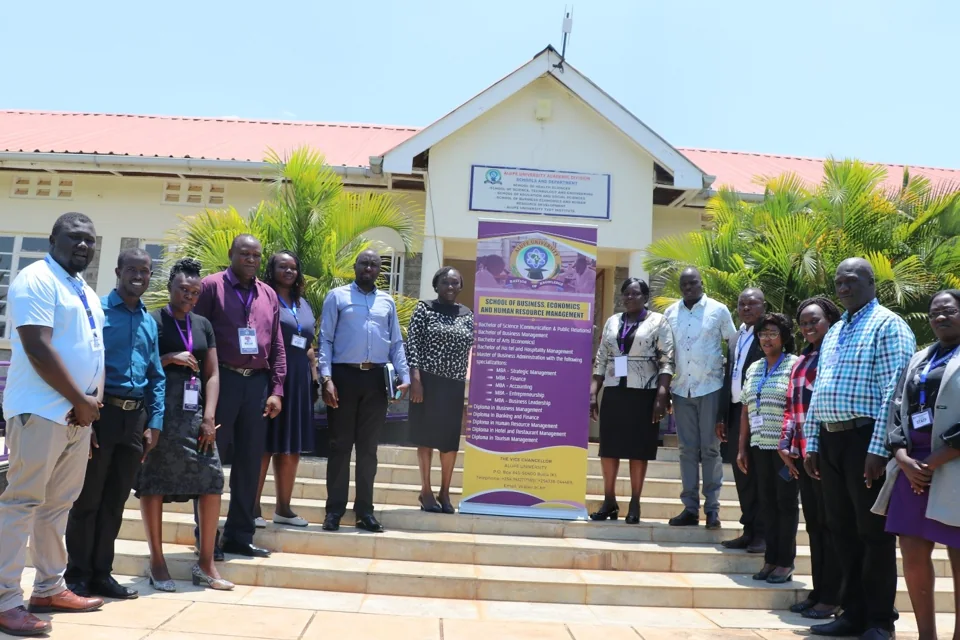
The School of Business, Economics and Human Resource Development organises its work through three broad departmental groupings. One combines management science, development studies and communication; another brings together finance, accounting, economics and procurement; and a third covers marketing, hospitality and human resource development. Its educational priorities include analytical skills, ethical leadership, entrepreneurship and organisational development. The school’s own website describes applied research, practical training and engagement with industry as parts of that approach. Its current programme information includes business management, commerce, economics, business information technology, communication and public relations, tourism and hospitality subjects. Postgraduate information includes an MBA and other specialised areas of business-related study. The institutional school page also presents staff and a campus photograph carrying the school’s identity, situating these academic activities within the university’s wider organisation.
Sources: School of Business, Economics and Human Resource Development ↗ · Business school institutional page and campus photograph ↗
A research agenda spanning several disciplines
Alupe’s research and innovation agenda is organised around themes that connect academic subjects with development questions. Agriculture, climate and food systems form one area, with attention to sustainable production, food security and agricultural value chains. Health and life sciences constitute another, alongside education, social sciences and development. Digital technologies, data and innovation are also identified as priorities. The university describes research partnerships involving government institutions, development organisations, research bodies, industry and communities. It lists journal articles, policy briefs, working papers, conference presentations and technical reports among its knowledge outputs. Ethical review is part of the framework for work involving human participants, animals or sensitive data. These stated priorities provide a cross-disciplinary direction for staff and postgraduate investigation, while emphasising collaboration and responsible research practice.
Sources: Research and innovation priorities ↗
Library spaces and scholarly resources
Alupe University Library describes its role as collecting, preserving and providing access to scholarly and educational resources. Its stated approach combines a physical study environment with access to information through virtual services. The librarian’s welcome identifies study spaces and a newer library facility as part of the learning environment. The library website brings together links to the online catalogue, institutional repository, electronic resources and information-literacy material. Its philosophy emphasises intellectual curiosity, continued learning and support for teaching and research. It also highlights an accessible and welcoming environment for a diverse scholarly community. These functions place the library alongside the schools as a resource for reading, independent study and the information needs of university research.
Sources: Alupe University Library ↗
Environmental participation beyond campus
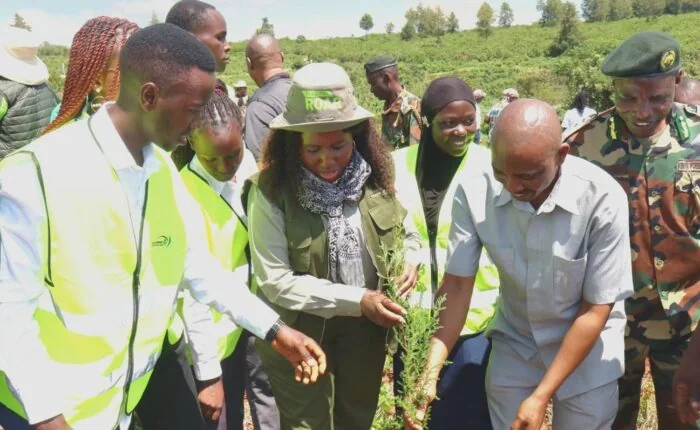
A dated example of community engagement is Alupe’s participation in National Mazingira Day on 10 October 2026. According to the university’s report, students joined the event at Senyende Forest within the Kakamega Forest ecosystem, alongside representatives of other education institutions, government agencies, organisations and local communities. The occasion focused on collective responsibility for tree growing and environmental stewardship. The university representative discussed the place of environmental responsibility in education and the value of students taking part in conservation activities. Speakers also emphasised aftercare and monitoring, extending attention beyond the planting event itself. Reported on 14 October, this activity provides a specific example of students’ involvement in a wider public initiative and of the university’s stated connection between learning, community participation and sustainable development.
Sources: National Mazingira Day participation, 10 October 2026 ↗